
Most outdoor French beans in the UK are harvested from July to September. Early greenhouse or polytunnel plants may crop in June, while healthy climbing beans can sometimes continue into October in mild conditions.
Pick each pod once it has reached the expected size for the cultivar, feels firm and crisp, and the beans inside have not formed large, obvious bulges. Check plants every two or three days once harvesting begins, as pods can quickly pass their best. Dwarf French beans usually crop over a shorter period than climbing types.
This guide covers dwarf and climbing French beans, including fine, flat-podded, yellow and purple varieties—not runner beans.
Signs French Beans Are Ready to Harvest
French beans should be judged pod by pod rather than by the date alone. Harvest months and expected length provide a useful starting point, but the texture of the pod and the development of the beans inside are more reliable signs.
The Pod Has Reached Its Expected Size
There is no universal harvesting length for French beans.
Fine varieties are picked while they are slim and young, while standard dwarf and climbing beans may be allowed to grow considerably larger. Flat-podded varieties can also be naturally broad without being overgrown.
Use the seed packet or cultivar description as your starting point rather than waiting for every bean to reach the same length.
The Beans Inside Are Still Small
The development of the beans inside is one of the best indicators of readiness.
A pod at its ideal picking stage should remain reasonably smooth, although small bumps are perfectly normal. Large, clearly defined bulges usually mean the seeds are maturing and the pod is moving beyond its best stage for eating whole.
As the beans enlarge, the pod walls become thicker, tougher and more fibrous.
The Pod Feels Firm and Crisp
Ready French beans should feel fresh and firm. They should bend slightly and will often snap cleanly when broken.
Hard, leathery or rubbery pods are usually past their best. There is no need to break every bean to test it, though—once you know how a ready pod feels, it becomes easy to judge by touch.
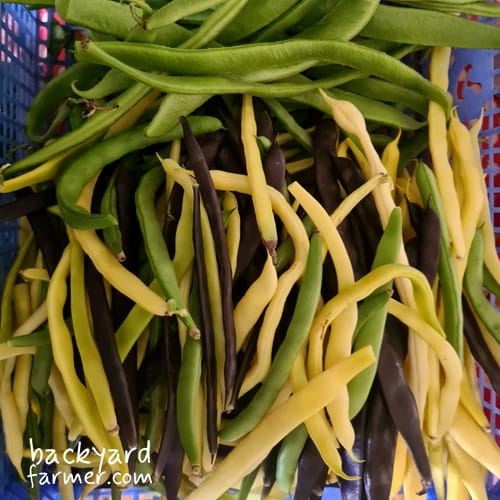
Finally, assess colour according to the variety. Yellow and purple pods can be perfectly ready, while yellowing on a normally green bean may indicate that it is ageing.
How Big Should French Beans Be Before Picking?
There is no single correct picking size for French beans. Fine varieties may be ready below 10cm, while some climbing beans remain tender at around 18–20cm.
The best size depends on the type and cultivar you are growing:
| French bean type | Approximate picking size | Main readiness sign |
|---|---|---|
| Fine or filet beans | Around 8–10cm | Slim pods with barely developed seeds |
| Standard dwarf beans | Around 12–15cm | Crisp texture and limited seed swelling |
| Flat-podded beans | Often around 15cm | Broad shape is normal; check tenderness |
| Long climbing beans | Around 15–20cm | Pick before the seeds strongly swell |
| Shelling or drying beans | Left beyond the fresh stage | The developed seeds become the crop |
A fine bean such as ‘Annabel’ may be ready below 10cm, while climbing varieties such as ‘Blue Lake’ and ‘Cobra’ can remain tender at around 15–20cm.
These measurements are guides rather than fixed rules. Use the cultivar description as your starting point, then judge each pod by its crispness and seed development rather than length alone.
What Month Are French Beans Harvested in the UK?
The main outdoor French bean harvest runs from July through September. Sowing date, warmth, exposure and protection can move the season earlier or later.
June — Possible Early Protected Harvests
A June harvest is possible from early indoor sowings, particularly where plants are grown in a greenhouse, polytunnel or warm, sheltered garden.
However, this is not the normal starting month for outdoor crops. Many unprotected plants will still be establishing, flowering or only beginning to form pods.
July — Main Harvests Begin
Early dwarf French beans often begin cropping in July, with climbing varieties starting soon after.
Begin checking plants regularly as soon as the first pods appear. Cold spring weather can delay growth, so some outdoor crops may not produce their first useful harvest until late July or even August.
August — Peak French Bean Harvest
August is usually the busiest month for both dwarf and climbing French beans.
During heavy production, check plants daily or every other day, as pods can quickly move beyond their best. Lift the leaves and look through the centre and back of the plant, where slender green beans are easily missed.
September — Cropping Continues
Climbing beans often remain productive throughout September, while later dwarf sowings may provide another crop.
Cooler nights gradually slow flowering and pod development, but healthy plants can continue producing for several weeks.
October — Possible Final Harvests
October harvests are most likely from climbing beans or plants grown under cover.
Mild, sheltered and coastal gardens have the best chance of late crops. Pick any remaining tender pods before frost or prolonged cold damages them.
Sheltered southern and coastal gardens may begin earlier and finish later, while exposed northern or upland plots can be delayed. Local warmth and protection often matter more than broad regional location.
How to Harvest French Beans
French bean stems can be damaged if the pods are pulled roughly, so support the plant as you harvest.
Simple Harvesting Method
- Hold the stem close to the pod.
- Pinch through the short stalk or cut it with clean scissors.
- Avoid pulling hard on the pod itself.
- Check beneath the leaves for hidden beans.
- Remove oversized pods unless you are keeping them for shelling or seed.
Cut or Pinch?
Either method works. Pinching is usually fine when the stalk releases easily, while scissors give better control when a pod is firmly attached or surrounded by flowers and younger beans.
Avoid forceful pulling or twisting, as this can tear the stem or dislodge developing pods.
How Often Should You Pick French Beans?
Check plants every two or three days once cropping begins. During warm weather and peak production, daily or alternate-day inspections may be worthwhile.
Fine beans pass their best stage especially quickly, while hidden pods can become oversized before you notice them. Regular harvesting maintains pod quality and encourages the plant to continue producing.
One missed pod will not immediately stop cropping, but allowing several beans to mature fully can gradually reduce further flower and pod production.
Dwarf Versus Climbing French Bean Harvests
Dwarf and climbing French beans are picked at the same tender-pod stage, but they usually produce their crops differently.
| Harvest feature | Dwarf French beans | Climbing French beans |
|---|---|---|
| First harvest | Usually earlier | Often slightly later |
| Cropping pattern | Concentrated main flush | More gradual production |
| Harvest period | Generally shorter | Usually longer |
| Main challenge | Pods hidden beneath foliage | Pods hidden behind leaves and supports |
| Best way to extend harvest | Successional sowing | Regular picking |
| Late-season potential | More limited | May continue into October |
Harvesting Dwarf French Beans
Dwarf French beans often produce several ready pods at once and may crop heavily over a few weeks. Check beneath the foliage and close to the soil, where beans can easily be missed.
Some plants provide smaller follow-up pickings, but successional sowing is the most reliable way to extend the harvest.
Harvesting Climbing French Beans
Climbing French beans usually produce more gradually and continue cropping for longer when picked regularly.
Search carefully behind leaves, along the supports and near the top of the plants, as hidden pods can quickly become oversized. Healthy climbing beans often remain productive through September and may continue into October in mild, sheltered conditions.
What Happens If French Beans Are Left Too Long?
French beans become tougher as the seeds inside mature and the pod walls thicken.
Signs of an Overgrown French Bean
Look for:
- Large, clearly defined seed bulges
- Thick or leathery pod walls
- Tough strings or seams
- Dull or faded skin
- Pods that are difficult to bend or snap
- Dry, papery pods at full maturity
Why Beans Become Tough or Stringy
Late harvesting is the main reason French beans become tough or stringy. Cultivar genetics also play a part, as some varieties develop fibrous seams more readily than others.
Even beans described as stringless can become coarse when left on the plant too long. Heat, drought and irregular watering may also reduce pod quality, although late harvesting remains the main cause.
Curved or misshapen pods are usually still edible if they remain firm, fresh and free from rot.
One overlooked bean will not immediately stop the plant from cropping. However, allowing several pods to mature fully encourages the plant to put more energy into developing seeds, which can gradually reduce new flowers and tender pods.
What Can You Do With Overgrown French Beans?
How you use an overgrown French bean depends on how far it has matured.
Slightly Overgrown Pods
Slightly overgrown beans may still be usable. Remove any tough strings, slice the pods finely and cook them more thoroughly than younger beans.
They work well in soups, stews, casseroles and other dishes where a softer texture is not a problem.
Tough Pods With Developed Beans
Once the outer pod becomes leathery, it is usually better to discard it and use the beans inside.
Shell the developed beans and cook them thoroughly before eating. Their size, flavour and usefulness will vary between cultivars.
Fully Mature or Dry Beans
Pods intended for drying can be left on the plant until they become dry and brittle. Harvest them before prolonged wet weather or frost, and finish drying them somewhere warm and well ventilated if necessary.
Pods being saved for seed should be left to mature and dry fully, then harvested separately from beans intended to be eaten fresh. See our guide to saving French bean seeds for the full method.
When Do French Beans Finish Cropping?
Dwarf French beans often slow down soon after their main flush, while climbing varieties can continue producing for longer if pods are picked regularly.
As autumn approaches, cooler nights and weaker light reduce flowering and slow pod development. Late flowers may form, but they often do not have enough time to produce usable beans before conditions deteriorate.
Unprotected cropping usually ends with the first frost.
After the final harvest, pick any remaining usable beans and shell or dry suitable mature pods. Compost healthy growth, remove diseased material, and clear away canes, netting or other supports before storing them for next season.
How to Store French Beans After Picking
Refrigerate French beans soon after picking, keeping them dry in a loose bag or suitable container. Avoid washing them before storage, as excess moisture can encourage spoilage.
Instead, rinse them shortly before cooking and use them within a few days while the pods are still firm, crisp and fresh.
For longer storage, trim the beans, blanch them briefly, cool them quickly and freeze them in practical portions. This helps preserve their colour, texture and flavour for later use. See our full guide to [freezing French beans] for detailed blanching times and step-by-step instructions.
Frequently Asked Questions
French beans are ready when the pods have reached the expected size for the cultivar, feel firm and crisp, and show no large seed bulges.
Fine varieties may be ready below 10cm, while long climbing beans can remain tender at around 18–20cm. Cultivar size and seed development matter more than length alone.
Most French beans are harvested from July to September. Protected plants may crop from June, while healthy climbing beans can sometimes continue into October.
Check plants every two or three days. During warm, productive weather, daily or alternate-day picking may be useful.
Dwarf beans usually produce one main flush followed by smaller pickings. Successional sowing is the most reliable way to extend the harvest.
Slightly overgrown pods can be sliced and cooked thoroughly. If the pod has become leathery, the developed beans inside may still be shelled and cooked.
Conclusion
Most UK French beans are harvested from July to September, although protected crops may begin in June and climbing plants can sometimes continue into October.
Pick pods at the expected size for the cultivar, while they are still crisp and before large seed bulges form. Check plants every two or three days: dwarf beans usually produce a shorter flush, while climbing varieties crop for longer. Remove overgrown pods unless keeping them for shelling, drying or seed.
See our guide to saving French bean seeds for the full method, UK vegetable harvest calendar and the free Allotment Planner.