

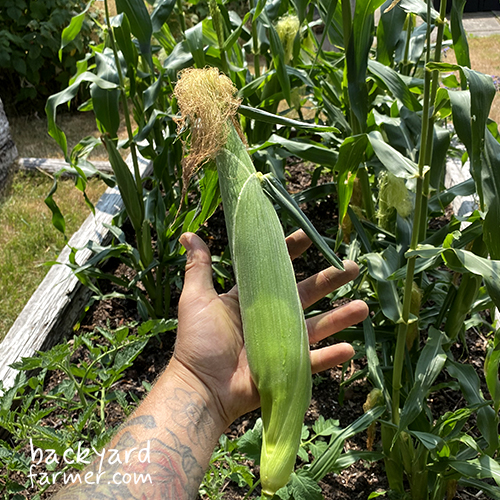
The calendar gives you a useful starting point, but sweetcorn does not always ripen evenly. Timing can vary between plants—and even between cobs on the same plant—depending on the cultivar, weather and growing conditions. Before picking, check each cob for brown, drying silks, a firm and well-filled shape and, most importantly, kernels that release milky or creamy liquid when pierced.
Signs Sweetcorn Is Ready to Harvest
Use several signs together. Brown silks tell you when to inspect the cob, while the kernel test confirms whether it is ready.
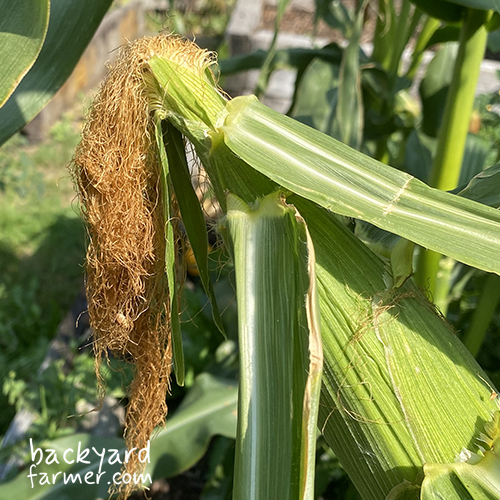
The Silks Have Turned Brown and Dry
Fresh green silks usually mean the cob is still developing. As it matures, the silks darken, shrivel and dry.
This is the first sign that it is time to check, but it is not enough on its own. Silks can brown while the kernels are still immature or poorly pollinated, and they remain attached after a cob has passed its best.
Brown silks tell you when to start checking; milky kernels tell you when to harvest.
The Cob Feels Full Through the Husk
Gently feel the cob without removing the husk. A developed cob should feel firm, rounded and well filled along most of its length.
A thin or sharply pointed cob may still need more time. However, an empty tip does not always mean the whole cob is unripe. Poor pollination can leave missing kernels at the end while those farther down are ready.
The Husk Is Usually Still Green
Sweetcorn is harvested while the husk is green and reasonably fresh. It does not need to dry on the plant like popcorn, grain maize or corn being saved for seed.
A yellowing or papery husk can mean the cob has been left too long, although drought or general plant decline may also dry the husks early.
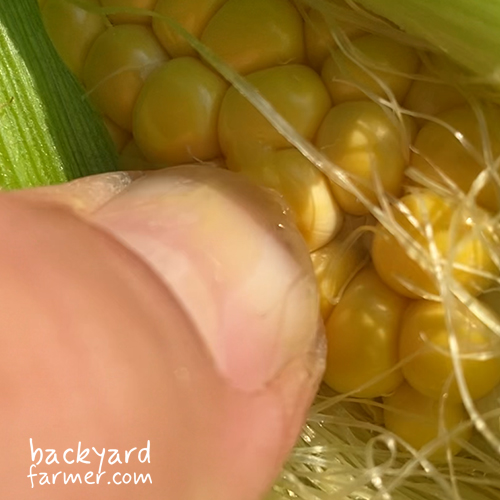
Use the Sweetcorn Milk Test
Peel back a small part of the husk and look at the kernels. Where pollination has succeeded, they should appear full and closely packed. Do not rely on colour alone: ripe kernels may be yellow, white, cream or bicoloured.
The most reliable test is to pierce a developed kernel with your thumbnail and check what comes out.
| Kernel test | What it means | What to do |
|---|---|---|
| Clear or watery liquid | Too early | Fold the husk back and leave it longer |
| Milky or creamy liquid | Ready | Harvest promptly |
| Thick or doughy contents | Overripe | Pick now; the texture may be starchier |
| Hard kernel with little liquid | Past its best | Use only if it is still sound |
Choose a cob with brown, drying silks and peel back only a small section of husk. Test a developed kernel a little way down rather than one at the tip, which may be poorly pollinated.
If the liquid is clear, fold the husk back and check again after two or three days.
What Month Is Sweetcorn Harvested in the UK?
The broad UK sweetcorn season runs from late July to October, but most outdoor crops are harvested during August and September. Timing depends on the cultivar, sowing date, summer weather and the warmth and shelter of the site.
July: Possible Early Harvests
Late-July harvests are possible rather than typical. They are most likely with an early cultivar, an indoor start and a warm, sheltered site.
A hot spring and early summer can bring the crop forward, particularly in southern gardens or protected plots. Even so, confirm readiness with the kernel test rather than relying on the variety description or calendar.
August: The Main Harvest Begins
Many UK crops begin ripening during August. Southern and sheltered gardens often start first, while early cultivars may produce most of their cobs during this month.
Once the silks turn brown and dry, check the plants every few days. Cobs may become ready at slightly different times, even within the same block.
September: Peak and Later Harvests
September is a major harvest month across much of the UK. Crops in northern England, Scotland, exposed allotments or cooler gardens may only reach full maturity now.
Lower or second cobs often ripen later than the first. As nights cool, development slows, so keep testing the kernels rather than waiting for the whole plant to dry.
October: Possible Final Cobs
October harvests are possible in mild, southern or sheltered locations, but they are less dependable in northern and exposed areas.
Late cobs may remain small, poorly filled or watery if they run out of warm weather. Autumn rain, cooler temperatures and pest damage also become greater risks. Harvest as soon as the kernels reach the milk stage.
| Growing conditions | Likely harvest tendency |
|---|---|
| Warm, sheltered southern site | Often earlier; late July is possible |
| Typical central UK garden or allotment | Mainly August to September |
| Northern, Scottish or exposed plot | Often later; early cultivars are more reliable |
| Greenhouse or polytunnel | Earlier and more dependable in cool areas |
| Shaded or windswept site | Slower ripening and greater risk of immature cobs |
Broad location matters, but it does not tell the whole story. An early cultivar in full sun on a sheltered northern plot may ripen before a later variety in a shaded or windswept garden farther south.
How Long After the Silks Appear Is Sweetcorn Ready?
Sweetcorn is often ready around two to three weeks after successful pollination, but this is only a rough guide.
Warm, sunny weather helps the kernels fill quickly, while cool or cloudy conditions delay them. Lower or later cobs may also need more time than the first.
Silks do not always emerge together across the crop. One plant may be several days ahead of another, even when they were sown and planted at the same time.
Once the silks turn brown and dry, feel whether the cob is full and test a developed kernel. Milky liquid means it is ready; clear liquid means it needs longer. The milk test is more reliable than assuming every cob will be ready exactly 21 days after silking.
Do All Sweetcorn Cobs Ripen Together?
Sweetcorn does not always ripen evenly. Plants within the same block may be ready several days apart, with larger or earlier-flowering plants often finishing first.
Once harvesting begins, check the crop every two or three days and pick each cob when it passes the milk test rather than clearing the whole block at once.
Which Cob Ripens First?
The upper or first cob normally ripens before a lower cob. It usually develops earlier and has longer to fill.
Harvesting the top cob does not mean the plant has finished. Leave any lower cob attached if it still looks healthy and is continuing to develop.
Will the Second Cob Ripen?
Some plants produce two usable cobs, particularly in warm summers. However, second cobs are less dependable in UK conditions.
They may remain smaller, fill unevenly or appear too late to mature before cooler weather arrives. Leave a healthy second cob in place and assess it separately, but do not delay picking a ripe upper cob while waiting for the lower one.
Sweetcorn produces a limited number of cobs. Once they have been harvested, it will not continue cropping like courgettes or beans.
How to Harvest Sweetcorn
Once a cob passes the milk test, harvest it promptly.
- Hold the main stem steady with one hand.
- Grip the ripe cob firmly with the other.
- Twist the cob downwards.
- Pull it sharply away from the plant.
- Leave any immature lower cob attached.
Avoid pulling sideways, as this can bend or damage the stem. Ripe cobs normally come away cleanly, so secateurs are not usually needed.
Leave the husk on until cooking or storage. Where practical, pick close to mealtime; otherwise, refrigerate the cob promptly.
Why Is My Sweetcorn Cob Only Partly Filled?
Missing kernels and empty tips are usually caused by incomplete pollination rather than harvesting too early.
Each silk is connected to one potential kernel. For that kernel to develop, the silk must receive pollen from the tassels at the top of the plants. Because sweetcorn is wind-pollinated, it usually performs better in a block than in a long single row.
Small groups, uneven growth and poor weather can all reduce pollination. Cold, wet or unusually still conditions may limit pollen movement, while uneven plants may release pollen before some silks are ready. Lower or later cobs are often less completely filled for the same reason.
Can You Eat a Partly Filled Cob?
Yes, provided the developed kernels are fresh and sound. Test a plump kernel farther down the cob rather than one at the empty tip. If it releases milky liquid, the filled portion is ready.
Cut away mouldy, rotten or heavily pest-damaged areas. Empty sections will not fill after harvest, but they do not make the healthy kernels unsuitable to eat.
What Happens If You Pick Sweetcorn Too Early or Too Late?
Sweetcorn has a fairly narrow window when its kernels are at their sweetest and most tender. The milk test is the best way to judge the stage.
| Stage | Kernel test | Appearance and texture | Eating quality |
|---|---|---|---|
| Too early | Clear or watery liquid | Small, shallow kernels | Watery and less sweet |
| Ready | Milky or creamy liquid | Plump, juicy kernels | Sweet and tender |
| Too late | Thick or doughy contents | Firmer skins and darker kernels | Tougher and starchier |
Picking Sweetcorn Too Early
An immature cob often feels thin, with small or shallow kernels that release clear or watery liquid.
It may still be edible, but the flavour is usually weaker and more watery. Sweetcorn does not meaningfully ripen after picking, so an immature cob will not become fuller or sweeter indoors.
If the liquid is clear, fold the husk back and leave the cob attached. Check again after two or three days.
Leaving Sweetcorn Too Long
As sweetcorn becomes overripe, the kernel skins grow firmer and the contents turn thick or doughy. The kernels may deepen in colour, while the texture becomes tougher and starchier.
The husk may also begin to yellow or dry, although drought can cause similar symptoms. Cobs left too long are more vulnerable to mould, autumn weather and pest damage.
The ideal milk stage can pass quickly in warm weather, so check regularly once the first cobs are ready. Modern supersweet cultivars hold their sweetness longer than traditional types, but they can still become overripe.
Can Sweetcorn Ripen After Picking?
No. Sweetcorn does not continue ripening after harvest like tomatoes. Kernel filling and sugar development depend on the cob remaining attached to the living plant.
An immature cob may dry after picking, but it will not become properly full, sweet or tender indoors. Leave unripe cobs attached while the plant remains healthy and useful warmth remains.
Picking before frost can protect mature cobs from damage, but it will not improve an underdeveloped one.
What Can You Do With Imperfect Sweetcorn?
Not every cob will be perfectly filled or picked at exactly the right stage, but much of it may still be usable.
Slightly Immature Cobs
Remove the kernels and use them in soups, chowders, fritters or mixed dishes. Expect less sweetness and a more watery flavour.
Poorly Pollinated Cobs
Eat the filled portion or strip off the usable kernels. Cut away empty, mouldy or damaged ends.
Slightly Overripe Cobs
Remove the kernels, cook them more thoroughly and use them in soups, stews, fritters or relishes, where tenderness matters less.
Mouldy or Rotten Cobs
Discard cobs that are extensively mouldy, rotten or foul-smelling. Do not try to rescue kernels surrounded by rot.
Baby corn is deliberately harvested very young. Ordinary sweetcorn left to harden does not automatically become good popcorn; popcorn requires a suitable cultivar grown and fully dried for that purpose.
Protecting Sweetcorn Near Harvest
Badgers, rats, mice, squirrels and birds may attack cobs as they approach ripeness. Warning signs include flattened stems, torn husks, stripped kernels and missing cobs.
Inspect the crop regularly once the silks turn brown. Strong cages or secure barriers are generally more effective against mammals than loose netting. Keep bird netting taut and firmly anchored so wildlife cannot become trapped.
Individual cob covers may deter minor damage but are unlikely to stop a badger. Avoid picking clearly immature cobs purely because pests may appear, although on high-risk sites it may be sensible to harvest as soon as the kernels reach the milk stage.
How to Store Sweetcorn After Harvesting
Sweetcorn is best used soon after picking because its sweetness and texture gradually decline once it leaves the plant.
Short-Term Storage
Cook the cobs as soon as practical. If they will not be used straight away, refrigerate them promptly and leave the husks on to protect the kernels from drying.
For the best flavour and texture, aim to use refrigerated cobs within one or two days. Supersweet cultivars generally hold their quality longer than traditional types, but prompt cooling is still worthwhile. Do not leave harvested cobs in a warm greenhouse, shed or car.
Freezing Sweetcorn
Sweetcorn can be frozen as whole cobs or removed kernels. Blanch before freezing for the most dependable colour, flavour and texture, then cool quickly in cold or iced water.
Drain and dry thoroughly before packing into freezer-safe bags or containers. Remove excess air and label each package with the date.
For exact blanching times and full instructions, see our guide to freezing sweetcorn.
Frequently Asked Questions
Start checking once the silks turn brown and dry. The cob should feel firm and full. Pierce a developed kernel: milky or creamy liquid means it is ready, while clear liquid means it needs longer.
Most UK sweetcorn is harvested in August and September. Early crops may be ready from late July, while final cobs can continue into October in mild, sheltered conditions.
Allow roughly two to three weeks after successful pollination, depending on the weather. Warm sunshine speeds development, while cool or cloudy conditions delay it. Confirm readiness with the milk test.
Milky or creamy liquid means the cob is ready. Clear or watery liquid means it is immature, while thick or doughy contents indicate that it has become overripe.
An empty tip usually results from incomplete pollination. The filled portion can still be ripe, so test a developed kernel farther down the cob.
No. An immature cob may dry indoors, but it will not become fuller, sweeter or properly ripe. Leave it attached while the plant remains healthy and warm weather continues.
Yes, in mild or sheltered locations. However, October harvests are less dependable, especially in northern or exposed areas. Pick promptly once the kernels reach the milk stage.
Conclusion
Most UK sweetcorn is harvested during August and September, although early cultivars may be ready in late July and final cobs can continue into October in mild conditions. Brown silks mean it is time to start checking, while milky or creamy kernel liquid confirms readiness. Test each cob individually, harvest promptly and eat or refrigerate it as soon as practical.
For more help, see our guides to growing sweetcorn in the UK, the UK vegetable harvest calendar, freezing sweetcorn and the Free Allotment Planner.