
Save seed from healthy, open-pollinated French bean plants and leave selected pods in place until they turn brown, dry and brittle. If wet weather threatens, bring mature pods under cover to finish drying. Once fully dry, shell the beans, spread them out indoors until they are hard, then store them labelled somewhere cool, dry and dark. This method applies to dwarf, climbing and flat-podded French beans, not runner beans.
Quick Guide: Saving French Bean Seeds
- Choose an open-pollinated variety. Avoid F1 hybrids if you want plants that grow true to type.
- Mark several healthy, productive plants that match the expected variety.
- Leave selected pods on the plants instead of picking them for eating.
- Wait until the pods turn brown, papery and brittle, with hard, full-sized beans inside.
- Move mature pods under cover if prolonged rain, damp weather or frost threatens.
- Let the pods dry completely, then open them gently by hand.
- Reject any beans that are mouldy, soft, shrivelled, cracked or insect-damaged.
- Spread the remaining seeds indoors in a single layer until they are hard and cannot be dented with a fingernail.
- Label and store them in a paper packet inside a sealed container somewhere cool, dry and dark.
Do not seal French bean seeds until they are completely dry, as trapped moisture can quickly cause mould.
Which French Beans Can You Save Seeds From?
Open-pollinated, heritage and heirloom French beans are the best choices for seed saving because they are more likely to produce plants similar to the parent variety. Dwarf, climbing and flat-podded French beans can all be saved using the same basic method.
Seeds collected from an F1 hybrid may still germinate, but the next generation can differ in growth habit, pod shape, colour or productivity. Check the original seed packet or supplier description for “F1” after the variety name.
Whole dried supermarket beans may sometimes grow, but their variety, age, storage conditions and health status are usually unknown, so results can be unreliable.
For dependable results, start with a named open-pollinated variety from a reputable seed supplier.
Choosing Plants and Pods for Seed
Choose plants that are:
- Healthy and vigorous
- Productive
- Growing normally
- Typical of the variety
- Producing well-formed pods
- Free from serious disease
Avoid saving seed from weak, badly affected or unusual plants unless you are deliberately selecting for a particular characteristic.
Where practical, collect seed from several plants rather than relying on one. Five or more healthy plants is a sensible target for home gardeners, although a single plant can still provide usable seed.
Mark your chosen plants or pods clearly so they are not picked for eating. Because allowing pods to mature can reduce further cropping, it is often helpful to dedicate a few plants specifically to seed production.
When Are French Bean Pods Ready for Seed Saving?
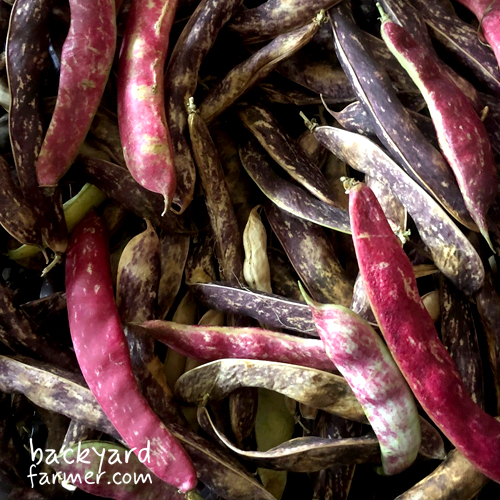
French bean pods are ready when they have lost their fresh green colour and turned yellow-brown or fully brown. The pod walls should feel leathery, papery or brittle, and they often shrink tightly around the beans. The seeds inside should be full-sized and hard. Completely dry pods may rattle when shaken.
A large green pod is not necessarily mature enough for seed saving. Seeds can be mature before the pod is fully dry, but they will still need finishing indoors before storage. Do not leave nearly mature pods outside indefinitely if heavy rain, mould or frost threatens.
| Pod condition | Suitable for saving? |
| Green and fleshy | No |
| Yellowing and leathery | Nearly mature; may finish indoors |
| Brown, papery and brittle | Ready to harvest |
How to Harvest and Dry French Bean Seeds
- Harvest the mature pods
Pick fully mature pods individually during dry weather. If most pods on a plant are nearly ready, cut the whole plant instead.
- Finish drying the pods
Leave the pods intact somewhere dry and well ventilated. Spread them in a single layer on trays, plates, paper or mesh screens, or hang whole plants upside down under cover.
- Shell the beans
Wait until the pods are completely dry and brittle, then open them gently by hand to avoid cracking or damaging the seeds.
- Dry the shelled seeds
Spread the beans in a single layer indoors. Turn or check them occasionally so air can reach all sides.
- Check they are ready for storage
The beans should feel very hard and should not dent when pressed with a fingernail.
Avoid sealed containers, damp rooms and strong direct heat while the seeds are drying. Drying time varies, so judge the beans by their hardness rather than by a fixed number of days.
What to Do in Wet UK Weather
French bean pods are best left to finish drying on the plant, but prolonged rain can cause mould, sprouting and pod splitting.
- Harvest mature pods before a wet spell
Collect pods that have already turned yellow-brown or brown and move them somewhere dry with plenty of airflow. - Bring whole plants under cover where needed
If most pods are nearly ready, cut or lift the plant and hang it upside down somewhere dry and sheltered. - Spread pods out to dry
Keep loose pods in a single layer rather than piling them together, especially if they feel damp. - Check them regularly
Turn the pods occasionally and remove anything that develops mould.
The beans must already be reasonably mature. Very green pods containing soft, undersized seeds may not develop into strong, viable seed simply because they are brought indoors.
How to Store French Bean Seeds
Before storing them, make sure the seeds are:
- Completely dry and hard
- Placed in a labelled paper envelope or packet
- Marked with the variety and harvest year
- Protected inside an airtight jar or moisture-proof container
- Kept somewhere cool, dry, dark and temperature-stable
An indoor cupboard is usually safer than a greenhouse, garage or damp shed, where humidity and temperature can fluctuate. A small sachet of silica gel can help where moisture is a concern.
French bean seeds commonly remain viable for around three to four years when stored well, although germination gradually declines rather than stopping at a fixed point.
Important: Sealing beans while they still contain moisture is one of the main causes of mould and failed seed. Allow extra drying time whenever you are unsure.
Do French Beans Cross-Pollinate?
French beans are mainly self-pollinating, so crossing between varieties is possible but relatively uncommon. For ordinary home seed saving, avoid growing different varieties immediately beside one another. Around 10m of separation is a cautious target where space allows, although it cannot guarantee complete purity.
Growing only one French bean variety is the simplest option when keeping it true to type is especially important. Greater precautions are mainly needed when preserving rare or valuable varieties rather than saving seed casually for personal use.
Crossing may not be obvious when the seed is harvested. The beans can look completely normal, with differences only appearing in the plants grown the following year.
Which Seeds Should You Discard?
Discard French bean seeds that are:
- Mouldy or soft
- Deeply shrivelled
- Cracked or badly damaged
- Marked with insect holes
- Affected by unusual sunken lesions
- Showing other signs of deterioration
- Collected from plants that showed serious disease
Several bean diseases can be carried into the next crop through infected seed, so avoid saving from unhealthy plants.
Many French bean varieties naturally produce mottled, spotted, striped or dark-coloured seeds. These markings are not always a sign of disease, so compare them with the expected appearance of the variety. Healthy seed should be hard, well filled and free from softness, mould and obvious damage.
Test Older Seeds Before Sowing
- Count out 10 seeds
Place them between damp sheets of kitchen paper. - Keep them warm and moist
The paper should stay damp but not become waterlogged. - Check them for 7–14 days
Look for seeds producing healthy roots. - Calculate the germination rate
If eight out of ten germinate, the batch has an 80% germination rate.
Sow slightly more heavily where results are moderate. Replace the seed if very few beans germinate or the seedlings appear weak. Saved French bean seed needs no special treatment before normal sowing.
Frequently Asked Questions
Yes. Dwarf, climbing and flat-podded French beans are generally Phaseolus vulgaris and are saved in the same basic way. Choose an open-pollinated variety, select healthy plants and allow the pods to mature fully before harvesting.
You can collect and sow them, but the next generation may differ from the parent plant in growth, pod shape, colour or productivity. For reliable, true-to-type plants, save seed from open-pollinated varieties instead.
Yes, provided the beans are already mature and the pods have started turning yellow or brown. Move the intact pods somewhere dry and well ventilated, then wait until they are brittle before shelling them.
The beans should feel very hard and should not dent when pressed with a fingernail. Do not seal seeds that still feel soft, cool or damp, as trapped moisture can quickly lead to mould.
Properly dried and stored French bean seeds commonly remain viable for around three to four years. Germination declines gradually, so test older seed before sowing and use more seeds where the result is only moderate.
Only if the shed remains reliably cool and dry. Many sheds experience fluctuating temperatures, condensation and high humidity, so a cool indoor cupboard is usually the safer place for long-term storage.
Conclusion
Start with a healthy, open-pollinated French bean variety and leave selected pods until they are fully mature and brown. If wet UK weather threatens, move them under cover to finish drying. Shell only when the pods are brittle, reject damaged or unhealthy beans, then dry the remaining seed thoroughly before storing it labelled somewhere cool, dry and dark.
For more help, see growing French beans in the UK, when to harvest French beans, the UK vegetable planting calendar and the Free Allotment Planner. Once safely stored, add the variety to your planting plan for next spring.