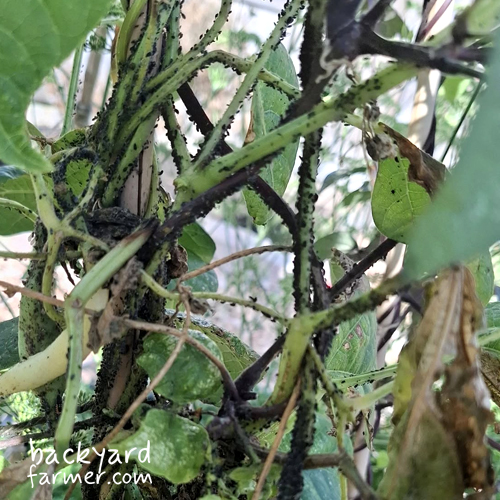
Aphids, commonly called greenfly or blackfly, are small sap-sucking insects found on many UK vegetables. They gather on growing tips and beneath leaves, sometimes causing distorted growth, weakened plants or contaminated harvests.
However, not every aphid infestation needs treating. Healthy plants can often tolerate small populations, while larger colonies may require targeted action to protect young growth and developing crops.
Aphids at a Glance
| What you’re seeing | What to do |
|---|---|
| A few aphids on healthy, established plants | Usually tolerate and monitor |
| Small colonies on exposed shoots | Remove by hand if damage is developing |
| Dense blackfly on broad bean tips | Consider pinching affected tips once the lowest flowers have formed small pods |
| Aphids distorting young growing points | Intervene to protect developing growth |
| Aphids contaminating edible leaves or heads | Assess whether affected parts can be cleaned or removed |
| Ladybird or hoverfly larvae feeding among aphids | Allow natural control to develop if damage remains manageable |
How to Identify Aphids
Aphids are small, soft-bodied insects, usually around 1–7 mm long. They feed by piercing plant tissues and extracting sap, often gathering in colonies around tender new growth.
They can be green, black, grey, yellow or other colours, depending on the species. Some develop wings, allowing them to move between plants and establish new colonies.
Three common types found on UK vegetables are:
| Type | Appearance | Typical location |
|---|---|---|
| Greenfly | Green, soft-bodied aphids | Young shoots and leaf undersides |
| Blackfly | Dark brown or black aphids | Broad bean tips and tender stems |
| Mealy cabbage aphids | Grey-green with a whitish, waxy coating | Brassica leaves and growing points |
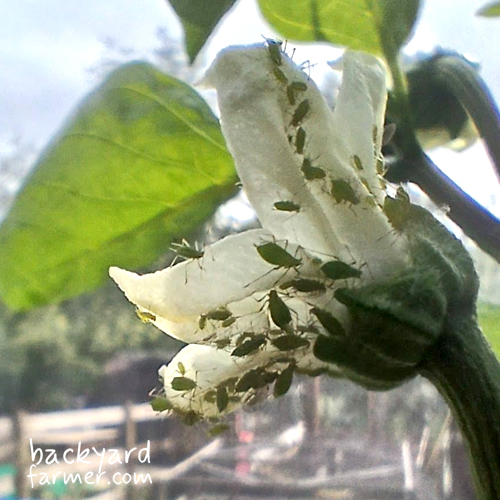
Greenfly and blackfly are general descriptions rather than individual species. Several aphid species can affect the same crop, and colour alone isn’t always enough for identification.
Mealy cabbage aphids can also be confused with cabbage whitefly. Unlike the wax-coated aphids, adult whiteflies have white wings and typically fly up when disturbed.
Most aphids are easiest to find by inspecting growing tips, stems and the undersides of leaves.
Signs of Aphid Damage
Small populations often cause little noticeable harm, but heavy feeding can interfere with developing growth.
Common signs include:
- Curled, twisted or distorted young leaves.
- Weakened or stunted growing tips.
- Clusters of insects on stems and leaf undersides.
- Sticky honeydew coating leaves or nearby surfaces.
- Black sooty mould developing on honeydew.
- Small white flecks left behind when aphids shed their skins.
- Aphids gathering inside edible leaves or developing vegetable heads.
Sooty mould grows on the sugary honeydew produced by aphids rather than infecting the plant’s tissues directly. Heavy deposits can reduce light reaching the leaves and make edible crops difficult to clean.
Some aphids can also transmit plant viruses. However, not every aphid carries a virus, and distorted leaves alone don’t confirm that a plant has become infected.
When Should You Control Aphids?
The presence of aphids doesn’t automatically mean a plant needs treatment.
The most useful approach is to assess the condition of the crop, whether the infestation is spreading and whether productive growth or the harvest is being affected.
There isn’t one universal number of aphids that requires intervention on every vegetable.
When Aphids Can Be Left Alone
Healthy, established plants can often tolerate small aphid populations without significant damage.
Aphids are also an important food source for ladybirds, hoverflies, lacewings and other beneficial insects.
If your vegetables are growing normally and the infestation isn’t increasing rapidly, regular monitoring may be enough.
Look for natural enemies already feeding among the aphids before deciding to intervene.
When Aphids Need Controlling
Targeted control becomes more useful when colonies are weakening young plants, distorting productive growth or making vegetables difficult to harvest.
Young seedlings and tender growing points are particularly vulnerable because damage at this stage can affect later development.
Harvest quality matters too. A mature plant may tolerate aphids without serious harm, but dense colonies inside broccoli florets or lettuce hearts can still make the crop difficult to use.
Aphid-transmitted viruses are another consideration. Some can spread before natural predators reduce aphid numbers, so tolerating aphids cannot guarantee protection against disease.
The aim is to protect the crop, not eliminate every aphid from the garden.
How to Remove Aphids Without Insecticides
When aphids begin causing damage, targeted physical removal is often the most practical first response.
These methods work best when colonies are accessible and infestations haven’t spread throughout the crop.
Remove Aphids by Hand
Small colonies can be crushed between finger and thumb or gently wiped from affected shoots.
This works particularly well on individual vegetable plants, broad bean stems and exposed growing tips.
Check for ladybird or hoverfly larvae before removing entire colonies, as these beneficial insects may already be feeding on the aphids.
Hand removal won’t necessarily eliminate every insect, but reducing a concentrated population can help protect developing growth.
Inspect the affected shoots again over the following days.
Dislodge Aphids with Water
A directed stream of water can knock exposed aphids from stems and leaves.
Use enough pressure to dislodge the insects without damaging tender growth. A powerful jet can break delicate shoots or tear leaves.
Water removal is less effective where aphids are concealed inside curled foliage or tightly packed growing points.
Surviving aphids can reproduce quickly, so one treatment may not provide lasting control.
Check the crop again afterwards and repeat selectively if necessary.
Remove Heavily Infested Growing Tips
Blackfly commonly gathers around the soft growing tips of broad bean plants.
Once the lowest flowers have formed small pods, pinching out heavily infested tips can remove concentrated colonies while supporting normal crop development.
Remove the affected tips carefully and dispose of them away from the plants.
However, this approach isn’t suitable for every vegetable.
Removing the growing points of peppers, tomatoes or young plants can sacrifice productive growth, so don’t pinch out shoots indiscriminately.
Aphids on Common UK Vegetables
The effects of aphid infestations vary between crops. Some affect plant growth and yields, while others become a problem mainly because insects contaminate edible leaves or developing heads.
| Crop | Common problem | Practical approach |
|---|---|---|
| Broad beans | Blackfly on growing tips | Inspect shoots and pinch affected tips at the appropriate stage |
| Cabbage, kale and broccoli | Mealy cabbage aphids | Protect young growth and inspect edible leaves or heads |
| Lettuce | Aphids concealed between leaves | Inspect developing heads and remove affected leaves |
| Peas and runner beans | Colonies on tender shoots | Monitor growth and remove damaging colonies |
| Peppers and greenhouse crops | Recurring colonies on new growth | Check regularly and use targeted controls |
Blackfly on Broad Beans
Black bean aphids are among the most familiar pest problems on UK allotments.
They often form dense, dark colonies around the upper stems and growing tips, sometimes weakening new growth and reducing pod production.
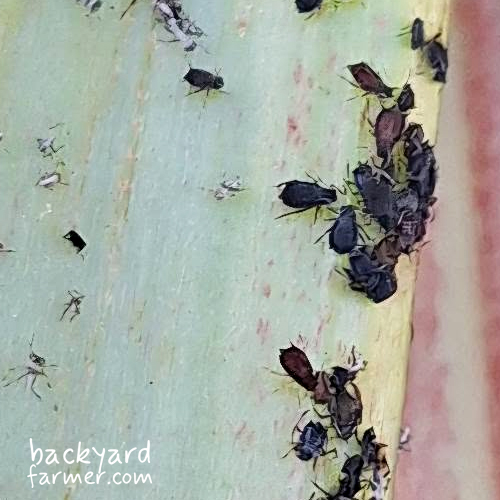
However, even heavily affected broad bean plants may produce usable pods, and the beans inside aren’t automatically spoiled by aphids on the stems.
Check broad beans regularly as flowering begins and pods develop. Dense blackfly colonies are easier to manage when spotted early, but a few scattered aphids don’t justify sacrificing healthy, productive shoots.
For earlier crop planning, see our guide to when to sow broad beans in the UK.
Aphids on Brassicas and Leafy Vegetables
Mealy cabbage aphids commonly affect cabbage, kale, broccoli, cauliflower and other brassicas.
Established plants can often tolerate some feeding, but young plants may suffer distorted growth when colonies become established around developing leaves.
Harvest contamination is another concern.
A cabbage may remain usable after affected outer leaves are removed, while aphids concealed inside broccoli florets or tightly packed leafy growth can be difficult to remove completely.
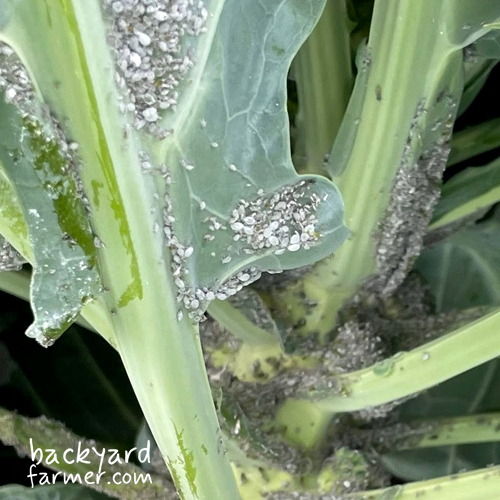
Inspect edible parts before harvesting and wash sound produce thoroughly. Discard badly contaminated or damaged portions that cannot reasonably be cleaned.
A sufficiently fine insect-proof mesh may exclude winged aphids when fitted before they reach the crop, with the edges properly secured. However, aphids that get underneath can multiply rapidly, while the covering may also restrict access for natural predators.
Check covered crops regularly rather than assuming netting provides complete protection.
For crop-specific growing advice, see our guides to growing cabbage and growing kale.
Natural Aphid Predators and Biological Control
Aphids are an important food source for many beneficial insects.
Encouraging these natural enemies can help regulate populations without routine insecticide treatments.
Common natural enemies include:
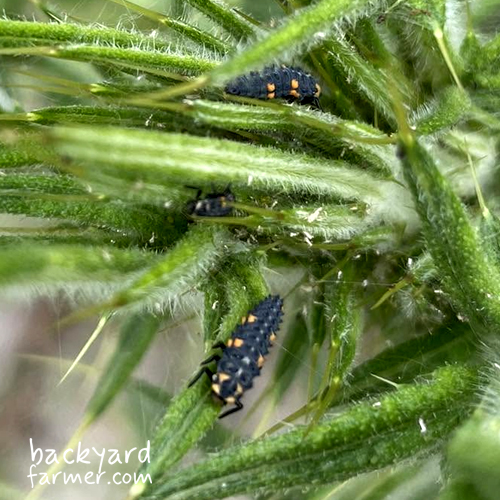
- Ladybirds: Both adults and larvae of many species feed on aphids.
- Hoverfly larvae: Small, legless predators that consume aphids on leaves and stems.
- Lacewing larvae: Predatory insects that capture soft-bodied prey with their jaws.
- Parasitoid wasps: Tiny wasps whose larvae develop inside aphids, eventually killing their hosts.
Ladybird and hoverfly larvae are particularly worth recognising.
Gardeners often notice adult ladybirds but overlook their larvae, which can consume substantial numbers of aphids.
You may also find swollen, discoloured aphid bodies known as aphid mummies. These can indicate that parasitoid wasps are active.
Purchased biological controls are sometimes used in greenhouses and polytunnels, but outdoor gardeners can often benefit from supporting the natural enemies already present.
Why Aphid Numbers Sometimes Collapse Naturally
Aphids reproduce rapidly during favourable conditions, sometimes increasing faster than their natural enemies can respond.
As predators, parasitoids and naturally occurring diseases begin reducing the population, aphid numbers may fall sharply.
This is sometimes called an aphid crash.
It explains why some infestations appear severe for a short period before declining with little intervention.
However, natural control isn’t guaranteed to happen before vulnerable crops suffer damage. Targeted removal may still be appropriate when growing points or harvestable parts are being affected.
Why Do Aphids Keep Coming Back?
Many aphid species reproduce rapidly without mating during the growing season.
Even after a large colony has been removed, a few surviving insects may rebuild the population.
Common reasons infestations return include:
- Aphids surviving on untreated shoots.
- Colonies remaining hidden inside curled leaves.
- Winged aphids arriving from other plants.
- Continued production of tender new growth.
- Natural enemies taking time to respond.
This is why a single water spray or hand-removal session doesn’t always provide lasting control.
Regular inspection and selective removal are more realistic than trying to eliminate aphids permanently.
Do Ants Protect Aphids?
Ants are often attracted to aphid colonies because they feed on the sugary honeydew the insects produce.
Some ant species also defend aphids against predators, including ladybird larvae, helping colonies survive.
You may notice ants repeatedly travelling up stems before spotting the aphids themselves.
However, ants don’t normally cause an aphid infestation to begin.
Their presence is a useful reason to inspect the plant, not an automatic reason to control the ants.
Avoid unnecessary ant treatments, particularly where they could harm beneficial insects.
How to Reduce Aphid Problems in Future
Completely preventing aphids from arriving in a UK garden isn’t realistic, but several practices can help keep damaging populations manageable.
- Inspect plants regularly: Check young shoots and leaf undersides before colonies become established.
- Encourage beneficial insects: Flowering plants provide nectar and pollen for adult hoverflies and other natural enemies.
- Retain suitable habitat: Varied planting and undisturbed areas can support predators throughout the season.
- Avoid unnecessary insecticides: Treatments may harm natural enemies as well as aphids.
- Act selectively: Remove colonies causing damage while leaving unaffected plants and beneficial insects undisturbed.
These practices support natural pest regulation but cannot guarantee aphid-free crops.
Common Aphid Control Mistakes
Some widely repeated aphid remedies are unnecessary, unreliable or potentially harmful to plants and beneficial wildlife.
| Common mistake | Why it matters |
|---|---|
| Treating every aphid as a serious pest | Small populations often cause little damage |
| Expecting one water spray to solve the problem permanently | Surviving aphids may reproduce quickly |
| Using washing-up liquid as an insecticide | Detergents can damage foliage and affect other organisms |
| Assuming ladybirds will eliminate aphids immediately | Natural enemies take time to establish and may move elsewhere |
| Relying on nasturtiums as a guaranteed trap crop | Results are inconsistent |
| Removing growing tips from every affected vegetable | Can sacrifice productive growth unnecessarily |
| Overlooking ladybird and hoverfly larvae | May disrupt natural pest control |
| Assuming natural enemies prevent all aphid-transmitted viruses | Infection can occur before aphid populations decline |
Homemade mixtures containing washing-up liquid, essential oils or other household ingredients aren’t automatically safe or effective because they’re described as natural.
Some can scorch foliage or affect insects other than aphids.
For most vegetable gardens, targeted physical removal and supporting natural enemies provide a better starting point than repeated spraying.
Frequently Asked Questions
Small colonies can be removed by hand or dislodged with a controlled stream of water. Encouraging ladybirds, hoverflies and other natural enemies also helps reduce populations over time. Complete eradication is rarely realistic or necessary.
Small populations rarely cause serious damage to healthy, established vegetables. Heavy infestations can weaken young plants, distort growing points and reduce yields. Some aphids also transmit plant viruses that can cause more serious problems.
Yes, provided the vegetables are otherwise sound and can be cleaned properly. Aphids don’t automatically make produce inedible. Wash harvested vegetables thoroughly and remove badly contaminated or damaged portions where necessary.
Aphids reproduce rapidly, and surviving colonies can rebuild after removal. Winged aphids may also arrive from nearby plants. Regular monitoring and targeted control are more realistic than expecting one treatment to eliminate them permanently.
Ants are attracted to the honeydew aphids produce, and some species protect aphid colonies from predators. However, ants don’t normally cause the original infestation, and treating them is not usually necessary.
Ladybirds and their larvae can substantially reduce aphid numbers, but they aren’t an instant cure. Their effectiveness depends on timing, population size and growing conditions. Hoverflies, lacewings and other natural enemies also contribute.