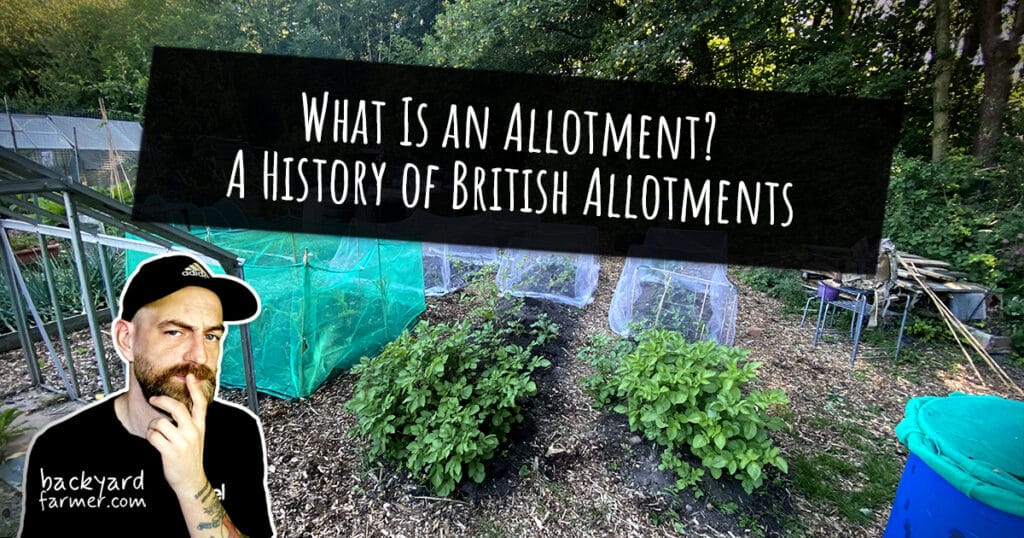

The Western Honey Bee, European Honey Bee and common Honey Bee are all names used for Apis mellifera, the familiar social bee kept by beekeepers and commonly seen on flowers throughout the UK.
Most honey bees have a slim, lightly hairy body, a brown or amber-banded abdomen and pollen baskets on their hind legs. However, their colouring varies considerably, so shape, behaviour and physical features are more reliable than colour alone.
Quick ID: How to Recognise a Honey Bee
Honey bees are usually slimmer and less furry than bumblebees, but hairier and less sharply coloured than wasps. Most bees seen visiting flowers are workers, which may carry yellow or orange pollen on their hind legs.
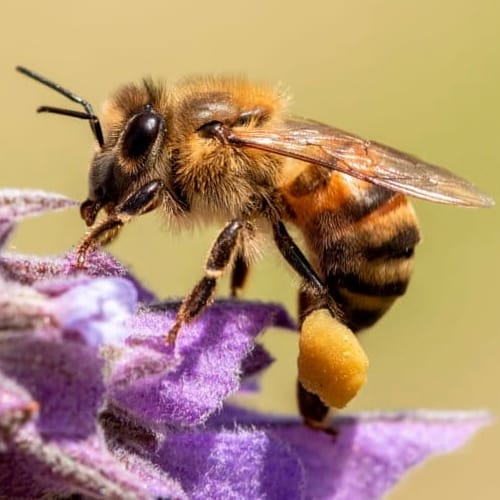
Look for:
- A slim, oval body
- A lightly hairy thorax
- A brown, amber or dark-banded abdomen
- Long, elbowed antennae
- Pollen baskets on the hind legs of workers
- Calm, purposeful movement between flowers
Worker, Queen and Drone Honey Bees
Honey bees live in colonies with different types of bees, but you do not need to know the full workings of a hive to identify one in the garden.
For practical honey bee identification, the main thing to remember is this: most honey bees seen on flowers are workers. Queens and drones are part of the colony, but they are much less useful for everyday garden ID.
Worker Honey Bee
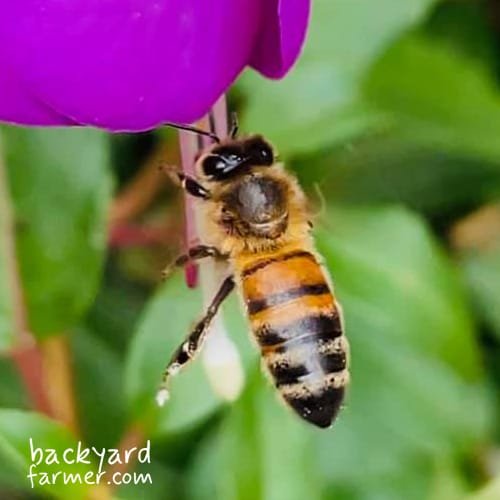
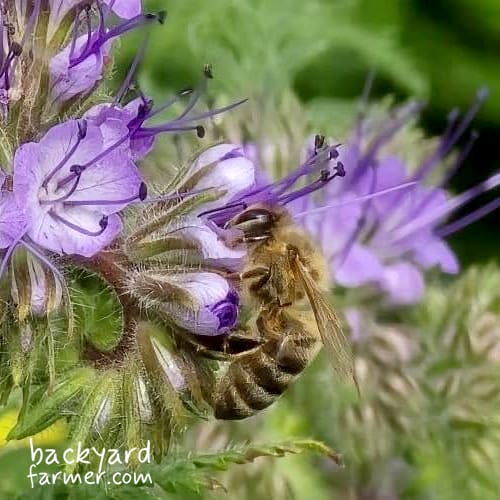
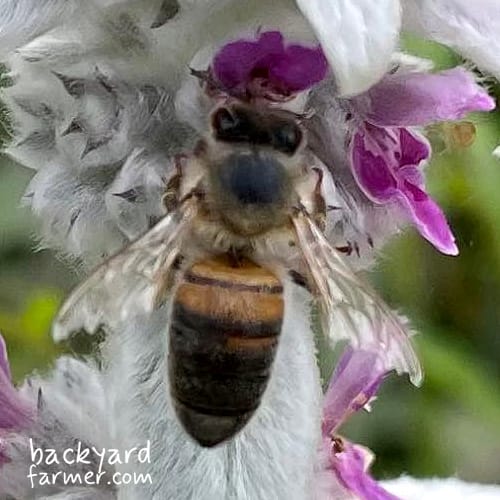
Worker honey bees are the individuals most commonly seen on flowers. They are female, collect nectar and pollen, and may carry visible pollen loads on their hind legs.
Queen Honey Bee
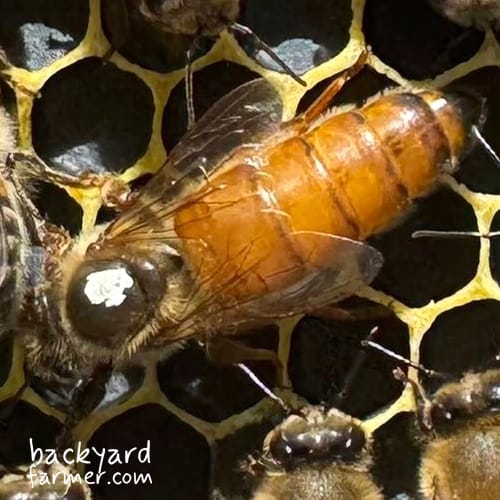
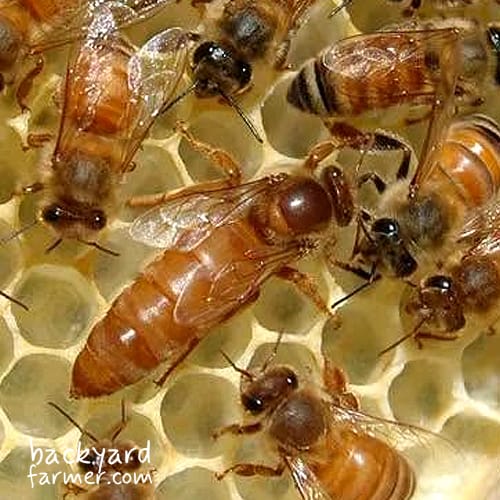
The queen is longer and heavier-bodied than a worker, with an abdomen extending beyond the tips of her wings. She normally remains inside the colony and is rarely seen on flowers.
Male Honey Bee (Drone)
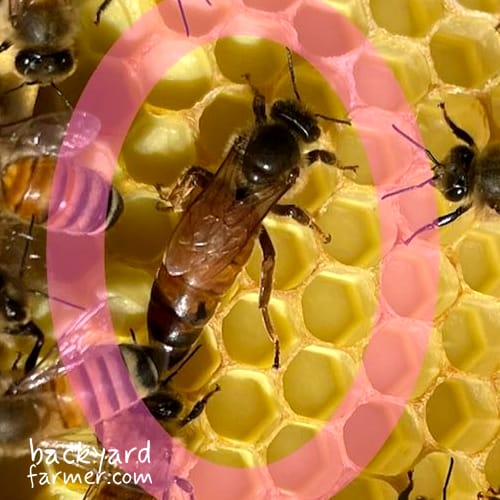
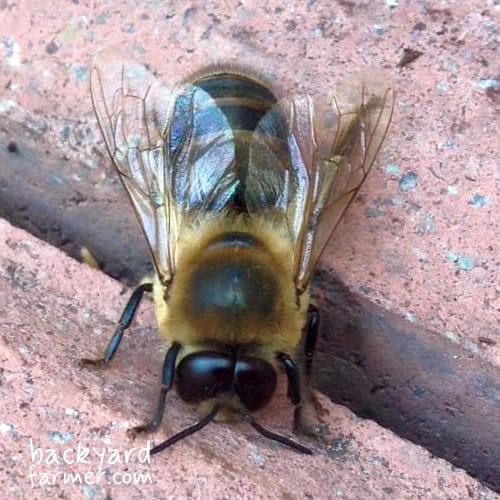
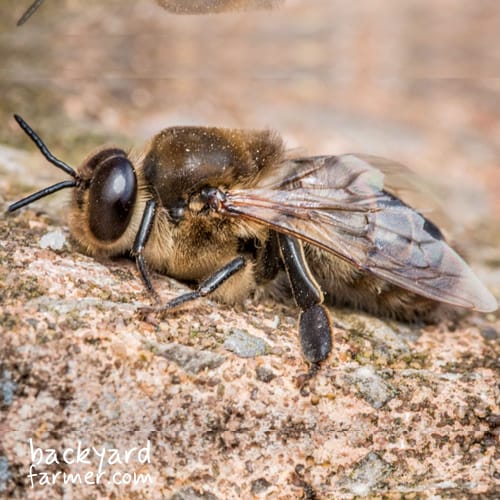
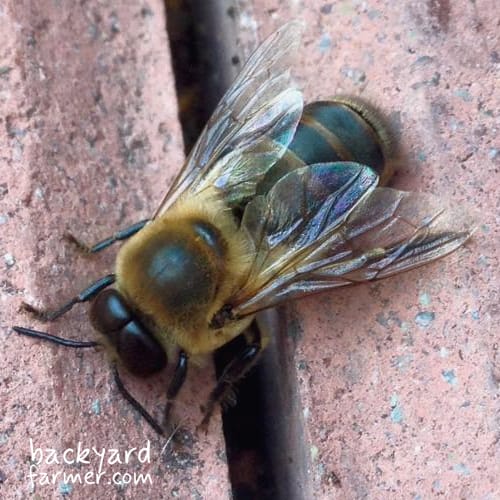
The drone is the stockier male honey bee, with very large eyes, no pollen baskets and no sting.
For most garden sightings, focus on workers.
| Honey bee | Main identification clue | Usually seen where? |
|---|---|---|
| Worker | Slim body and pollen baskets | Flowers |
| Queen | Long, heavy abdomen | Inside the colony |
| Drone | Broad body and very large eyes | Near colonies or mating areas |
Is the European Honey Bee Different?
For normal UK garden identification, Honey Bee, Western Honey Bee and European Honey Bee all refer to the same species: Apis mellifera.
You may see different names used in books, websites and beekeeping circles, but they should not be treated as separate species in a beginner-friendly guide.
For most gardeners and wildlife watchers, recording the insect as a Honey Bee or Apis mellifera is accurate enough. More specific forms and subspecies are much harder to identify and should not be assigned from an ordinary garden sighting.
Honey Bee Colours and the Native Black Bee
Honey bees vary considerably in colour. Some have warm golden or amber bands, while others are grey-brown, dark brown or almost black. Workers from the same colony may also differ slightly in appearance.
This variation reflects the mixed ancestry of many UK colonies. Beekeepers may refer to Italian bees, Carniolan bees, Buckfast bees, native black bees and mixed lines, but these are not usually distinctions that can be confirmed from a garden photograph.
A particularly dark honey bee is not automatically a native black bee. The European dark bee, Apis mellifera mellifera, is generally dark-bodied with narrow abdominal bands, but reliable identification depends on more than colour alone. Detailed physical measurements or genetic testing may be needed to confirm its ancestry.
For most sightings, the safest and most accurate identification is simply Honey Bee or Apis mellifera. Avoid assigning a subspecies based only on colour, pattern or a single photograph.
Honey Bee Lookalikes
Honey bees are sometimes confused with bumblebees, wasps and several bee-like flies. Body shape, hair, antennae, eyes and behaviour are generally more reliable than colour alone.
| Lookalike | Main difference from a Honey Bee |
|---|---|
| Bumblebee | Rounder, chunkier and much furrier |
| Wasp | Smoother, brighter and more sharply pinched at the waist |
| Hoverfly or drone-fly | Large eyes, short antennae and only one pair of wings |
| Bee-fly | Rounded body with a long, forward-pointing proboscis |
| Solitary bee | Highly variable and usually seen alone rather than as part of a colony |
Honey Bee vs Bumblebee
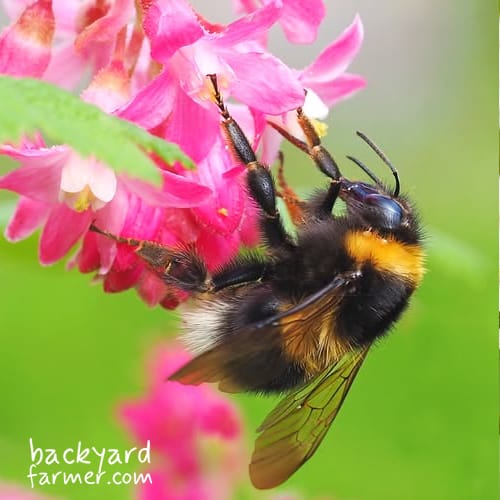
Honey bees are usually slimmer, neater and less fluffy than bumblebees. Bumblebees tend to have rounder, heavier bodies, dense hair and more obvious tail colours, including white, buff, red, orange or ginger.
Small or faded bumblebees can still cause confusion. Common Carder Bees, for example, are ginger-brown and may look honey bee-like when moving quickly between flowers. However, they are generally rounder and furrier, while honey bees look slimmer and more clearly banded.
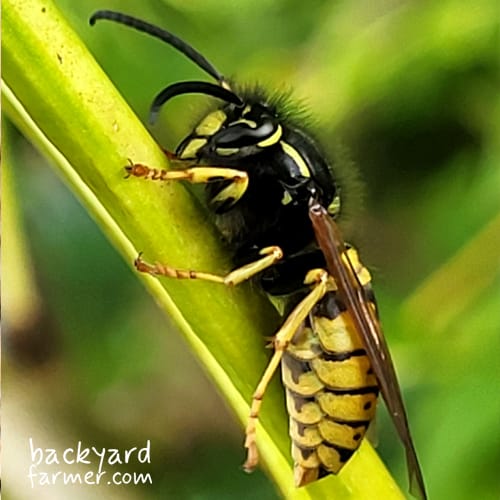
Honey Bee vs Wasp
Wasps are smoother, shinier and usually more brightly marked in yellow and black. They also have a noticeably narrow waist.
Honey bees are hairier and softer-looking, with colouring that is more often brown, golden, amber or dark brown. On flowers, they usually move steadily between blooms, while wasps often appear sleeker and more restless and are commonly noticed around food, ripe fruit and bins.
Honey Bee vs Hoverfly or Drone-fly
Hoverflies are flies rather than bees, although some are convincing mimics. The drone-fly is particularly easy to mistake for a honey bee because it has a brown, bee-like body and visits many of the same flowers.
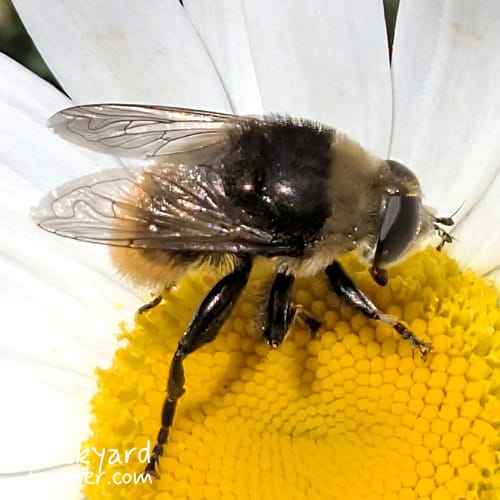
Look for:
- Very large, fly-like eyes
- Short antennae
- One pair of wings
- No pollen baskets
- Hovering or darting flight
Honey bees have longer antennae, a hairier appearance and usually move more steadily from flower to flower.
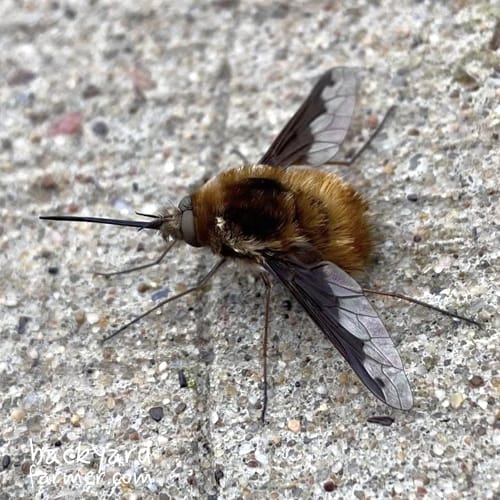
Honey Bee vs Bee-fly
Bee-flies are fluffy, bee-like flies most often seen in spring. Their clearest feature is a long, straight proboscis projecting from the front of the head like a small drinking straw.
They also tend to have rounded bodies and a hovering flight. Honey bees do not have the same obvious forward-pointing proboscis and usually land more firmly on flowers while feeding.
Honey Bee vs Solitary Bees
Some solitary bees, particularly small brown mining bees, can resemble honey bees. However, solitary bees vary so much in size, shape and colour that there is no single feature that separates them all.
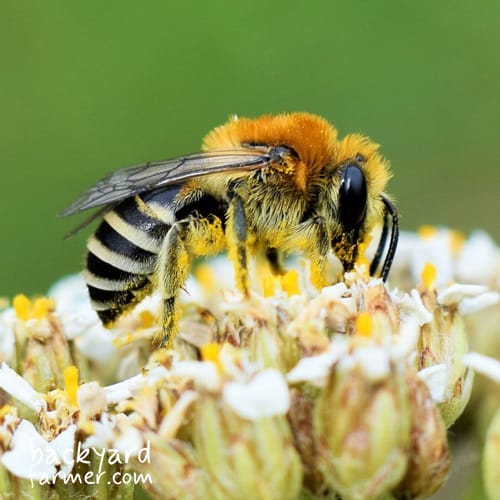
They may carry pollen on hairs covering their legs or underneath the abdomen rather than in the compact pollen baskets seen on worker honey bees. They are also usually found alone around bare soil, walls, hollow stems or small nesting holes rather than living in large honey bee colonies.
When the identification is uncertain, it is better to record the insect cautiously than force a species-level answer. Clear photographs of the face, side, wings and legs will make later identification much easier.
Where and When to See Honey Bees in the UK
Honey bees are common across much of the UK and can be found anywhere with a good supply of flowers, including gardens, allotments, orchards, parks, hedgerows and farmland edges.
You do not need to see a hive nearby. Workers may travel in from managed, feral or neighbouring colonies to use a productive patch of flowers.
When Are Honey Bees Active?
Honey bees are most often seen from spring through to autumn, when temperatures are warm enough for regular foraging. They may also fly on mild winter days, particularly in sunny, sheltered spots, although sightings are less frequent.
| Season | Where to Look |
|---|---|
| Early spring | Willow, fruit blossom, dandelions and flowering shrubs |
| Late spring and summer | Clover, bramble, lavender, herbs, wildflowers and allotment crops |
| Autumn | Ivy, sedums, late daisies and other late nectar flowers |
| Mild winter days | Sheltered gardens with winter-flowering plants |
Allotments can be particularly good places to see honey bees where herbs, fruit, beans, flowers and a few useful weeds are allowed to bloom.
Common Honey Bee Misconceptions
Honey bees are familiar insects, but their variable colouring and resemblance to other pollinators can still cause confusion.
| Misconception | What is more accurate |
|---|---|
| Honey bees are always yellow | They may be golden, amber-banded, grey-brown, dark brown or almost black. |
| Every dark honey bee is a native black bee | Colour alone cannot confirm a European Dark Bee or native black bee. |
| Every striped insect on a flower is a honey bee | Bumblebees, wasps, hoverflies, bee-flies and solitary bees may look similar. |
The safest approach is not to over-identify. Look at body shape, hair, antennae, eyes, legs and behaviour, then compare the insect with the common lookalikes.
For most reliable sightings, identifying the insect as a Honey Bee or Apis mellifera is enough. It is better to remain cautious than assign a subspecies or species that the available evidence cannot support.
FAQs
Yes. Western Honey Bee and European Honey Bee are both names used for Apis mellifera, commonly called the Honey Bee in the UK.
Look for a slim, lightly hairy bee with a brown or amber-banded abdomen, long antennae and, on workers, pollen baskets on the hind legs.
Honey bees are generally slimmer and less furry. Bumblebees have rounder, heavier bodies and a much denser coat of hair.
Not from colour alone. Dark workers may come from mixed or managed colonies, and confirming a subspecies normally requires detailed examination or genetic evidence.
Regular traffic through one opening may indicate an established colony. Do not block the entrance; seek advice from an experienced beekeeper or suitable specialist.