
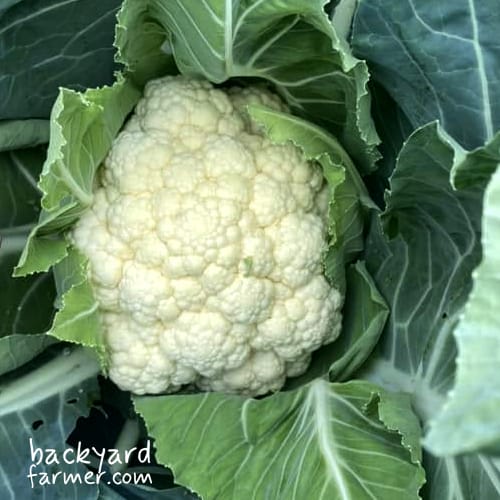
Cauliflower has a reputation for being one of the fussier brassicas, but most problems come from the same few things: poor timing, weak plants, interrupted growth, dry soil or pest damage.
The key is choosing the right variety for the season, planting into fertile ground and keeping growth steady with reliable moisture and early pest protection. This guide covers the simplest route for UK growers, along with the adjustments needed for winter and spring varieties.
What Matters Most When Growing Cauliflower
- Choose a cauliflower variety suited to the season you want to harvest.
- Start with strong, healthy young plants.
- Grow in fertile, firm soil in full sun.
- Avoid letting plants dry out or suffer repeated checks in growth.
- Give full-sized plants plenty of room.
- Protect plants from brassica pests from the start.
- Harvest while the head is firm and tightly packed.
Choose the Right Cauliflower for Your Harvest Season
Different cauliflower varieties are bred for different harvest periods, so choosing the type comes before choosing the sowing date.
| What you want | Best route |
|---|---|
| Straightforward first crop | Summer or autumn cauliflower |
| Earlier crop | Early varieties started under cover |
| Winter or spring harvest | Hardy winter/spring varieties |
| Autumn sowing | Only varieties specifically recommended for autumn sowing |
You can also compare cauliflower with other brassicas in the Plant Library before deciding what to grow.
Best Choice for Beginners
Summer and autumn cauliflowers are usually the easiest place to start. They fit into a normal UK growing season, mature faster than overwintering types and are available in plenty of reliable varieties.
Once you have chosen the harvest period, use the seed packet to confirm the exact sowing window.
When to Sow and Plant Cauliflower in the UK
Summer and Autumn Cauliflower
This is the simplest route for most gardeners.
- Sow mainly from March to May.
- Start earlier crops under cover if you want an earlier harvest.
- Plant out once seedlings are established, sturdy and hardened off.
- Harvest generally runs from summer into autumn, depending on the variety and sowing date.
Sowing a few batches several weeks apart can spread the harvest and reduce the risk of every plant maturing at once. Avoid sowing more plants than you can protect and water properly.
Winter and Spring Cauliflower
Hardy winter and spring varieties usually need sowing earlier than many beginners expect because they remain in the ground for much longer.
Late spring or early summer sowing can produce crops through winter and into spring, depending on the variety. These plants need to establish well before cold weather arrives, but they should not be allowed to become excessively large and soft before winter.
Check the packet for:
- the recommended sowing period
- whether plants need protection in severe weather
- the expected harvest months
- the mature spacing
Can You Sow Cauliflower in Autumn?
Yes, but only certain varieties are bred for autumn sowing and overwintering.
Do not treat September or October sowing as a general cauliflower method. Follow the sowing window on the seed packet, as autumn-sown varieties need enough time to establish before winter without necessarily producing a full head immediately.
Where to Grow Cauliflower
Cauliflower performs best where conditions stay consistent. A sunny, sheltered bed with fertile soil is usually more reliable than a position that alternates between drought and waterlogging.
Best Growing Conditions
| Factor | What works best |
|---|---|
| Light | Full sun |
| Soil | Fertile, moisture-retentive and free-draining |
| Soil structure | Firm rather than freshly loose and fluffy |
| Soil pH | Around 6.5 is a useful target |
| Exposure | Sheltered from strong winds where possible |
| Moisture | Consistent rather than alternating wet and dry |
Preparing the Ground
- Add compost or well-rotted organic matter ahead of planting where needed.
- Allow freshly worked soil time to settle.
- Firm the soil before planting rather than leaving it excessively loose.
- Remove perennial weeds before planting.
- Mulch after planting where useful to help retain moisture.
Where soil is acidic and clubroot is a known problem, correcting the pH can help reduce disease pressure. Follow a soil test and avoid adding lime without a clear reason.
Can You Grow Cauliflower in Raised Beds?
Yes. Raised beds work well provided they are fertile and do not dry out too quickly. Check moisture regularly in warm weather and mulch where useful.
Can You Grow Cauliflower in Pots?
Mini cauliflower varieties are much better suited to containers than full-sized types. Use a large pot with drainage, fertile compost and full sun, and pay close attention to watering.
How to Grow Cauliflower from Seed
Cauliflower is usually easiest to start in modules or trays. This protects young plants and lets you plant out strong seedlings with minimal root disturbance.
Sowing Cauliflower Step by Step
- Fill modules or trays with fresh seed compost.
- Sow seeds around 1–1.5cm deep.
- Cover lightly with compost.
- Water gently so the seeds are not displaced.
- Keep the compost moist but not waterlogged.
- Give seedlings plenty of light once they emerge.
- Grow them steadily without allowing them to become pot-bound or stressed.
Cauliflower seeds usually germinate best in cool to moderate conditions. Cold, wet compost can slow germination and encourage problems.
Why Modules Work Well
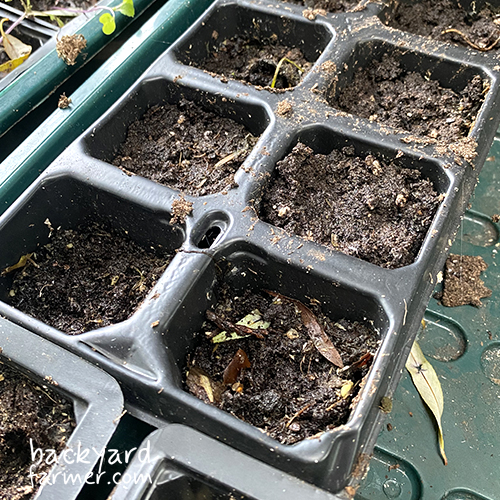
- Better control over germination
- Easier protection from slugs and pests
- Less root disturbance when planting
- Easier to select strong seedlings
What to Watch For
- seedlings becoming leggy or overcrowded
- compost drying out
- plants becoming pot-bound
- weak or stressed seedlings
Discarding weak seedlings is often better than planting them out and hoping they catch up. Cauliflower plants that start poorly are more likely to suffer a check in growth later.
Direct sowing is possible in a well-prepared bed, but it is less reliable. Young seedlings are vulnerable to slugs, weeds, dry soil and sudden weather changes, so raising plants under cover is usually the easier option.
How to Plant Out Cauliflower
Plant cauliflower once seedlings are sturdy, properly hardened off and have developed roughly five or six true leaves.
Harden them off over about a week by gradually exposing them to outdoor conditions. Start with a sheltered position and bring them back under cover if frost or severe weather is forecast.
Planting Out Step by Step
- Prepare and water the bed.
- Water the seedlings before removing them from their modules.
- Mark out the correct spacing.
- Set the seedling into the planting hole and firm the soil well around the root ball.
- Water thoroughly.
- Cover immediately with suitable mesh or netting.
After planting, check the seedlings regularly for the first few weeks and replace any that fail to establish.
Why Firm Planting Matters
Firm planting:
- improves root contact with the soil
- reduces wind-rock
- helps plants establish quickly
Do not leave a loose hollow around the stem where water can collect, but make sure the soil is firm enough to support the plant without compacting it excessively.
Cauliflower Spacing and Layout
Do not squeeze cauliflower plants together simply to fit more into the bed.
For standard summer and autumn cauliflower, allow roughly 45–60cm between plants, with rows around 60cm apart.
Large winter varieties may need considerably more room, while mini varieties can be grown much closer together. Always check the mature spacing on the seed packet because the final size varies considerably between varieties.
Why Spacing Matters
Overcrowded cauliflower plants compete for:
- light
- moisture
- nutrients
- airflow
This can lead to weaker plants, smaller heads and more difficult pest protection. Poor airflow can also leave foliage damp for longer, increasing the risk of disease.
Practical Layout Tips
- Check the mature spacing on the seed packet.
- Leave enough room to weed and inspect plants.
- Remember that small transplants become large brassicas.
- Consider planting smaller batches rather than one huge block.
Cauliflower is easier to care for when you can reach every plant without stepping on the surrounding soil or brushing against neighbouring leaves.
Plan Your Cauliflower Bed Before You Plant
Use the Allotment Planner to map the bed at the correct spacing before planting.
This is particularly useful with cauliflower because it is easy to underestimate how much room mature plants occupy. Planning the bed first makes it easier to see how many plants genuinely fit without overcrowding them.
How to Care for Cauliflower
Once cauliflower is established, the main aim is to avoid checks in growth. Regular attention is more useful than trying to correct problems after the plants have already been stressed.
Watering
Keep the soil consistently moist, watering deeply during dry periods rather than applying frequent shallow sprinkles. Mulch where useful if the bed dries quickly.
Repeated drought stress can interrupt growth and reduce head quality. Water the soil rather than simply wetting the foliage, and give newly planted crops extra attention until their roots spread into the surrounding soil.
Keep weeds down to reduce competition for water and nutrients.
Feeding
If the bed was prepared with fertile soil or organic matter, cauliflower may not need additional feeding. Where growth is weak on poorer soil, an appropriate nitrogen-rich feed can support young plants, but feeding will not correct drought, root damage or poor timing.
Follow the product instructions rather than applying feed by guesswork.
Protecting Cauliflower from Pests
Protect plants as soon as they are planted out rather than waiting for damage. For a practical way to cover your crops, see my garden netting guide, including simple frames, choosing mesh and securing the edges.
Fine insect mesh over hoops can help protect against:
- cabbage white butterflies and caterpillars
- pigeons
- cabbage root fly
- other flying brassica pests
Keep the mesh away from the foliage where possible and secure the edges firmly at ground level. Inspect the plants before covering them so that caterpillars or eggs are not trapped underneath.
Slugs and snails need separate control because mesh will not stop them. Check around young plants after wet weather and remove hiding places where practical. For a deeper look at the pests shared by most brassicas, see our guide to growing cabbage in the UK.
Protecting the Developing Head
As white cauliflower heads develop in strong summer sunshine, leaves can be folded loosely over the curd to help prevent yellowing. Do not tie them so tightly that air cannot circulate or rainwater becomes trapped.
For winter crops, leaves can also provide some protection during hard frost. Harvest promptly after severe weather if the head begins to deteriorate.
Common Cauliflower Problems
| Problem | Likely cause | What helps |
|---|---|---|
| Tiny or button-sized heads | Growth check, drought, temperature stress, weak plants or root disturbance | Strong plants and steady growth |
| Loose or separating heads | Over-maturity or stressful conditions | Check plants regularly and harvest promptly |
| Leaves badly eaten | Caterpillars, pigeons, slugs or snails | Protect early and inspect plants regularly |
| Young plants suddenly wilt | Dry soil or cabbage root fly | Check moisture and inspect roots |
| Plants remain stunted or wilt despite watering | Possible clubroot | Inspect roots and rotate brassicas |
| Plants fail to form a proper head | Wrong seasonal variety, repeated growth checks or poor growing conditions | Review variety, timing and growing conditions |
Why Cauliflowers Form Tiny Heads
This is usually described as buttoning.
It usually follows a check in growth caused by drought, temperature stress, weak or root-bound seedlings, root disturbance or poor timing.
Once a plant has buttoned, it rarely develops a full-sized head, so prevention is more effective than trying to correct it. Keep plants growing steadily, avoid root disturbance and do not allow young plants to dry out.
Clubroot
Clubroot can cause poor growth, wilting even when soil is moist, distorted or swollen roots, yellowing and weak foliage.
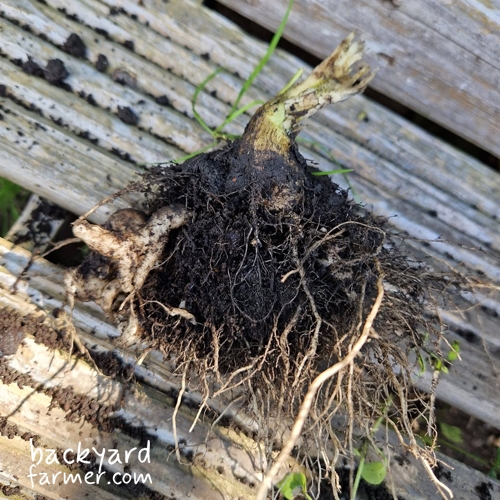
Lift an affected plant and inspect the roots if possible. Clubroot can survive in soil for many years, so avoid repeatedly growing brassicas in affected ground and use the longest practical rotation, while remembering that rotation alone will not eliminate established clubroot. Avoid moving contaminated soil between beds.
Where clubroot is a known problem, improving soil conditions and maintaining a suitable pH may reduce its impact, but it will not remove the disease from contaminated ground.
When and How to Harvest Cauliflower
Harvest cauliflower when the head is:
- firm
- tightly packed
- evenly formed
- still fresh and compact
Do not wait for the head to reach the largest possible size. A slightly smaller, firm head is usually better quality than an oversized head that has started to separate.
Once the surface begins loosening or separating, quality can deteriorate quickly. Check plants every day or two when heads are close to maturity, particularly during warm weather.
How to Harvest
- Check heads regularly once they begin forming.
- Cut the main stem with a sharp knife.
- Leave several outer leaves around the head for protection.
- Harvest slightly early rather than leaving a mature head too long.
How Long Does Cauliflower Take to Grow?
Many summer and autumn varieties crop roughly three to six months after sowing.
Winter and spring cauliflower can take considerably longer because plants may remain in the ground for much of the year.
Variety is therefore more useful than a single universal number. The seed packet should give an approximate maturity period, but weather, soil fertility and watering can all affect the final harvest date.
Storing Cauliflower
Cool the head soon after cutting and refrigerate if you are not using it immediately. Cauliflower is best eaten fresh but can be blanched and frozen for longer storage.
FAQ
Cauliflower is less forgiving than crops such as kale or beetroot, but it is perfectly achievable. Choosing the right seasonal variety, raising strong plants, keeping the soil consistently moist and protecting plants from pests makes the biggest difference.
March to May is the main sowing period for summer and autumn crops. Earlier, winter, spring and autumn-sown crops use different timings depending on variety, so always check the seed packet.
Yes, but mini varieties are much better suited to containers than large winter cauliflowers. Use a large container, fertile compost and keep it consistently watered.
Small or button-sized heads usually indicate that the plant suffered a check in growth while young. Drought, temperature stress, weak seedlings, root disturbance or poor growing conditions can all contribute.
A mature cauliflower head naturally starts to loosen and separate if it is left too long. Stress and warm weather can also speed this up, so harvest once the curd is firm and tightly packed.
Protection is strongly recommended in many UK gardens and allotments. Fine insect mesh can help keep out cabbage white butterflies, pigeons and several other brassica pests. Slugs and snails need separate control.