
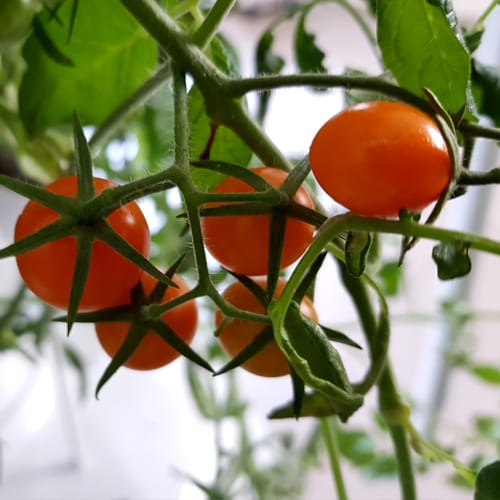
If you’re wondering how to grow tomatoes indoors using lights, this guide breaks it all down simply — from choosing the right setup to harvesting juicy homegrown fruits. Whether you’re short on outdoor space, eager to extend the growing season, or simply want more control over your plants, indoor tomato gardening is a rewarding and practical solution.
Exact Requirements for Growing Tomatoes Indoors
Growing tomatoes indoors successfully comes down to getting a few key details right. While tomato plants are fairly forgiving, providing clear, repeatable indoor growing conditions makes a noticeable difference to growth rate, flower set, and overall flavour — particularly when you’re learning how to grow tomatoes indoors with lights.
With that in mind, the guidelines below act as a reliable, no‑nonsense baseline for most indoor tomato plants, whether you’re growing cherry tomatoes indoors or compact bush varieties.
Indoor Tomato Temperature Requirements (Day & Night)
First of all, indoor tomato plants thrive on consistency. Although they can tolerate small fluctuations, ongoing temperature swings are one of the most common reasons tomatoes drop flowers, stretch, or produce weak growth indoors.
Ideal indoor tomato temperature range
- Daytime: 18–24°C (65–75°F)
- Night-time: 15–18°C (59–65°F)
Key points to remember
- If indoor temperatures regularly rise above 26°C (79°F), pollination rates often fall and fruit set can suffer.
- By contrast, temperatures below 12°C (54°F) slow growth and restrict nutrient uptake.
- Therefore, avoid placing indoor tomato plants near cold windows, draughts, or direct heat sources such as radiators.
Tomato Light Requirements Indoors (Light Hours & PPFD)
Above all else, light is the single most important factor when growing tomatoes indoors. Without adequate light intensity and duration, plants quickly become leggy, flowering slows down, and yields drop — even if watering and feeding are spot on.
Indoor tomato light hours
- 14–16 hours per day under full‑spectrum grow lights
- For best results, use a timer to keep lighting consistent from day to day
Recommended PPFD levels for indoor tomatoes
- Seedlings: 200–300 PPFD
- Vegetative growth: 400–600 PPFD
- Flowering & fruiting: 600–900 PPFD
Practical grow light tips
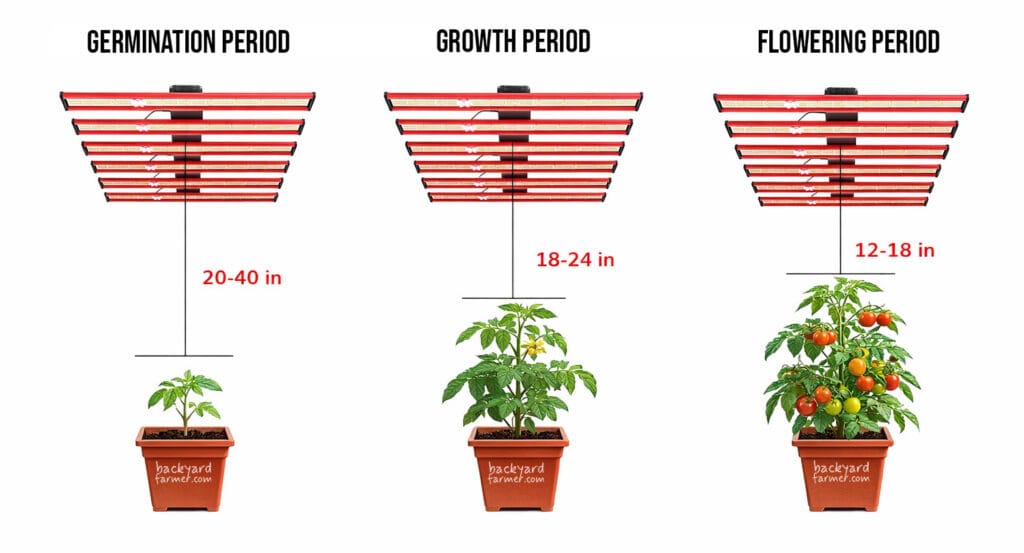
- Position LED grow lights 6–12 inches above the plant canopy
- Gradually increase light intensity as tomato plants mature
- Meanwhile, rotate pots weekly to ensure even light coverage across the foliage
Pot Size Requirements for Indoor Tomato Plants
Just as importantly, choosing the right pot size directly affects root development, nutrient uptake, and overall indoor tomato growth. In fact, undersized containers are one of the most common causes of stunted tomatoes when growing indoors.
Recommended pot sizes for indoor tomatoes
- Dwarf or micro varieties: 2–3 gallons (7–11 litres)
- Cherry tomatoes: 3–5 gallons (11–19 litres)
- Full‑size indeterminate tomatoes: 5–7 gallons (19–26 litres)
Potting tips for best results
- Always use containers with proper drainage holes
- Fabric pots or air pots improve oxygen flow to tomato roots
- However, avoid allowing plants to become root‑bound, as this often reduces flowering and fruit production
Indoor Tomato Watering & Feeding Schedule
When it comes to indoor tomato care, consistent watering matters far more than frequent watering. Tomato plants prefer even moisture, and overwatering remains one of the leading causes of yellow leaves, poor growth, and fungal problems indoors.
Indoor tomato watering guidelines
- Water when the top 2–3 cm (1 inch) of soil feels dry to the touch
- In most indoor setups, this usually means watering every 2–3 days, depending on temperature, pot size, and airflow
- Always water slowly, allowing excess moisture to drain freely from the bottom of the pot
Indoor tomato feeding schedule
- Seedlings: No fertiliser until the first true leaves appear
- Vegetative stage: Apply a balanced liquid fertiliser every 10–14 days
- Flowering & fruiting: Switch to a potassium‑rich tomato feed every 7–10 days to support fruit development
Optional supplements
Only if deficiency symptoms appear
Magnesium: Epsom salts can be used where magnesium deficiency has been identified.
In most cases, consistent watering and a suitable tomato feed are more important than adding supplements.
Indoor Tomato Growth Timeline (Seed to Harvest)
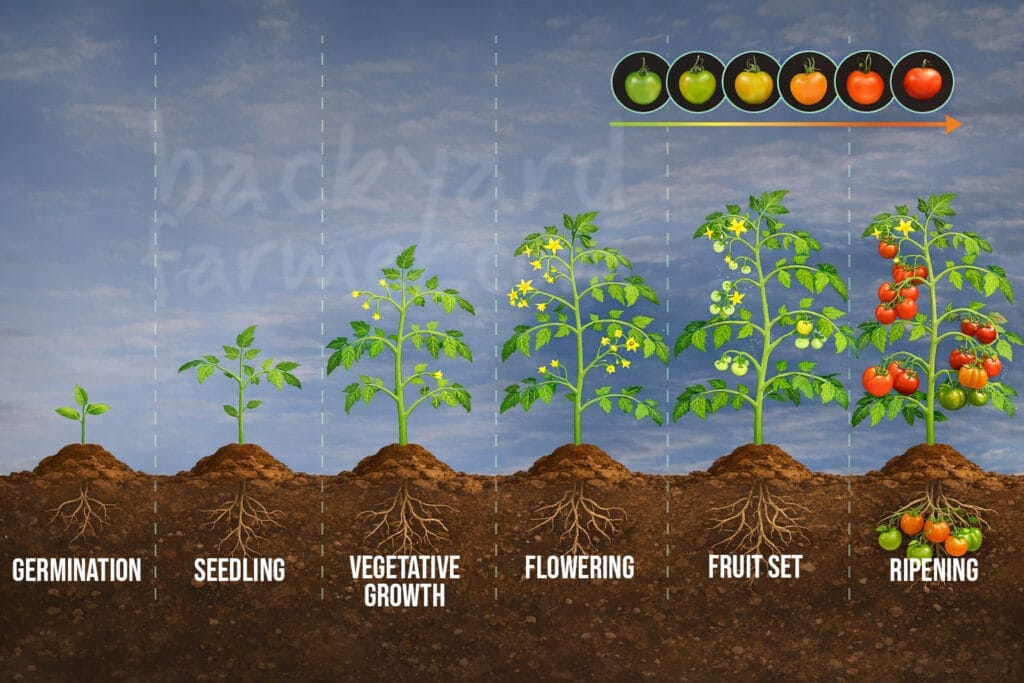
Once your growing conditions are dialled in, it helps to know what to expect at each stage of growth. This timeline gives you a realistic overview of how long indoor tomatoes take to grow under lights, from sowing seed to picking ripe fruit. Times can vary slightly by variety, but the stages below apply to most indoor tomato plants.
| Growth Stage | Typical Timeframe | What’s Happening | What You Should Do |
|---|---|---|---|
| Germination | 5–10 days | Seeds sprout and first shoots appear | Keep soil warm (20–25°C), lightly moist, and under gentle light |
| Seedling stage | 1–3 weeks | First true leaves develop | Increase light intensity, avoid overwatering, no feeding yet |
| Vegetative growth | 3–5 weeks | Rapid leaf and stem growth | Pot up if needed, begin light feeding, provide support |
| Flowering | 5–7 weeks | Yellow flowers open | Maintain stable temperatures and hand‑pollinate indoors |
| Fruit set | 6–9 weeks | Small green tomatoes form | Switch to potassium‑rich feed, keep watering consistent |
| Ripening & harvest | 8–12+ weeks | Fruit colours and sweetens | Harvest regularly to encourage continued fruiting |
Best Tomatoes for Growing Indoors
With so many tomato varieties available, it can be challenging to know where to start. Here is a list of compact tomato varieties perfect for container growing, especially if you are figuring out how to grow tomatoes indoors.
Best Tomato Varieties for Growing Indoors
| Variety | Growth habit | Approx. height | Best for | Notes |
|---|---|---|---|---|
| Tiny Temptations | Determinate, compact | 6–12 in | Very small spaces | Compact plant suited to containers |
| Tumbling Tom | Trailing | Variable | Hanging baskets | Trailing habit works well where floor space is limited |
| Red Alert | Determinate, bush | 12–18 in | Easy container growing | Early fruiting and little support needed |
| Gardener’s Delight | Indeterminate, vining | 6–8 ft | Cherry tomatoes | Sweet fruit and a prolific cropper |
| Sungold F1 | Indeterminate, vining | 6–8 ft | Sweet cherry tomatoes | Golden-orange fruit and heavy cropping |
| Shirley F1 | Indeterminate, vining | 6–8 ft | Reliable cropping | High yielding with good disease resistance |
| Crimson Plum F1 | Compact | 3–4 ft | Plum tomatoes | Blight resistant and useful for cooking |
| Crimson Cherry F1 | Indeterminate, vining | 6–8 ft | Disease resistance | Blight-resistant cherry type |
My Pick: Tomato ‘Tumbling Tom Red’
A compact bush tomato that’s well suited to containers and indoor growing. Tumbling Tom Red is easy to manage, doesn’t need side-shooting and produces plenty of sweet cherry tomatoes without taking over your growing space.
How to Grow Tomatoes Indoors: Step-by-Step Guide
Once you have the right lighting and growing conditions, tomatoes are straightforward to grow indoors. The main jobs are choosing a manageable variety, providing enough light, keeping watering consistent and helping the flowers pollinate.
1. Choose the Right Tomato Variety
Compact and dwarf tomatoes are easiest to manage indoors.

- Bush varieties need less pruning and support.
- Vining varieties can also be grown indoors but need staking and more space.
- Cherry tomatoes are particularly useful where growing space is limited.
Good options include Tiny Temptations, Red Alert and Crimson Cherry F1.
2. Sow the Seeds
Sow tomato seeds about ¼ inch deep in seed trays or small pots.
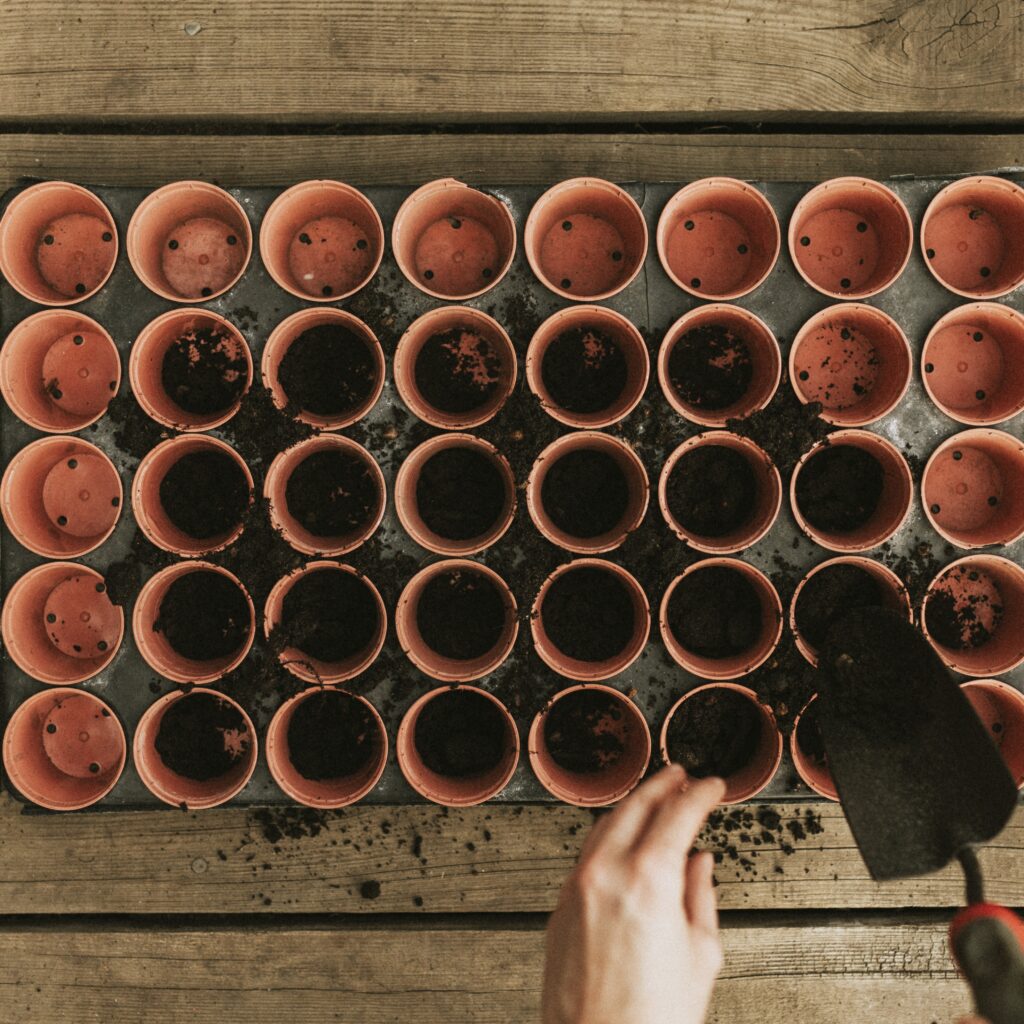
- Keep the compost moist but not waterlogged.
- Maintain a warm, consistent temperature while they germinate.
- A propagator or humidity dome can help prevent the compost drying out.
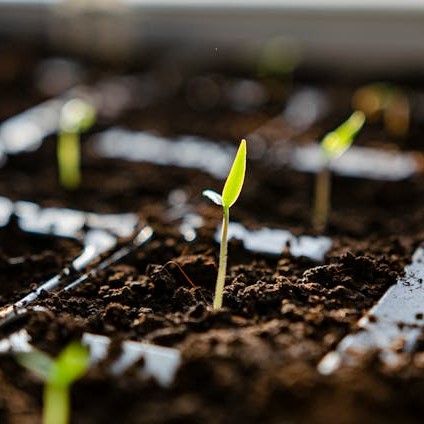
Seedlings will usually begin appearing within around 5–10 days.
3. Pot On the Seedlings
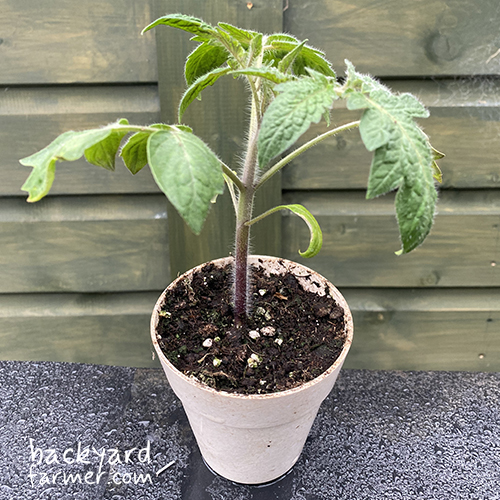
Once the seedlings have developed 3–4 true leaves, move them into larger pots.
Plant them slightly deeper than they were growing, burying part of the stem. Tomatoes can produce additional roots from the buried stem, helping establish a stronger plant.
Use a free-draining potting mix and containers with drainage holes.
4. Set Up the Grow Light
Indoor tomatoes need strong, consistent light to grow well and produce fruit.
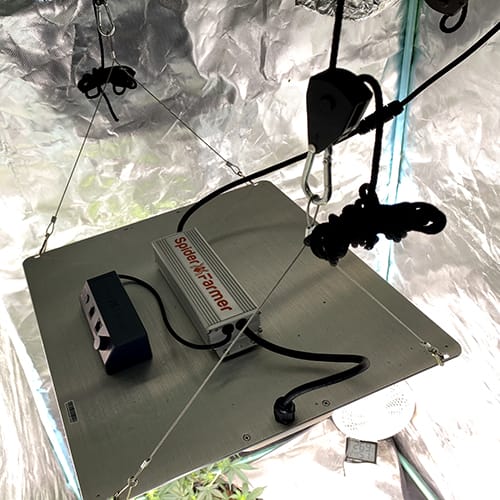
Use a full-spectrum LED grow light for around 14–16 hours per day, adjusting the distance from the plants as they grow.
I use LED grow lights for indoor crops, and larger lights such as the Mars Hydro TSW2000 can provide enough coverage for several plants.
Keep an eye on the plants themselves: stretching usually means they need more light, while bleaching or scorched leaves can indicate the light is too intense or too close.
5. Water and Feed Consistently
Tomatoes prefer evenly moist compost rather than constantly wet soil.
Check the compost regularly and water when the upper layer begins to dry. Always allow excess water to drain away.
Once the plants are established:
- use a balanced feed during early growth;
- switch to a potassium-rich tomato feed once flowering and fruiting begin;
- avoid large swings between very dry and very wet compost.
Consistent watering is particularly important once fruit begins developing.
6. Support and Prune the Plants
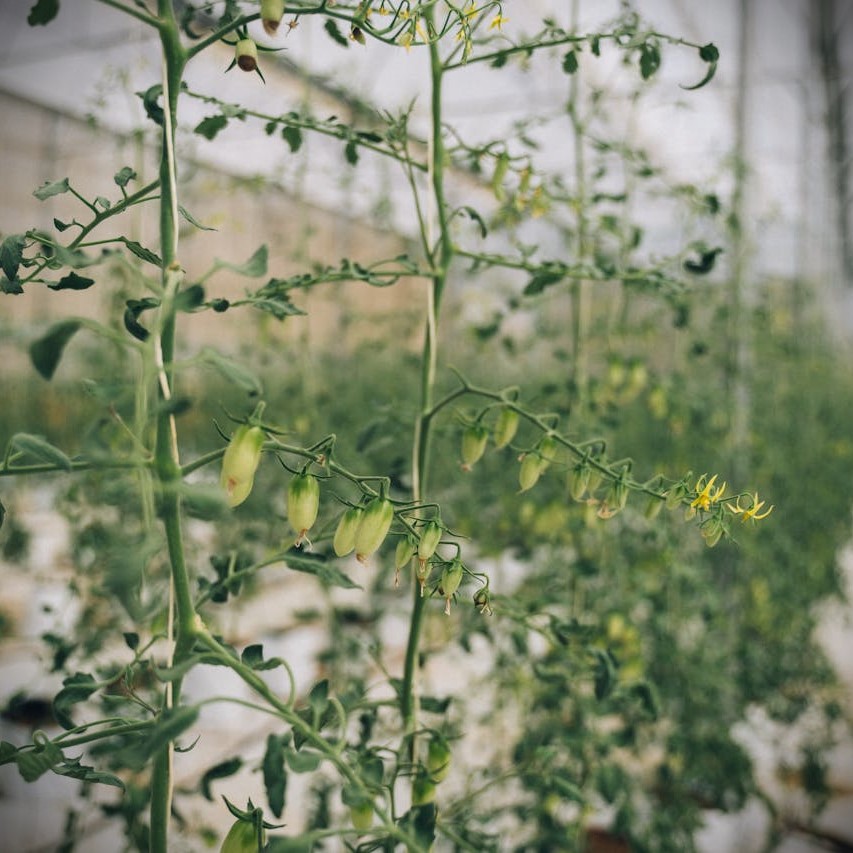
Tall or vining tomatoes will need support as they grow.
Use stakes, canes or cages to keep plants upright. For indeterminate varieties, regularly remove side shoots if you are training the plant as a cordon.
Compact bush varieties generally need much less pruning.
7. Pollinate the Flowers
Tomatoes are self-fertile, but indoors they may need some help moving pollen within the flower.
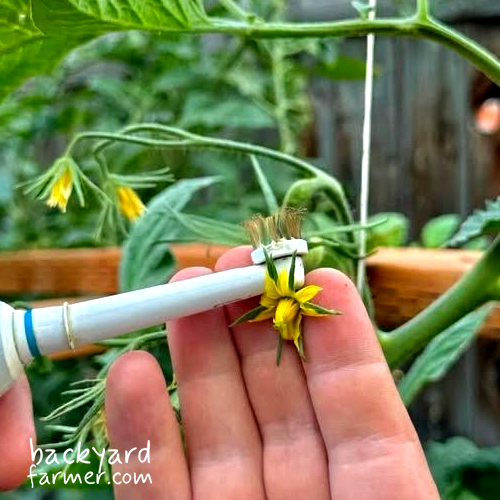
Every few days while the plants are flowering:
- gently shake the flower trusses;
- tap the supporting cane; or
- hold an electric toothbrush against the flower stem for a second or two to vibrate the flowers.
You don’t need to touch the petals with the toothbrush — just place it against the stem or flower truss. The vibration helps release the pollen.
A small fan can also help by creating gentle air movement around the plants.
8. Harvest Your Tomatoes
Harvest tomatoes once they have developed their mature colour and begin to soften slightly.
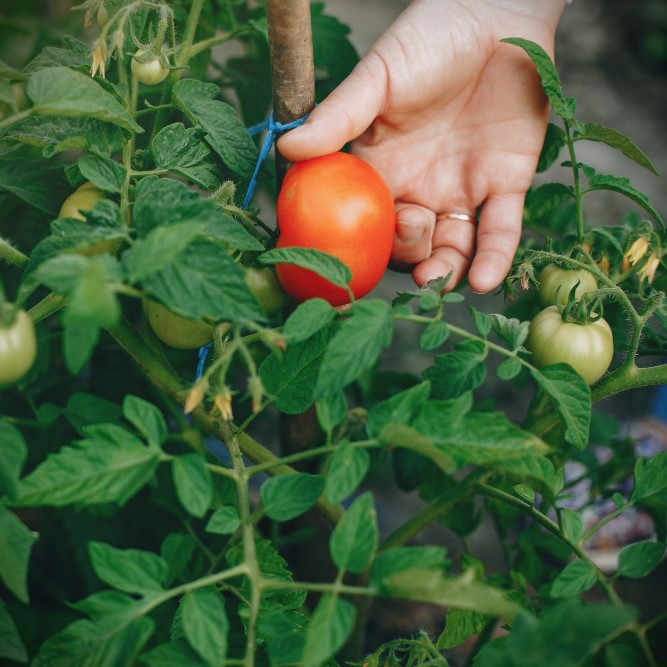
Pick ripe fruit regularly to keep the plant productive. Tomatoes that need another day or two to finish ripening can be left at room temperature.
Once you have a good harvest, see our guide to peeling tomatoes for sauces and cooking.
Indoor Tomato Plant Care: Troubleshooting Common Problems
Even with a good indoor setup, tomatoes can occasionally struggle. Use this table to identify the likely cause and the first thing to check.
| Problem | Likely cause | What to do |
|---|---|---|
| Yellow leaves | Overwatering, poor drainage or nutrient deficiency | Check drainage and allow the compost to dry slightly between waterings. If the plant is otherwise healthy but pale, review its feeding schedule. |
| Leggy seedlings | Insufficient light, excessive warmth or lights positioned too far away | Increase light intensity or move the grow light closer. Keep seedlings under light for around 14–16 hours per day. |
| Flowers dropping | Poor pollination, temperature swings or plant stress | Keep temperatures reasonably stable and help pollination by gently shaking the flowers or vibrating the flower truss with an electric toothbrush. |
| Small or tasteless fruit | Inconsistent watering, insufficient light or inadequate feeding | Keep moisture levels consistent, make sure the plant is receiving enough light and use a potassium-rich tomato feed once fruiting begins. |
| Fungal problems | Poor airflow, high humidity or persistently wet compost | Improve ventilation with a small fan, avoid wetting the foliage and make sure excess water can drain freely. |
| Aphids, whiteflies or spider mites | Pests introduced on plants or establishing in warm indoor conditions | Inspect leaves regularly, particularly the undersides, and deal with infestations early. Keep new plants separate before placing them beside established tomatoes. |
| Cracked tomatoes | Uneven watering, particularly heavy watering after a dry period | Keep the compost consistently moist rather than allowing it to become very dry and then soaking it. |
| Stunted growth | Root-bound plants, overcrowding, inadequate nutrition or poor growing conditions | Check the roots and pot size, give plants enough space and review lighting, watering and feeding. Repot if necessary. |
Most indoor tomato problems come back to light, watering, airflow or feeding, so check these basics before making major changes.
FAQs About Growing Tomatoes Indoors
Yes. Tomatoes can be grown indoors throughout the year if you provide enough artificial light and maintain suitable temperatures. Winter growing is possible, but the plants will depend much more heavily on grow lights because natural daylight is limited.
Indoor tomatoes generally need around 14–16 hours of strong light per day, followed by a period of darkness. A timer makes it much easier to maintain a consistent lighting schedule.
They can grow beside a very bright, sunny window during the brighter parts of the year, but producing a worthwhile crop is much harder without supplementary lighting. For reliable indoor growing, especially through autumn and winter, a suitable grow light is the better option.
Compact and dwarf tomatoes can be grown in relatively small containers, while larger varieties need considerably more root space. As a general rule, use at least a 2–3 gallon pot for compact cherry tomatoes and around 5 gallons or more for larger plants, always with good drainage.
Tomatoes are self-fertile, but indoor plants don’t benefit from the same wind and insect movement as outdoor plants. Gently shaking the flower trusses or touching an electric toothbrush against the stem of the flower cluster for a second or two can help release the pollen.
Leggy growth usually means the plants aren’t receiving enough light. Increase the light intensity or reduce the distance between the grow light and the plants, while staying within the manufacturer’s recommended hanging height.
Most tomatoes take roughly three to four months from sowing to the first ripe fruit, although this varies with the variety, temperature and growing conditions. Compact and early varieties will generally crop sooner than large indeterminate tomatoes.