
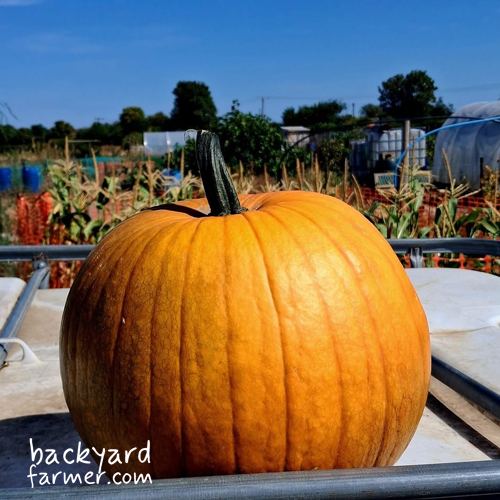
Once you’ve harvested a pumpkin, what you do in the first week has a major impact on how long it will last. In most cases, mature pumpkins store best when they are cured first, then kept somewhere cool, dry and well ventilated. Curing allows the skin to harden and small surface wounds to seal, which significantly reduces the risk of rot during storage.
In the UK, the main challenge is often not the pumpkins themselves, but finding a warm, dry place to cure them during a cool, wet autumn. Fortunately, you don’t need specialist equipment — just the right conditions and a bit of planning.
This guide explains practical, home-friendly methods for how to store pumpkins successfully after harvest.
If you’re unsure whether your pumpkin was fully mature when picked, see: When to Harvest Pumpkins in the UK
Quick Guide: Cure → Store → Check → Use
| Stage | Conditions | Approximate time |
|---|---|---|
| Cure | Warm, dry surface, well ventilated | 7–10 days |
| Store | 10–15°C, stable, airy | Until needed |
| Check | Inspect for soft spots or mould | Throughout storage |
Avoid letting pumpkins touch during long-term storage where possible.
What Does Curing a Pumpkin Mean?
Curing is one of the most misunderstood parts of post-harvest pumpkin care. It is important to be clear: curing is not ripening.
Instead, curing is a short conditioning period that happens after a pumpkin has already reached maturity. During this time, the outer skin (rind) continues to harden and minor surface damage begins to seal over.
Curing helps to:
- harden the rind for better protection
- dry and seal small cuts or scratches
- reduce the risk of fungal or bacterial decay
- improve overall storage life
However, curing cannot reliably fix a pumpkin that was harvested too early. If the fruit is significantly immature, it will not develop strong storage quality, even with ideal conditions.
If you suspect your pumpkin was picked too soon, you may also find this useful:
How to Ripen Pumpkins in the UK
How to Cure Pumpkins After Harvesting
Curing is simple, but consistency matters. The goal is to provide warmth, dryness and airflow for about a week.
1. Select the best pumpkins for storage
Start by choosing only sound fruit. Good candidates are:
- fully mature and well-coloured
- firm to the touch
- dry on the surface
- free from deep cuts or cracks
- ideally still attached to a healthy stalk
Any pumpkins with obvious damage are better used early rather than stored long term.
2. Provide warmth and ventilation
Ideal curing conditions are:
- around 27–29°C (ideal, not essential)
- for 7–10 days
- with steady airflow
- protected from rain and frost
Most UK growers will not achieve perfect temperatures, and that is fine. The key is to keep pumpkins as warm, dry and airy as realistically possible.
3. Keep the surface dry
Moisture is one of the fastest causes of rot.
- Brush off soil gently rather than scrubbing
- Avoid leaving pumpkins wet after rain
- If rinsed, dry thoroughly before curing
- Do not use disinfectants unless disease is clearly present
Routine chemical washing is unnecessary — clean, dry conditions are what matter most.
4. Give each pumpkin space
Airflow is essential during curing.
- Do not stack pumpkins
- Place them on slats, boards, racks or dry cardboard
- Keep them separated so air can circulate
- Turn them occasionally if one side is less exposed
Good spacing often makes the difference between long storage and early rot.
How to Cure Pumpkins in the UK
A British October is often cool, damp and unpredictable, which makes outdoor curing unreliable.
Instead, use sheltered indoor or semi-indoor spaces such as:
- greenhouse (short-term use only)
- polytunnel
- conservatory (if not too hot)
- bright porch
- spare room
- utility space
- sheltered indoor windowsill area
The key requirements are always the same:
- warmth (as much as realistically possible)
- dry surfaces
- good airflow
Sunlight is not essential. Warmth and ventilation matter far more, and strong direct sun can sometimes cause uneven drying or overheating.
Greenhouses can help during the day, but temperatures may drop sharply at night in autumn, so they should be used with caution.
Ideal target: ~27°C
Realistic UK approach: the warmest frost-free, dry, ventilated space available
How Do You Know When a Pumpkin Is Cured?
A pumpkin is usually ready to move into storage when:
- the rind feels noticeably harder
- a fingernail no longer easily pierces the skin
- small scratches have dried over
- the stalk is dry and firm
- the surface feels tougher and less soft
At this point, it should be moved into cooler storage. Leaving it in warm conditions too long can shorten its storage life.
How to Store Pumpkins Long Term
Once cured, pumpkins should be moved into a stable storage environment.
Best storage conditions
Aim for:
- 10–15°C
- stable temperatures (avoid swings)
- moderate humidity (not damp, not bone dry)
- good airflow
- protection from direct sunlight
- pumpkins kept apart
Cool does not mean cold. Temperatures below about 10°C for long periods can damage tissue, while warm indoor rooms will speed up deterioration.
Do pumpkins need to be stored in the dark?
Not necessarily. Darkness is helpful but not essential. A shaded or dim space is usually sufficient. More important is temperature stability, airflow and avoiding heat or frost.
Where Is the Best Place to Store Pumpkins in the UK?
| Location | Suitable? | Main consideration |
|---|---|---|
| Garage | Often | Must stay frost-free and dry |
| Shed | Sometimes | Risk of damp and cold nights |
| Pantry | Good | If cool and well ventilated |
| Utility room | Sometimes | Often too warm |
| Spare room | Good | Especially if unheated |
| Cellar | Good | Must not be damp |
| Greenhouse | Poor | Temperature fluctuates too much |
| Conservatory | Usually poor | Often too warm |
| Loft | Usually poor | Large temperature swings |
The most important rule is simple:
Judge the conditions, not the name of the room.
A cool, dry garage at 12°C can be ideal, while a damp or freezing one is not suitable.
How to Keep Pumpkins From Rotting After Picking
Most post-harvest losses are preventable. Rot usually develops due to moisture, damage and unstable conditions.
Common causes include:
- harvesting before full maturity
- frost damage before or after picking
- bruising or cuts during handling
- broken or missing stalks
- storing while still wet
- poor airflow
- pumpkins touching each other
- repeated condensation
- storage too warm or too cold
- hidden fungal or bacterial infection
To prevent problems:
- always cure sound pumpkins first
- keep surfaces dry
- avoid stacking or crowding
- ensure airflow around each fruit
- maintain stable temperatures
- inspect regularly
- remove failing pumpkins immediately
A key warning sign is repeated condensation, which usually indicates high humidity, poor airflow or temperature fluctuations.
If condensation keeps forming, adjust the storage environment rather than just wiping it off.
How Long Do Pumpkins Keep After Harvesting?
Storage life varies depending on variety and conditions.
As a general guide:
- 2–3 months is typical for many home-grown pumpkins
- 4–6 months is possible for strong storage varieties
- carving pumpkins usually store for less time than winter squash types
Key factors affecting longevity include:
- maturity at harvest
- rind thickness and condition
- stalk damage
- frost exposure
- curing quality
- storage temperature stability
- humidity levels
- disease presence
Good handling early on has more impact than any later storage adjustment.
What Should You Do With a Damaged Pumpkin?
Not all pumpkins are suitable for long storage. Sorting them early helps prevent rot spreading.
Store normally
- fully mature
- firm and dry
- undamaged
Use first
- minor bruising
- small healed surface marks
- light insect damage
- missing or damaged stalk (if otherwise sound)
Use or cook promptly
- fresh cuts or cracks
- frost-damaged fruit
- deeper bruising
Discard
- soft or spreading rot
- mould covering large areas
- leaking or collapsing fruit
- strong unpleasant smell
- advanced decay
Never store damaged pumpkins alongside healthy ones, as rot can spread quickly.
How to Store Pumpkins Until Halloween
If your goal is simply to keep pumpkins until Halloween, the process is straightforward:
- harvest only when fully mature
- cure them properly
- store at 10–15°C
- avoid warm indoor rooms for long periods
- check regularly for early decay
- delay carving until close to Halloween
A well-grown, properly cured pumpkin harvested in September should usually last until late October if stored correctly.
Once carved, however, a pumpkin becomes a short-term decoration rather than a storage crop.
Final Takeaway
Successful pumpkin storage follows a simple sequence:
Cure warm → store cool → keep dry and ventilated → check regularly.
You do not need perfect conditions, but you do need consistent ones. Most storage failures come from moisture, damage or temperature swings rather than the pumpkin itself.
For most UK growers, the biggest improvements come from:
- harvesting at full maturity
- avoiding frost and wet damage
- curing in a sheltered warm space
- storing at a stable 10–15°C
- keeping pumpkins separated
For next season, you may also find: How to Grow a Pumpkin for Halloween