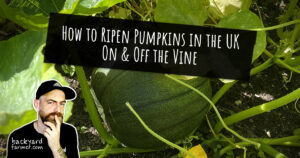

If you want pumpkins ready for Halloween in the UK, timing is everything. The most reliable approach is to sow seeds indoors in mid to late April, giving plants a long, warm growing season. Once the risk of frost has passed, usually late May to early June, young plants can be moved outside to continue developing in the soil.
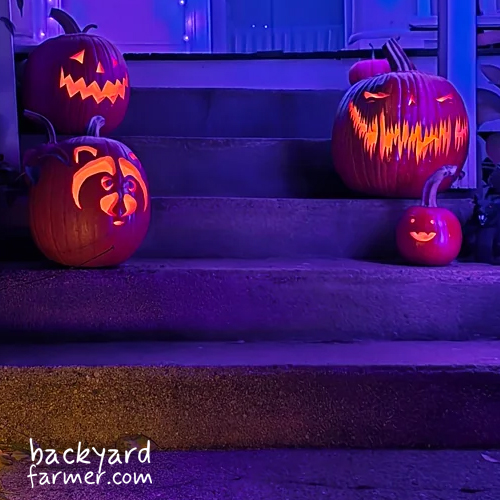
From there, the real goal is not just leafy growth, but getting strong fruit set during early to mid-summer, when conditions are warm enough for pumpkins to swell steadily. This early start is what gives them enough time to mature and develop a hard rind before autumn slows everything down.
Exact timing will always vary depending on your location, the weather in a given year, and the variety you choose. Instead of treating this as a fixed calendar, it helps to think of it as a seasonal race backwards from 31 October.
If pumpkins mature early, they can be stored safely. If they are late or still green, there are still options later in the season.
Halloween Pumpkin Growing Timeline
| Month | Main job |
|---|---|
| April | Sow seeds indoors |
| May | Grow seedlings and harden off |
| Late May–June | Plant outside after frost risk |
| June–July | Establish vines and encourage flowering |
| July–early August | Aim for successful fruit set |
| August | Main fruit development |
| September | Maturation and rind hardening |
| October | Harvest when ready / protect from wet and cold |
| 31 October | Carve and use |
These stages are guideposts rather than strict deadlines. A warm southern garden may run ahead, while cooler, exposed or northern gardens often run behind. Variety choice also plays a major role in how quickly pumpkins develop.
The key takeaway is simple: you are not growing to a fixed harvest date, you are growing towards a seasonal window.
When to Sow Pumpkins for Halloween
The safest and most reliable time to start pumpkins in the UK is mid to late April indoors. This early start is important because pumpkins need a long, warm growing season to reach full size before autumn conditions slow them down.
Starting indoors gives seedlings a protected environment where they can develop strong roots and leaves before facing outdoor conditions. Keep them in a warm, bright position and avoid letting them become cold or stressed, as this can slow early growth significantly.
It is also important not to start too early. If seeds are sown in February or early March, plants may become large and leggy before they can safely be planted outside, making them harder to manage and more vulnerable to setbacks.
Can You Sow Pumpkins Outside?
Yes, but only once the soil has warmed and frost risk has passed, usually from late May or early June in most of the UK. Direct sowing can work in warmer regions or good summers, but it reduces your margin for error if the season turns cool.
For a reliable Halloween harvest, starting indoors remains the safest option.
When to Plant Pumpkins Outside
Pumpkins should be planted outside only when all risk of frost has passed. In most UK gardens this falls between late May and early June, but local conditions matter more than the calendar.
Before planting out, seedlings should be hardened off gradually by exposing them to outdoor conditions for increasing periods over 7–10 days. This helps prevent shock when they are finally planted into the soil.
Choose a sunny, sheltered position, ideally with protection from strong winds. Pumpkins dislike cold soil and will stall quickly if temperatures drop.
Gardeners in Scotland, northern England, coastal areas or higher elevations should be especially cautious and wait for stable, mild conditions rather than rushing planting based on southern UK timings.
How Long Do Pumpkins Take to Grow?
There is no single fixed timeline for growing pumpkins. While you will often see figures like “100 days to maturity,” this should only be treated as a rough guide rather than a guarantee.
Growth speed depends on several factors:
- Pumpkin variety (some mature faster than others)
- Weather conditions throughout the season
- Soil quality and feeding
- Whether plants were started indoors or sown directly outside
Seed packet information is useful, but it is not always measured in exactly the same way between suppliers, so it should be used as a guide rather than a strict rule.
A key point for Halloween planning is that fruit development after pollination takes several weeks of warm weather. This is why pumpkins that set fruit in July are far more likely to be ready in time than those that only begin forming in late summer.
In short, early fruit set is just as important as total growing time.
Choose a Pumpkin That Fits the Deadline
Not all pumpkins are equally suited to a Halloween deadline. When choosing a variety, focus less on appearance and more on how reliably it will mature in a UK growing season.
Key things to consider include:
- Expected maturity time (check seed packet guidance)
- Suitability for UK conditions
- Final size and carving suitability
- Available garden space
- Plant vigour and spread
A few common types include:
- Traditional orange carving pumpkins (reliable, medium to large)
- Medium-sized varieties suited to most gardens
- Smaller pumpkins ideal for containers or limited space
The most important rule is simple:
Always prioritise maturity time and reliability over appearance when growing for Halloween.
For more detailed variety suggestions, see:
→ Best Pumpkins to Grow for Halloween UK
Get Fruit Set Early Enough
Pumpkins produce separate male and female flowers. Male flowers usually appear first, while female flowers are the ones that develop into fruit once pollinated.
For a successful Halloween crop, the critical stage is not flowering itself, but getting at least one healthy fruit set early enough in summer to allow full development before autumn slows growth.
Cool weather, lack of pollinators, or poor growing conditions can all delay or prevent fruit set, even if the plant looks healthy.
Flowers alone do not guarantee pumpkins — successful pollination and early fruit development are what matter.
What If You Have Flowers but No Pumpkins?
- Check that female flowers are present (they have a small swelling behind the bloom)
- Encourage pollinators by growing flowers nearby
- Hand pollination can help in poor weather conditions
For more detail, see:
→ Pumpkin Flowers but No Fruit / Pollination Problems
Keep the Plant Growing Strongly Through Summer
Once pumpkins are planted out, the focus shifts to maintaining strong, steady growth through the summer months.
Sun and Space
Pumpkins need a warm, sunny position and plenty of room to spread. Vines can grow several metres, so avoid overcrowding or shading from other plants.
Watering
Consistent watering is essential, especially during dry spells. Irregular watering can slow growth and reduce fruit size, particularly once pumpkins begin swelling.
Feeding
A fertile soil base is important at planting time. Once plants begin flowering and fruiting, light feeding can help support steady development and fruit expansion.
Keep Pumpkins Off Wet Soil
As fruit develops:
- Place pumpkins on wood, tiles, straw or similar material
- Prevent prolonged contact with damp soil
- This becomes especially important as autumn weather arrives
For full growing guidance, see: How to Grow Pumpkins in the UK
August to October: Help Existing Pumpkins Finish
By late summer, the focus shifts from growth to ripening. At this stage, the goal is to support existing fruit rather than encourage new development.
Keep plants healthy by:
- Maintaining regular watering while growth continues
- Avoiding waterlogging or drought stress
- Keeping fruit off wet ground
- Removing only leaves that are clearly blocking light or airflow
It is not necessary to strip back large amounts of foliage. Healthy leaves still play an important role in feeding and ripening the fruit.
Should You Remove Late Flowers or Tiny Pumpkins?
Very late flowers or newly forming fruit in late summer are unlikely to reach full maturity in time for Halloween. However, removing them is optional.
In most cases, it is better to focus the plant’s energy on fruit that is already well established rather than trying to force a single-fruit system.
Will My Pumpkin Be Ready for Halloween?
Good signs
- Fruit set occurred in midsummer
- Pumpkin is close to expected size
- Colour is beginning to develop
- Vine and stalk are starting to mature
More uncertain
- Fruit only formed recently
- Pumpkin is still small in early autumn
- Plant has suffered from poor weather or stress
If your pumpkin falls into the uncertain category, it may still develop, but timing becomes less predictable.
For more detail, see: When to Harvest Pumpkins in the UK
Am I Too Late to Grow a Pumpkin for Halloween?
| When you’re starting from seed | Halloween outlook |
|---|---|
| Mid–late April | Ideal UK window |
| Early–mid May | Good |
| Late May–early June | Still realistic |
| Mid June | Possible, but riskier |
| Late June | Increasingly unreliable |
| July | Generally too late for a dependable crop |
| August onward | Not realistic from seed |
These are not strict biological cut-offs, but practical risk bands based on UK growing conditions. A warm summer and fast variety can still succeed later than expected, while a cool season can slow even early plantings.
If you are starting from seed in July or August, do not rely on producing a mature Halloween pumpkin. Instead, assess any existing plants or fruit already in development.
What If Your Pumpkin Is Ready Too Early?
If your pumpkin ripens in September, it does not need to remain outside until Halloween. Once mature, it is often safer to harvest before autumn weather becomes wet and cold.
Properly cured pumpkins can store well for weeks or even months, meaning early harvest does not prevent a Halloween display.
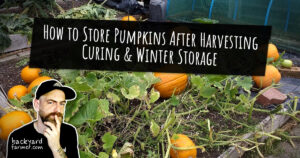
How to Cure & Store Pumpkins After Harvesting
What If Your Pumpkin Is Still Green?
If your pumpkin is still developing but the vine is healthy, it is usually best to leave it in place and allow it more time to mature.
However, as frost and wet weather approach, leaving fruit outside becomes riskier. Colour alone is not a reliable indicator of readiness, so judgement should be based on overall development and weather conditions.
How to Ripen Pumpkins in the UK: On & Off the Vine
Don’t Leave a Mature Pumpkin Out Just for Halloween
Halloween is the celebration date, not the harvest deadline. If a pumpkin is already mature and conditions are turning poor, it is better to harvest it rather than risk damage.
Frost, heavy rain and prolonged damp conditions can quickly ruin a fully grown pumpkin if it is left outside too long.
When to Harvest Pumpkins in the UK
Quick Halloween Pumpkin Checklist
- Sow indoors around mid–late April
- Plant outside after frost risk has passed
- Provide sun, warmth and space
- Water consistently during growth
- Watch for female flowers and fruit set
- Aim for fruit development in summer
- Keep pumpkins off wet soil
- Monitor progress through August and September
- Harvest when mature, not just on 31 October
- Cure or follow ripening guidance if needed
FAQs
Sow indoors in April, then plant outside in late May or early June once frost risk has passed. This gives the best chance of having mature pumpkins by October.
Yes, especially in early June. However, later planting reduces the time available for fruit to develop before autumn conditions slow growth.
Generally yes for seed starting in the UK. It is usually too late for reliable results unless you already have established plants.
Several weeks, depending on weather and variety. Warm conditions are essential for steady fruit development.
Yes, but choose compact varieties and use a very large container. Regular watering and feeding are essential for success.
Yes, most carving pumpkins are edible, but flavour and texture vary. Some are better for decoration than cooking.
Final Takeaway
The key to growing pumpkins for Halloween is not aiming for a specific harvest date, but starting early enough that fruit is already well developed before October arrives.
Mid to late April sowing gives most UK gardeners the best chance of success, followed by strong summer growth and early fruit set.
If pumpkins mature early, store them. If they run late, follow ripening guidance. The goal is always the same: a ready pumpkin for Halloween, not a last-minute race against the weather.
Growing → Harvest → Ripen if necessary → Cure/store → Halloween