

Peak Cluster is one of those local issues many people have now heard about, but far fewer feel they fully understand.
You may have seen route maps, planning notices, consultation events, local Facebook posts, campaign material, company statements or news coverage. However, once terms like carbon capture and storage, CO2 pipeline, industrial decarbonisation and offshore storage start appearing, it can quickly feel technical and remote.
At ground level, though, this is not just a technical project. It could affect real places: farmland, roads, hedgerows, footpaths, coastal areas, wildlife habitats and local communities.
So, what is Peak Cluster? In simple terms, it is a proposed carbon capture project that would collect carbon dioxide from cement and lime production, move it through a buried pipeline, and store it beneath the seabed in the East Irish Sea.
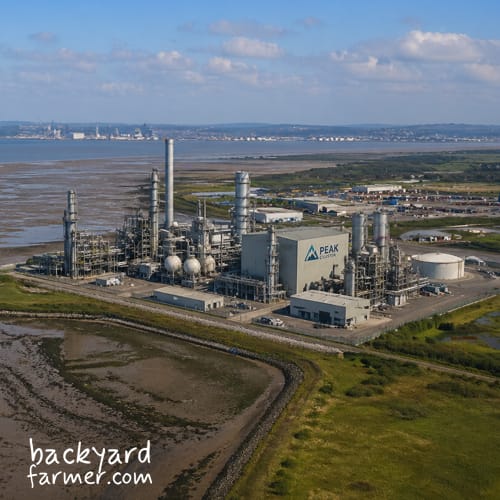
Supporters argue that Peak Cluster could help cut emissions from industries that are very difficult to clean up by other means. Critics and local residents, however, have raised concerns about land use, wildlife, construction disruption, consultation, safety and long-term accountability.
This guide explains what Peak Cluster is, how it would work, where it may go, why it is being proposed, and why it has become controversial.
It is not here to tell you what to think. It is here to make the project easier to understand, so you can form your own opinion based on facts rather than noise.
What Peak Cluster Actually Is
Peak Cluster is a proposed carbon capture and storage project, often shortened to CCS. It focuses on cement and lime production because these industries release large amounts of carbon dioxide as part of the manufacturing process.
The basic idea is simple enough. Instead of allowing CO₂ to leave industrial sites and enter the atmosphere, Peak Cluster would try to capture it at source. That CO₂ would then be compressed, moved through a new buried pipeline, and sent offshore for storage beneath the seabed in the East Irish Sea.
In simple terms: Peak Cluster is a plan to catch carbon dioxide from cement and lime plants, move it through pipelines, and store it underground rather than releasing it into the air.
However, this is not a small local development or a routine utility upgrade. It is a major industrial infrastructure project linked to the UK’s wider push to reduce emissions from heavy industry.
To make it work, the project would need capture equipment at industrial sites, a long pipeline network, above-ground infrastructure, construction access, maintenance access and a connection to offshore carbon storage.
That is why Peak Cluster sits in a difficult middle ground. Supporters see it as a practical way to reduce emissions from industries that are hard to clean up. Critics point out that it still means building major new infrastructure through real landscapes and communities.
That trade-off sits at the heart of the whole debate.
Why Cement and Lime Are So Hard to Decarbonise
To understand why Peak Cluster is being proposed, it helps to understand the problem it is trying to solve.
Cement and lime are used everywhere. They sit behind houses, roads, bridges, farms, drains, sea defences, public buildings and everyday infrastructure. Most of us use these materials without giving much thought to where they come from.
The difficulty is that cement and lime production can release a lot of carbon dioxide. Some emissions come from burning fuel to create heat, which is the easier part to understand. Cleaner fuels, efficiency improvements or electrification may help with that side of the problem.
However, cement and lime also release CO₂ through the chemical process itself. When limestone is heated, carbon dioxide is released as part of the reaction. So the issue is not only about what fuel is burned. It is built into the way these materials are made.
That is why cement and lime are often described as hard to decarbonise. Switching to renewable electricity does not remove all the emissions, because some of the CO₂ comes from the raw material and production process.
This is the main reason carbon capture is promoted for these sectors. Supporters argue that if society still needs cement, concrete and lime, then capturing CO₂ at source may be one of the most realistic ways to reduce emissions without shutting down production or moving it overseas.
However, that does not settle the debate. The question is not whether cement and lime produce emissions. They do. The question is whether a large carbon capture pipeline network is the best way to deal with them, and whether the benefits outweigh the local costs.
That is where Peak Cluster becomes more than a technical project. It becomes a question about land use, wildlife, climate policy and public accountability too.
How Peak Cluster Would Work Step by Step
The idea behind Peak Cluster is fairly simple, even if the engineering is not. The project would take CO₂ from large industrial sites, move it through a pipeline system, and send it offshore for storage beneath the seabed.
A useful way to picture it is:
Capture → Compress → Pipeline → Offshore storage
That looks tidy as a diagram. However, each stage brings its own questions about safety, land use, cost, monitoring and long-term responsibility.
Step 1: Capture the CO₂
The first stage would happen at the industrial sites themselves. These are not homes, farms or small workshops. They are major cement and lime plants.
At those sites, capture equipment would separate carbon dioxide from the gases produced during manufacturing. The aim is to catch the CO₂ before it reaches the atmosphere.
In plain English, Peak Cluster would try to deal with a large share of industrial carbon emissions at the factory gate, rather than after they have already entered the air.
However, this still depends on the capture technology working properly over time. Each site would need equipment, energy input, maintenance, monitoring and safety systems. So even before the pipeline is considered, there is already a lot of infrastructure involved.
Step 2: Compress and Move the CO₂
Once captured, the CO₂ would need to be prepared for transport. That usually means cleaning, drying and compressing it so it can move through a pipeline.
This is where the project starts to move from factory emissions into public land-use questions. A buried pipeline may sound less visible than an overhead structure, but it still needs a route, construction access, working areas, maintenance access and safety planning.
For local people, this is often where the proposal stops feeling abstract. A pipeline route can mean fields, roads, verges, footpaths, hedgerows, gardens, watercourses and coastal areas being assessed for possible works.
That is why the exact route matters so much. A line on a consultation map can look simple, but on the ground it crosses real places with real wildlife, drainage, soil, access and community concerns.
Step 3: Store It Beneath the Seabed
The final stage would be offshore storage. The captured CO₂ would be sent towards geological storage beneath the seabed in the East Irish Sea, linked to depleted gas field infrastructure.
Supporters argue that suitable underground rock formations can store CO₂ long term, keeping it out of the atmosphere. In broad terms, this is based on the same idea that oil and gas were held underground for millions of years.
However, long-term storage raises fair questions. People may want to know who monitors the site, how leaks would be detected, who remains responsible decades into the future, and what happens if companies, contracts or government policy change.
That does not mean the technology cannot work. It means the public should be shown clear evidence on safety, monitoring and accountability before being asked to accept the trade-offs.
Where Would Peak Cluster Be Built?
Peak Cluster is not proposed for one single site. It would connect several inland industrial locations to offshore carbon storage infrastructure.
Public project information describes a new buried onshore CO₂ pipeline running from cement and lime plants in Staffordshire and Derbyshire towards a Coastal Above Ground Installation, or AGI, near the north end of the Wirral. From there, the CO₂ would connect to offshore infrastructure and be stored beneath the East Irish Sea.
In broad terms, the project could affect parts of Staffordshire, Derbyshire, Cheshire, Wirral and the East Irish Sea.
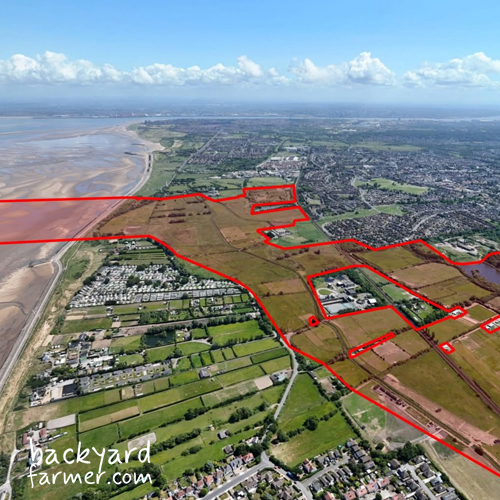
The onshore pipeline is expected to be around 200km long, although the final length depends on the chosen route. The offshore section is expected to be around 90km long. The proposed onshore pipeline could be up to 36 inches wide, but it would be buried once installed.
That matters because “buried” can make a pipeline sound almost invisible. In reality, getting it into the ground is still a major construction project.
For national planners, a pipeline can look like a line on a map. For people living near it, that line can mean fields, hedgerows, footpaths, roads, verges, gardens, watercourses, coastlines and wildlife corridors.
The Route Is Not Final Yet
One important point is that the final route has not been fixed.
At this stage, Peak Cluster has worked with a broad project boundary or search area. For much of the pipeline route, this has been described as about 300m wide. The construction corridor would be much narrower, but the final position of the pipeline within that wider area is still being refined.
So some people may see their area included in consultation maps without yet knowing exactly where the pipeline, access routes, construction areas or associated infrastructure would sit.
That is one reason consultation matters. Local knowledge can highlight things that national datasets may miss, such as wet ground, old hedgerows, informal wildlife corridors, public access routes, drainage issues, local flooding and sensitive habitats.
Why the Route Matters
The route matters because the impact is not only about the pipe itself.
A project like this can also need construction compounds, temporary working areas, access tracks, road crossings, watercourse crossings, material storage areas and long-term inspection access.
Even where land is restored afterwards, some features recover more slowly than others. A field may be reseeded fairly quickly, but old hedgerows, mature trees, species-rich grassland, soil structure and wetland edges can be much harder to replace properly.
That does not mean every part of the route would be equally sensitive. Some stretches may recover well if the work is planned and managed properly. But the detail matters: exactly where the pipeline goes, how it is built, when works take place, and how restoration is monitored afterwards.
Why This Matters for the Wirral and Coastal Wildlife
For the Wirral, the issue is not just that the pipeline may pass through parts of the borough. Public project information also refers to a proposed Coastal Above Ground Installation on the Wirral North Shore.
That gives the project a serious local coastal angle.
The north Wirral coast is more than open space on a map. It sits close to communities, walking routes, coastal habitats, bird feeding areas, farmland, drainage channels and wildlife corridors. Even where a site is not directly inside a protected area, nearby development can still raise questions about noise, lighting, traffic, disturbance, drainage and long-term land use.
This is where a project promoted as a climate solution needs careful local scrutiny. Cutting emissions matters. But so do wildlife, soil, water, landscape character and public access.
A fair test for Peak Cluster is not simply whether it can reduce industrial CO₂. It is whether it can do that while being transparent about local impacts, avoiding sensitive places where possible, and proving that any damage can genuinely be restored.
Why Is Peak Cluster Being Proposed?
Peak Cluster is being proposed because cement and lime production create emissions that are hard to remove with simpler measures alone.
In many parts of the economy, the route to lower emissions is fairly clear: use less fossil fuel, switch to renewable electricity, improve efficiency and reduce waste. Those things still matter. However, cement and lime are more complicated because some CO₂ comes from the chemistry of the production process itself.
That gives projects like Peak Cluster their main argument. Supporters say carbon capture is needed because cement and lime are still widely used, and the UK needs a way to reduce emissions from the industries that produce them.
There is also an economic argument. Cement, lime and related industries support jobs, supply chains, construction, infrastructure and manufacturing. If emissions rules tighten, supporters argue that UK producers need a practical way to keep operating without simply pushing production overseas.
This is often described as avoiding “deindustrialisation”. In plain English, that means trying to cut emissions without shutting down industries that still supply materials the country uses every day.
Peak Cluster also fits into the UK’s wider net zero strategy. The policy direction is to build low-carbon infrastructure around industrial areas, including carbon capture, pipelines, hydrogen projects and offshore CO₂ storage. The idea is that large emitters can connect to shared infrastructure, rather than each site having to solve the whole problem alone.
So Peak Cluster is not just an environmental project. It is also an industrial infrastructure project. It aims to keep existing industries running while changing what happens to some of their emissions.
That is where the debate begins. Supporters see this as realistic and necessary. Critics ask whether it locks the country into the same industrial model, whether public support is being used wisely, and whether enough attention is being given to reducing demand, using alternative materials and protecting local landscapes.
So the basic reason Peak Cluster is being proposed is clear: to reduce industrial CO₂ emissions from cement and lime production. The harder question is whether this particular project is the right way to do it, in the right places, with the right level of scrutiny.
Why Do People Support Peak Cluster?
The strongest argument in favour of Peak Cluster is that it is trying to deal with a real emissions problem.
Cement and lime are not fringe materials. They are part of everyday infrastructure, and they are difficult to replace quickly. Supporters argue that if the UK still needs these materials, it also needs a practical way to cut the emissions created when they are made.
From this point of view, Peak Cluster is not just about one pipeline. It is about keeping important industries running while reducing the amount of CO₂ they release into the atmosphere.
It Could Cut Industrial Emissions
Supporters say carbon capture could reduce emissions from industries that are hard to clean up by other means.
That matters because cement and lime production creates process emissions. In other words, some CO₂ is released by the chemistry of making the material, not only by burning fuel. That makes these industries harder to decarbonise than sectors where the main answer is cleaner electricity.
The argument is straightforward: if a plant keeps producing cement or lime, and that process releases CO₂, then capturing carbon at source may prevent a large amount of it from reaching the atmosphere.
This is the part of the project supporters tend to focus on most. They see carbon capture as a tool for dealing with emissions that are otherwise very difficult to avoid.
It Could Protect Jobs and Supply Chains
There is also a jobs and supply chain argument.
Cement, lime, quarrying, construction materials and related industries support workers, contractors, transport firms and wider local economies. If emissions rules tighten and UK producers cannot adapt, supporters argue that production could become less competitive or move abroad.
That would not necessarily reduce global emissions. It could simply move them somewhere else, while the UK still imports the same kinds of materials.
This is why supporters often frame projects like Peak Cluster as a way to avoid “decarbonisation by closure”. In plain English, they want to cut emissions without shutting down the industries that supply materials the country still uses.
That argument will make sense to many people, especially in areas where industrial jobs and local supply chains still matter.
It Could Support UK Manufacturing
A related argument is that the UK should keep making essential materials rather than becoming more dependent on imports.
Construction still needs cement, concrete, lime and other mineral products. Farms, roads, sea defences, homes, public buildings and drainage systems all rely on them in one way or another.
Supporters argue that if the UK wants cleaner construction, it should invest in cleaner production at home rather than outsourcing the problem.
That does not answer every concern about the project. However, it does explain why government and industry often present carbon capture as part of a wider industrial strategy, not just an environmental measure.
It Could Bring Investment and Infrastructure
Large projects like Peak Cluster can also attract investment, contracts and skilled work.
Supporters may see this as a chance to build low-carbon infrastructure around existing industrial regions. That could include capture equipment, pipeline engineering, monitoring systems, offshore storage links, maintenance work and specialist services.
In that sense, Peak Cluster is being presented as part of a bigger transition: moving from older high-emission industry toward lower-carbon industrial systems.
The fair pro-project view is this: society still uses cement and lime, these industries create difficult emissions, and carbon capture may offer a practical way to reduce those emissions while protecting jobs and supply chains.
The fair question back is whether that practical argument is strong enough to justify the route, land take, public support, local disruption and long-term responsibilities that come with it.
Why Is Peak Cluster Controversial?
Peak Cluster is controversial because it brings two real concerns into conflict.
On one side, there is the need to cut emissions from heavy industry. On the other, there is the impact of building major infrastructure through real landscapes, farms, villages, coastlines and wildlife habitats.
That is why this debate should not be reduced to “climate action versus people who object”. Many of the people raising concerns care deeply about climate change, wildlife and the future of the countryside. Their question is more practical: is this the right project, in the right place, with enough transparency and long-term accountability?
Land Use and Construction Impact
One of the biggest concerns is the physical impact of building the pipeline and associated infrastructure.
Even though the pipeline would be buried once installed, it still has to be built. That can mean temporary working corridors, access routes, construction compounds, road crossings, watercourse crossings and areas where soil is stripped, stored and replaced.
The word “temporary” can sound reassuring. However, anyone who works with land knows disturbance can leave a mark long after the machinery has gone. Soil structure can be damaged. Drainage can change. Old hedgerows can take years to recover properly. Species-rich grassland, mature trees and wetland edges are not things you can simply put back like-for-like.
That does not mean every part of the route would be equally sensitive. Some land may recover well if the work is planned and managed properly. But the detail matters: where the route goes, when work happens, how wide the working area is, and how restoration is checked afterwards.
Wildlife and Habitat Concerns
Wildlife concerns are another major reason people are questioning the project.
A pipeline route can cross or pass close to hedgerows, ditches, ponds, grassland, farmland, coastal areas, waterways and wildlife corridors. These features may look ordinary on a map, but they can be important for birds, bats, amphibians, invertebrates, small mammals and plant life.
The timing of construction also matters. Work during breeding seasons, migration periods or wet weather can have very different impacts compared with work carried out at less sensitive times of year.
This is especially relevant around coastal areas such as the north Wirral shore, where wildlife, public access and development pressure already sit close together. Even if a site is not directly inside a protected area, nearby noise, lighting, traffic, drainage changes and disturbance can still matter.
A project can be linked to climate goals and still raise serious local wildlife questions. Those two things can be true at the same time.
Pipeline Safety and Emergency Planning
Another concern is safety, particularly around CO₂ transport.
Carbon dioxide is not flammable like natural gas, so it can sound less risky. However, in high concentrations it can displace oxygen. Because CO₂ is heavier than air, a large release can collect in low-lying areas, hollows, ditches, basements, dips in roads or still-weather conditions.
That does not mean a pipeline failure is likely. But it does mean local people are entitled to ask serious questions about modelling, monitoring, emergency planning and public information.
Useful questions include: how would a leak be detected, how quickly would the system shut down, who would be notified, what would emergency services be told, and how would nearby residents know what to do?
For a project of this scale, trust depends not only on saying the pipeline will be safe. It depends on showing clearly how risks have been assessed and how local responders would be prepared.
Trust and Consultation
Consultation is another sticking point in many infrastructure projects.
People are more likely to trust a process when information is clear, accessible and open to challenge. They are less likely to trust it when documents are technical, maps are hard to interpret, or decisions feel like they have already been made.
With Peak Cluster, many residents will want to know whether consultation is genuinely shaping the route and design, or whether it is mainly explaining a preferred plan.
That is not a minor issue. Local people often know things desktop studies can miss: which fields flood, where wildlife moves, which lanes already struggle with traffic, where old hedges matter, and how land is actually used day to day.
A good consultation should not treat that knowledge as an inconvenience. It should use it.
Public Money, Private Benefit and Accountability
Peak Cluster also raises wider questions about public support and private benefit.
Large carbon capture projects often involve a mix of public funding, private investment, industrial partners and long-term infrastructure contracts. That does not automatically make them wrong. Many major infrastructure projects are delivered this way.
However, when public money or public policy support is involved, people have a right to ask who benefits, who carries the risk, and who remains responsible over the long term.
If infrastructure is built to help private industries keep operating, the public should be able to see what benefits are being claimed, what safeguards are in place, and what happens if costs, risks or responsibilities change later.
The Wider Carbon Capture Debate
Finally, Peak Cluster sits inside a bigger debate about carbon capture itself.
Supporters argue that CCS is needed for hard-to-decarbonise industries, especially where emissions come from the production process. They see it as a practical tool for reducing industrial carbon while keeping essential materials in production.
Critics argue that CCS can protect existing industrial systems rather than changing them. They worry it may delay deeper changes, such as using less concrete, reusing buildings, choosing alternative materials, reducing waste and changing how we plan development.
Both arguments deserve to be understood properly.
The question is not simply “is carbon capture good or bad?” A better question is: where is it genuinely needed, who benefits, what alternatives have been considered, and what does it cost locally?
That is why Peak Cluster needs clear public scrutiny. Not because every part of the project is automatically wrong, but because the trade-offs are too important to hide behind technical language.
Who Is Behind Peak Cluster?
Peak Cluster is not best understood as one simple company with one simple owner. It is better described as a public-private infrastructure project involving project companies, industrial producers, infrastructure developers, public investment and offshore carbon storage partners.
That matters because “who is behind Peak Cluster?” is not answered by one name alone. The project sits inside a wider structure built around industrial decarbonisation.
Peak Cluster Limited
Peak Cluster Limited is the project company publicly linked to the scheme. Companies House records show it was incorporated in November 2023 and remains an active private limited company.
Company filings are useful because they show the legal structure, directors and control records. However, they do not always explain the full practical role of every organisation involved in a major infrastructure project.
In plain English, the company record tells you who the legal entity is. It does not, by itself, tell you everything about how the project is funded, promoted, developed or delivered.
National Wealth Fund
The National Wealth Fund announced a £28.6 million equity investment in Peak Cluster in July 2025. Public statements describe this as development funding for the proposed CO₂ transportation pipeline.
That investment formed part of a larger equity raise, with additional private investment linked to industrial producers and project partners.
This matters because Peak Cluster is not simply a private company acting alone. It includes public-backed investment and is being presented as part of the UK’s wider industrial decarbonisation strategy.
That does not automatically make the project good or bad. However, it does mean the public has a reasonable interest in asking what benefits are being claimed, who carries the risks, and how long-term accountability will work.
Progressive Energy and Summit Energy Evolution
Progressive Energy is publicly associated with Peak Cluster and has been involved in several low-carbon infrastructure projects, including hydrogen and carbon capture schemes.
Public investment information also refers to Progressive Energy Peak Ltd as part of a joint venture with Summit Energy Evolution Ltd, which is part of Sumitomo Corporation.
In practical terms, these organisations sit on the development and infrastructure side of the project. Their role is different from the cement and lime producers, whose emissions are the reason the project exists in the first place.
Cement and Lime Producers
The industrial side of Peak Cluster is centred on cement and lime production. Public National Wealth Fund material names Tarmac, Breedon, Holcim and SigmaRoc among the cement and lime producers involved in the investment structure.
These companies matter because they represent the industries the project is designed to decarbonise. The basic argument is that their plants produce CO₂ that is difficult to remove through simpler measures alone, so carbon capture is being proposed as a way to reduce those emissions while keeping production in the UK.
Project partner names can change over time because of corporate changes, ownership changes, branding and project development. So it is worth checking the latest public project material and official investment statements before publishing.
Spirit Energy and Morecambe Net Zero
Peak Cluster also connects to offshore carbon storage through Spirit Energy’s Morecambe Net Zero project.
The aim is for captured CO₂ to be transported offshore and stored in depleted gas fields beneath the East Irish Sea. So Peak Cluster is not only an onshore pipeline project. It also depends on offshore storage infrastructure, regulation and long-term monitoring.
That wider connection matters because many local discussions focus on the pipeline route. But the full system also includes capture equipment, compression, transport, offshore storage and long-term responsibility for the stored CO₂.
David Parkin’s Public Role
David Parkin is publicly associated with Peak Cluster and has been described as chair of the project. Companies House records show that he resigned as a director of Peak Cluster Limited in July 2025.
That distinction matters. A company director role is a legal position within a company. A chair, spokesperson or wider project leadership role can be separate from that. So it is safest to describe what the public record shows without assuming that a change in directorship means someone has left the wider project entirely.
For more background, see: Who Is Dave Parkin? Peak Cluster Explained
Why This Structure Matters
Understanding who is involved does not prove good or bad intent. However, it does help readers understand the incentives behind the project.
Peak Cluster is being presented as a way to reduce emissions, protect industrial production and build new low-carbon infrastructure. At the same time, it involves public investment, private companies, land use, local disruption and long-term environmental responsibility.
That is why transparency matters. If the project is asking communities to accept disruption and risk in the name of climate action, people deserve to understand who is involved, who benefits, who pays, and who remains accountable in the long run.
What Happens Next?
Peak Cluster is still moving through the planning and consultation process. It has not simply been approved and built.
At the time of writing, the project is in the pre-application stage for a Development Consent Order, often shortened to DCO. This is the planning route used for Nationally Significant Infrastructure Projects, or NSIPs.
In plain English, the final decision will not be made by one local council in the normal way. The application would go through the Planning Inspectorate process, with the final decision made by the relevant Secretary of State.
The first phase of public consultation began in January 2026 and closed in February 2026. The project also announced an additional Wirral engagement phase running from 31 March to 8 May 2026, with further consultation expected as the design develops.
That timing matters. If the final route, construction approach, environmental assessments and site designs are still being refined, this is exactly when local evidence, questions and objections need to be taken seriously.
Check the Official Documents
Anyone affected by the project should start with the official documents, even if they are not always easy reading.
The most useful documents are likely to include consultation material, route maps, project overview documents, environmental assessment material, local authority updates, Planning Inspectorate pages and future DCO documents once submitted.
This is not just box-ticking. The details matter. A short project summary may say the pipeline will be buried and land restored afterwards. However, the maps, environmental documents and construction plans should show where work may happen, what habitats may be crossed, what temporary land take is needed, and how impacts would be managed.
If you live near the route, it is worth looking at the map carefully and matching it to what you know on the ground. Local knowledge can be extremely useful, especially around flooding, drainage, old hedgerows, wildlife movement, public footpaths and seasonal land use.
What Local People Can Still Ask
The most useful questions are specific ones. General support or opposition has its place, but detailed questions are harder to brush aside.
Local people may want to ask:
- Where exactly would the pipeline go near my area?
- How wide would the working corridor be during construction?
- What land would be needed temporarily or permanently?
- Which hedgerows, trees, ponds, ditches, streams or wildlife corridors could be affected?
- What ecological surveys have been completed, and when were they carried out?
- How would soil be stripped, stored, protected and replaced?
- What happens if land does not recover properly afterwards?
- How would construction traffic affect local lanes and access?
- How often would above-ground installations need maintenance access?
- What emergency planning has been done for a CO₂ pipeline release?
- Who monitors the project after construction?
- Who is accountable if something goes wrong years later?
- What alternatives to this route or design were considered?
These are not unreasonable questions. They are the basic questions any community should ask when a major infrastructure project is proposed through land, farms, villages, coastlines or wildlife habitats.
Watch for the Next Stage
The next important stage will be further consultation and, eventually, the formal DCO application.
By that point, the project should have more detailed information on route choice, construction methods, above-ground sites, environmental effects, mitigation, safety, monitoring and long-term management.
For local residents, wildlife groups and landowners, the key is not to wait until everything feels settled. Once the formal application is submitted, the process becomes more structured and harder to influence.
The practical advice is simple: read the documents, save copies of relevant maps, make notes on local concerns, take photographs where useful, and respond through the official channels when consultation is open.
If Peak Cluster is going to affect real landscapes, the people who know those landscapes should be part of the evidence base.
Common Questions About Peak Cluster
What is Peak Cluster?
Peak Cluster is a proposed carbon capture and storage project. It would collect CO₂ from cement and lime production, move it through a buried pipeline, and send it offshore for storage beneath the East Irish Sea.
What is the Peak Cluster pipeline?
The Peak Cluster pipeline is the proposed transport system for captured carbon dioxide. Instead of being released at industrial sites, the CO₂ would be compressed and moved through a buried pipeline towards offshore storage.
Where would the Peak Cluster pipeline go?
Public project information links the proposed pipeline to cement and lime sites in Staffordshire and Derbyshire, with a route running through parts of Cheshire and towards the north Wirral coast. From there, the CO₂ would connect to offshore infrastructure in the East Irish Sea.
Why is Peak Cluster being proposed?
Peak Cluster is being proposed to reduce emissions from cement and lime production. These industries are difficult to decarbonise because some CO₂ is released by the chemical process of making the materials, not just by burning fuel.
Why are people worried about Peak Cluster?
People are worried about land use, wildlife impact, construction disruption, pipeline safety, consultation, public funding and long-term accountability. Many concerns are not about whether emissions should be reduced. They are about whether this is the right way to do it.
Is Peak Cluster approved yet?
At the time of writing, Peak Cluster is still in the pre-application stage for a Development Consent Order. That means it has not yet received final consent. Because planning status can change, readers should check the latest official documents before making a formal response.
Who decides whether Peak Cluster goes ahead?
Because the project is being treated as a Nationally Significant Infrastructure Project, the application would go through the Planning Inspectorate process. The final decision would be made by the relevant Secretary of State, rather than by one local council in the normal planning process.
How can local people respond?
Local people can respond through official consultation stages, read route maps, check local authority updates, follow the Planning Inspectorate project page, and submit specific comments about land, wildlife, access, safety, drainage, construction and community impact.
Final Thoughts
Peak Cluster sits right in the middle of a difficult modern problem.
The UK needs to reduce emissions from industries that are genuinely hard to decarbonise. Cement and lime are not easy sectors to clean up, and pretending otherwise does not help anyone.
However, a climate project does not automatically get a free pass just because it is linked to net zero. If a scheme needs major new pipeline infrastructure, construction corridors, above-ground sites, public investment and long-term storage, then it also needs clear public scrutiny.
That is especially true when real landscapes are involved. Fields, hedgerows, footpaths, waterways, coastlines and wildlife habitats are not empty spaces waiting for infrastructure. They are living places, and local people often understand them in ways a project map never fully captures.
The most balanced way to look at Peak Cluster is this: it may be trying to solve a real industrial emissions problem, but it also raises serious questions about land use, wildlife, safety, public money and long-term accountability.
That does not mean people have to be automatically for it or against it. But it does mean they should be given clear information before being asked to accept the trade-offs.
If Peak Cluster goes ahead, it should do so with strong evidence, transparent consultation, proper environmental safeguards, and long-term accountability that local people can actually understand.
The more clearly people understand what is being proposed, the better chance they have of forming an opinion based on facts rather than noise.