
The tiny creatures crawling over a bee are usually mites, but their importance depends on the type of bee. Small mites clustered on a bumblebee are often hitchhikers travelling between flowers and nests rather than feeding on the adult. A flat, reddish-brown mite on a honey bee may be Varroa, a serious parasite that weakens bees and spreads damaging viruses through the colony. Leave an active bumblebee alone; suspected Varroa must be managed at hive level by a beekeeper.
Why Do Bumblebees Have Mites?
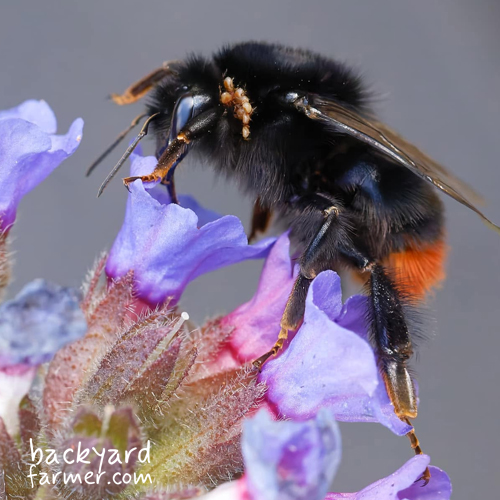
Many mites seen on bumblebees are phoretic, meaning they use the adult bee for transport rather than feeding on it. They often gather around the thorax, beneath the wings, at the leg bases or among the abdominal hairs, where they can hold on securely.
The mites travel between flowers and nests and may transfer to another bumblebee along the way. Young queens are especially useful carriers because they survive winter and establish new colonies in spring.
Inside the nest, different species may feed on pollen, wax, fungi, debris or other small organisms. Parasitellus fucorum is one example associated with bumblebees. The visible transport stage usually does not feed directly on the adult, so a few mites are generally passengers rather than parasites.
Are Mites on Bumblebees Harmful?
Usually not in small numbers. Most visible mites are using the bumblebee for transport, and some may even benefit the nest by feeding on fungi, other mites or small organisms.
However, not every species is harmless. Some consume stored pollen, while the effects of others are less clear. An exceptionally heavy covering may also hinder movement or flight through its combined weight.
Bumblebees can carry internal mites too, but these would not appear as visible dots on the body. Exact identification is difficult from a photograph, so visibly carried mites are best described as usually of little concern, rather than always harmless.
How Are Varroa Mites Different?
Varroa destructor is a serious parasite of honey bees, rather than one of the transport mites commonly seen on bumblebees. It can weaken individual bees and threaten the health of the whole colony.
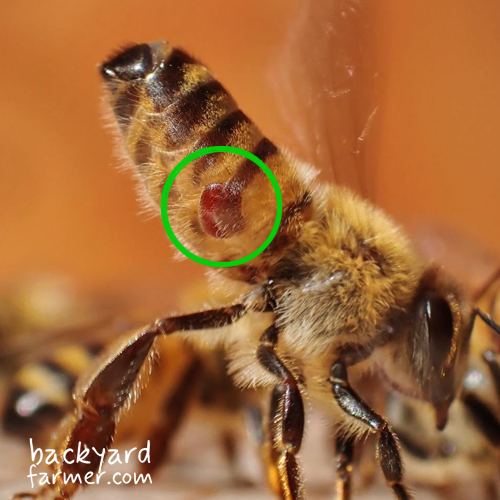
Adult female Varroa mites are:
- Flattened and oval
- Reddish-brown
- About 1.6 mm wide by 1.1 mm long
- Broader than they are long
They may hide beneath the bee’s abdominal plates or between body segments, making them difficult to spot.
Varroa reproduces inside sealed honey-bee brood cells and feeds mainly on fat-body tissue, weakening developing and adult bees. It also spreads damaging viruses, particularly deformed wing virus. Heavy infestations may be linked with deformed wings, shortened abdomens, patchy brood and declining colony strength.
Varroa is widespread across most of the UK. However, one visible mite only confirms exposure; it does not show how badly the colony is affected. This is a hive-level problem that must be monitored and managed by a beekeeper.
What About Mites on Solitary Bees?
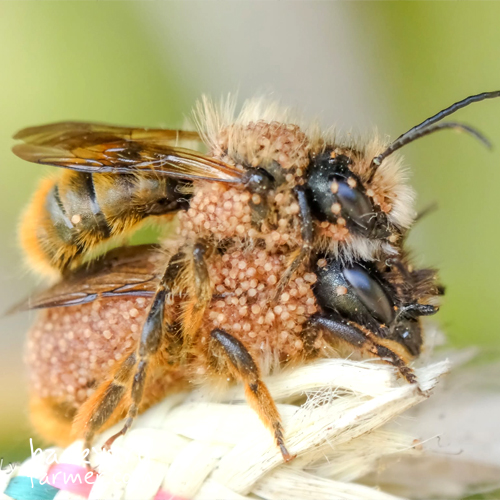
Solitary bees, including mason bees, can also carry mites linked to their nests. Some life stages use adult bees for transport, while others feed on stored pollen and nectar or affect developing brood.
Problems are more likely in crowded or poorly maintained bee hotels, where parasites can build up between seasons. Because exact identification is difficult from a photograph, good bee hotel maintenance is more useful than attempting to treat an individual bee.
Should You Remove Mites from a Bee?
Active bumblebee: Leave it alone. Do not brush, scrape or pick off the mites, wash the bee or apply oils, powders, pesticides or household treatments. These actions may injure or stress it without helping.
Bee in immediate danger: Move it only if it could be stepped on, trapped or otherwise harmed. Place it gently on a nearby flower or in a sheltered position.
Suspected Varroa: If the bee came from a known hive, take a clear photograph and inform the beekeeper. Do not attempt to treat the individual bee, as Varroa must be assessed and managed across the colony.
Sugar water does not remove or treat mites and should not be offered simply because mites are present.
How to Tell the Difference
| What you see | Most likely explanation | What to do |
| Several tiny pale, tan or brown mites among a bumblebee’s hairs | Bumblebee-associated transport mites; usually of little concern if the bee is active | Leave it alone |
| One or more flat, reddish-brown ovals on a honey bee | Possible Varroa mites; serious at colony level | Inform the hive owner where known |
| Tiny mites on a mason bee or inside a bee hotel | Solitary-bee nest mites; some may affect stored food or developing brood | Review your [bee hotel maintenance] |
| Powdery yellow or orange material that does not move | Pollen rather than mites | No action needed |
Colour, shape, movement and position provide useful clues, but photographs rarely allow mites to be identified confidently to species. An isolated creature may simply have been picked up from a plant, so photograph it where possible and do not apply chemical treatments to the bee.
Do Mites Cause Bee Declines in the UK?
Mites do not affect all British bees in the same way. Varroa is a major threat to managed and feral honey-bee colonies because it weakens bees and spreads damaging viruses.
By contrast, there is no strong evidence that the visible transport mites commonly found on bumblebees are a major cause of UK-wide decline. Wild bumblebees and solitary bees face broader pressures, including habitat loss, fewer flowers, pesticides, extreme weather, climate change and a shortage of nesting sites.
The UK bee population should not be treated as one group, and not all mites pose the same threat.
Frequently Asked Questions
Usually not. Varroa primarily affects honey bees. Small clusters on bumblebees are more likely to be transport mites travelling between flowers and nests.
A few mites are unlikely to cause problems. Exceptionally heavy loads may hinder movement or flight, but this appears to be unusual.
The bee-associated mites covered here are not considered human parasites. Avoid handling the bee mainly to prevent stressing or injuring it and to reduce the chance of being stung.
Not because it has mites. Sugar water does not treat them and should only be used as a temporary last resort for a grounded, exhausted bumblebee when no flowers are available.
Conclusion
A bumblebee carrying a few visible mites usually does not need help. Leave an active bee alone and do not apply home treatments. Varroa is different: it primarily affects honey bees and can threaten the whole colony. Suspected Varroa should therefore be monitored and managed at hive level by a beekeeper.