
The easiest way to tell whether a bee is female is to look for a packed pollen basket or another organised pollen load. When that is not visible, check the antennae and abdomen: females normally have 12 antennal segments and six visible abdominal plates, while males have 13 and seven. Male bees cannot sting. Larger eyes, a slimmer body, pale facial markings or patrolling behaviour may also help, but these clues vary between species and should never be used alone. In many ordinary photographs, the key features are hidden, so it is often better to leave the bee’s sex uncertain.
Male and Female Bees at a Glance
Some differences work across most bees, while others only help once the bee group or species is known. Start with pollen-carrying structures, then check the antennae and abdomen if the view is clear enough.
| Feature | Female bee | Male bee | Reliability |
| Pollen load | May carry a packed, organised load | Does not collect pollen for a nest | Strong female clue |
| Antennal segments | Normally 12 | Normally 13 | Strong when visible |
| Visible abdominal plates | Normally 6 | Normally 7 | Strong when visible |
| Hind legs | May have a pollen basket or carrying hairs | No specialised pollen-carrying structure | Group-specific |
| Eyes | Usually ordinary proportions | Enlarged in some species | Supporting only |
| Sting | Present or reduced | Absent | Reliable, but never test |
| Behaviour | Nest building and pollen provisioning | Patrolling and searching for females | Supporting only |
No single feature is visible on every bee, so use the strongest clue available and avoid guessing from size or colour alone.
First Look for Pollen-Carrying Structures
Pollen-carrying structures are often the quickest practical sign that a bee is female. Females collect pollen to provision their offspring, while males mainly visit flowers for nectar and do not deliberately build pollen loads.
Bumblebee Pollen Baskets
Female social bumblebees have a broad, smooth or shiny area on the outside of each hind tibia. Long hairs around its edge hold the pollen in place, forming a basket known as a corbicula.
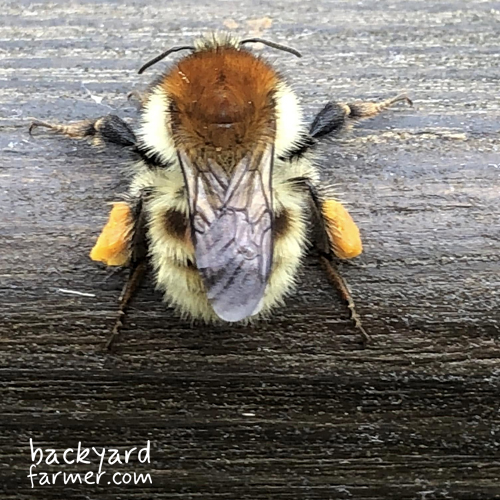
When loaded, the basket may look like a compact yellow, orange, cream or grey lump attached to the hind leg. Male bumblebees lack this smooth basket and usually have narrower, hairier hind legs.
There is an important exception. Female cuckoo bumblebees do not provision their own nests, so they also lack pollen baskets. A hairy hind leg does not automatically mean the bee is male.
Pollen Brushes on Solitary Bees
Many female solitary bees carry pollen on dense brushes of specialised hairs called a scopa. Mining bees and several related groups carry it on their hind legs, which may appear heavily coated when the bee returns to its nest.
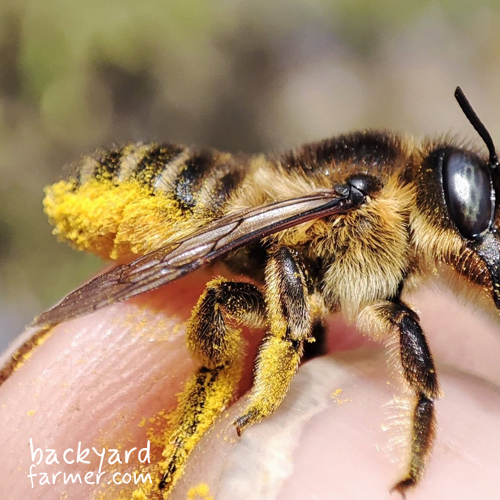
Female mason bees and leafcutter bees often carry pollen beneath the abdomen instead. The underside may look brightly dusted or densely packed with yellow, orange or pale pollen.
Some females show no external pollen brush at all. Yellow-faced bees, for example, carry pollen internally, so the absence of visible pollen structures does not prove that a bee is male.
Packed Pollen Versus Loose Dust
Look for an organised load rather than pollen alone. Pollen packed onto the legs or beneath the abdomen strongly confirms a female. Loose grains scattered across the face, thorax or body may simply have rubbed onto the bee while it fed.
Either sex can become dusted with loose pollen, and a female may be photographed before collecting any.
A deliberate pollen load can confirm a female. The absence of pollen cannot confirm a male.
Count the Antennae and Abdominal Plates
The antennae and abdomen provide the most dependable general differences between male and female bees. However, these features are small and often hidden, so counting them can be easier said than done in an ordinary photograph.
Antennal Segments
Each antenna is made from a series of small sections called segments. Female bees normally have 12 segments in total, while males normally have 13. The long first section at the base of the antenna is included in the count.
Male antennae often look longer, but apparent length alone is not reliable. The difference may be subtle, while camera angle can exaggerate it.
A sharp front, side or three-quarter view usually gives the best chance of counting the segments. Motion blur, dense hair, crossed antennae or part of an antenna hidden behind the head can make an accurate count impossible.
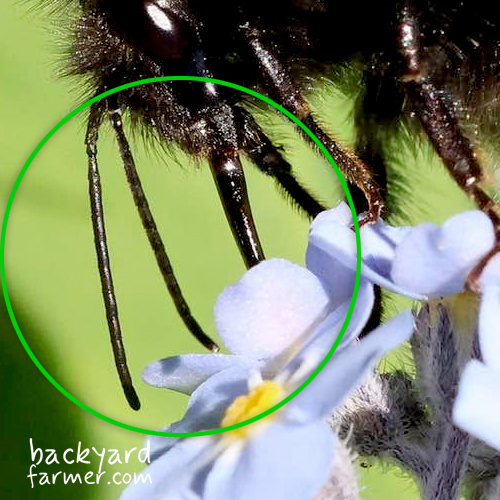
Male bee antenna with 13 segments
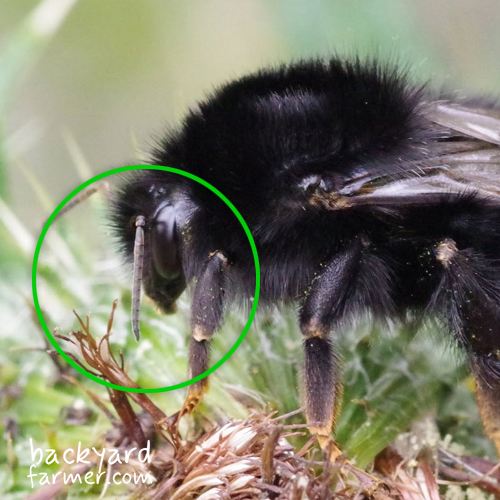
Female bee antenna with 12 segments
Visible Abdominal Plates
The hard plates visible across the top of the abdomen are called tergites. Female bees normally show six, while males show seven.
A dorsal or slightly angled photograph usually provides the clearest view. Even then, the final plate may be tucked beneath the abdomen, overlapped by another segment or hidden by dense hair. This can make a male appear to have only six.
Count the actual divisions between the plates rather than coloured markings or hair bands, as these do not always line up with the underlying structure.
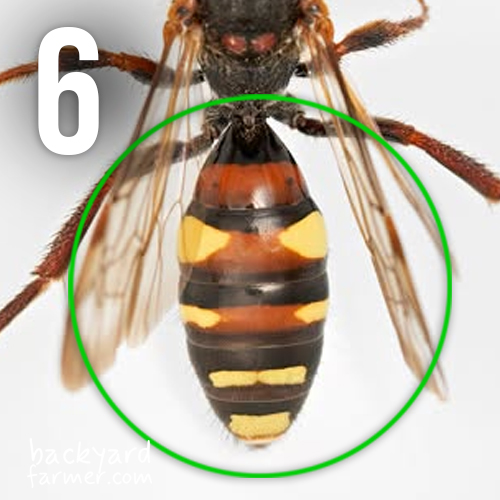
Female bee showing six visible abdominal plates
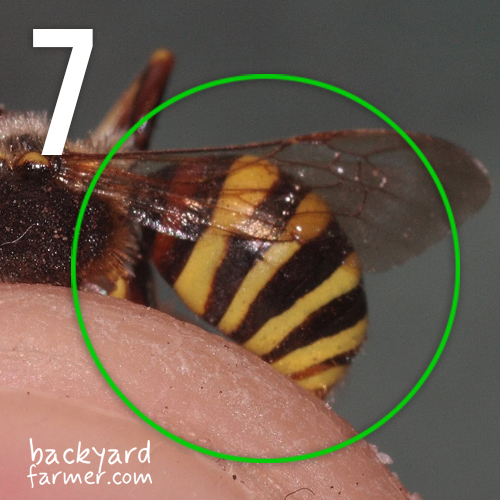
Male bee showing seven visible abdominal plates
Supporting Clues from the Eyes, Face and Body
Eyes, facial markings and body shape can support an identification, but they are less reliable than pollen structures or segment counts.
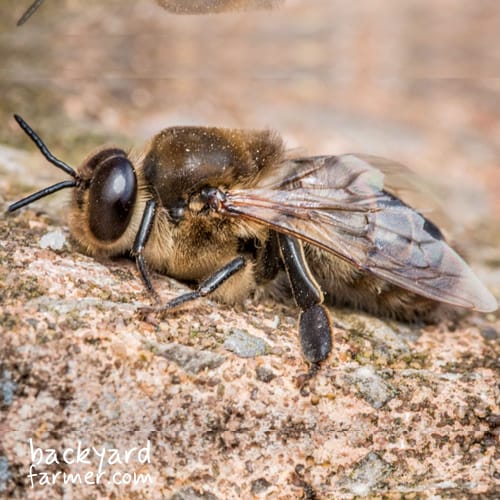
Honey-bee drones are the clearest example: their very large eyes approach or meet near the top of the head. This is an excellent clue for honey bees, but it does not apply to every male bee. Many male bumblebees and solitary bees have ordinary-looking eyes, so normal-sized eyes do not prove that a bee is female.
Males of some species also have pale facial hair, yellow or white markings, or noticeably longer-looking antennae. These features only become useful once the bee group or species is known.
Males are often slimmer or longer-bodied, while females may look broader or more robust. However, queens, workers and natural variation make size and shape unreliable on their own, and males are larger in some species.
Do not use the apparent gap between the thorax and abdomen as a sexing feature. Posture, hair and camera angle can easily alter its appearance.
Male and Female Bee Behaviour
Behaviour can provide useful clues, but it works best when watched over time rather than judged from a single photograph.
| Behaviour | What it may indicate |
| Returning repeatedly to a nest with pollen | Female |
| Digging, lining or sealing a nest | Female |
| Flying repeated circuits around flowers or hedges | Often male |
| Circling a nesting area | Often males waiting for females |
| Defending a patch of flowers | Male in some species |
| Resting in groups on flowers or stems | Sometimes males |
| Drinking nectar | Either sex |
Male bees also visit flowers for nectar, so feeding on a flower does not make a bee female. Repeated patrolling around flowers, hedges or nesting sites often suggests a male searching for females, but this behaviour varies between species and should be supported by physical features where possible.
Honey Bees, Bumblebees and Solitary Bees
The broad rules apply across bee groups, but some clues are more useful than others.
Honey bees: Queens and workers are female, while drones are male. Most honey bees carrying pollen are female workers, and the unusually large eyes of drones can make males easier to recognise.
Bumblebees: Queens and workers are female. Female social bumblebees have smooth pollen baskets on their hind legs, while males do not. However, female cuckoo bumblebees also lack pollen baskets, so hairy hind legs do not automatically indicate a male.
Solitary bees: Most species have nesting females and males rather than worker castes. Females may carry pollen externally or internally, while males often patrol flowers or nesting areas.
The anatomical counts remain dependable, but other clues must be interpreted with the bee group in mind.
When to Leave the Sex Uncertain
Do not confirm a bee as male or female when the key features are hidden or unclear. Blurred antennae, concealed hind legs, dense hair or a missing view of the abdominal tip can all prevent a reliable identification.
Avoid relying on size, colour, body shape or one species-specific clue. A distant photograph or awkward angle can easily create a misleading impression, while the absence of a visible pollen load does not prove that a bee is male.
It is better to record “sex uncertain” than to identify a bee from a feature that may not apply to its species.
Photographs to Take
Try to capture:
- The face and both antennae
- A side view showing the hind legs
- The underside of the abdomen
- A dorsal view showing the abdominal plates and tip
- More than one angle
Frequently Asked Questions
Honey-bee and social-bumblebee workers are female. Honey-bee males are called drones. Most solitary bees do not have worker castes; they simply have nesting females and males.
Yes. A drone is a male honey bee. Drones do not collect pollen for the colony and cannot sting.
No. Male bees lack a sting because it developed from female egg-laying anatomy. Never pick up, squeeze or provoke a bee to test its sex.
A packed load on a pollen basket or carrying brush strongly indicates a female. Loose dust across the face or body does not, as either sex can pick up pollen while feeding.
No. Honey-bee workers and female social bumblebees have pollen baskets, while other females use hairy brushes, carry pollen beneath the abdomen or transport it internally. Cuckoo females do not provision nests.
Sometimes. The image must clearly show the pollen structures, antennae or abdominal plates. Distant photographs showing only colour, size or general shape are rarely enough.
Biological sex is the more precise term for male and female bees. However, people commonly use “gender” in everyday questions and online searches.
Conclusion
Start by looking for an organised pollen load, then check the antennae and visible abdominal plates if the photograph is clear enough. Eyes, shape and behaviour can support the identification, but they are not reliable on their own. Where the key features are hidden, leave the sex uncertain. You can then use our bee identification guide to narrow down the species.