

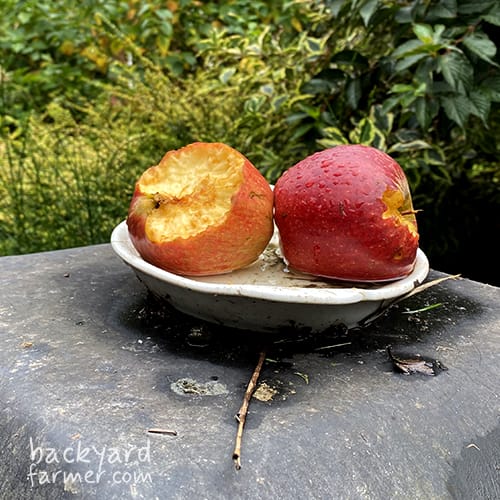
Yes, birds can eat apples. Fresh apple flesh and skin are suitable for many wild birds, especially fruit-eating species such as blackbirds, thrushes, starlings and waxwings. Offer them halved, sliced or cut into smaller pieces for smaller birds. Apples are particularly useful in autumn and winter, when natural fruit may be harder to find, but they should be offered alongside other foods rather than used as a complete diet. Remove any fruit once it begins to spoil.
Are Apples Safe for Birds?
Fresh apples are generally safe for garden birds when offered in sensible quantities. You can leave the skin on, although it is sensible to wash the fruit first if it may have dirt, wax or other residues on the surface. Cut away any bruised or spoiled areas and do not deliberately put out apples that are mouldy or heavily fermented.
Apples provide moisture, natural sugars and some fibre, but they do not contain everything birds need. They are best treated as a supplementary food alongside seeds, suet, insects and other suitable foods.
Can Birds Eat Apple Seeds and Cores?
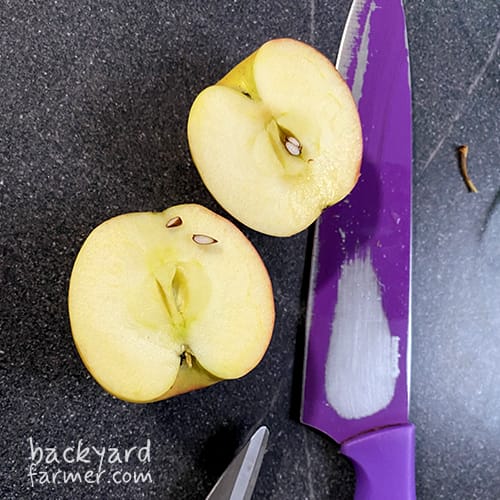
Apple seeds contain amygdalin, which can release cyanide when crushed and digested. A bird taking the odd seed is unlikely to be cause for concern, but removing the core and most seeds is a simple precaution when preparing apples.
Avoid deliberately offering crushed apple seeds or piles of cores.
How to Feed Apples to Birds
Cut apples in half or slice them into manageable pieces. This exposes the flesh and makes the fruit easier for birds to eat, particularly when the skin is firm.
Place apple halves or slices in a suitable fruit feeder or another feeder that keeps the food secure and allows waste and moisture to fall away. Smaller pieces may suit robins and other small birds, while blackbirds, thrushes and starlings can often manage larger pieces. If offering apple at ground level, use a clean, open spot, remove leftovers promptly and avoid allowing food or droppings to build up.
Whole or halved apples can also be hung securely from a suitable fruit feeder. This keeps the food off the ground and may make it more accessible to birds that prefer feeding above ground. Make sure any string, wire or holder is secure and cannot cause entanglement.
Check apples regularly, particularly in warm or wet weather. Remove pieces that become soft, mouldy, slimy or strongly fermented, and clean the feeding surface before replacing them. Offering a small amount at a time helps reduce waste and keeps the feeding area hygienic.
Which UK Birds Eat Apples?
Fruit-eating and opportunistic garden birds are most likely to take apples. Some species will feed directly from a halved apple, while others prefer small pieces or fruit that has fallen to the ground. Birds may be more interested when natural berries and windfall fruit become scarce.
| Bird | Likely to Eat Apple? | How They Commonly Feed |
|---|---|---|
| Blackbird | Yes | Ground-level halves and exposed flesh |
| Song thrush | Yes | Fallen fruit and soft pieces |
| Robin | Yes | Small pieces of soft fruit |
| Starling | Yes | Slices and exposed flesh |
| Fieldfare | Yes | Fallen and accessible fruit |
| Redwing | Yes | Fallen and soft fruit |
| Waxwing | Yes | Fruit, particularly during winter visits |
Blackbirds and thrushes often take apple from a clean spot at ground level. Starlings may take pieces from suitable fruit feeders, while waxwings, fieldfares and redwings may be attracted to fruit during winter movements.
Feeding is only one part of making a garden useful to birds — our UK bird box guide covers shelter and nesting too.
When Should You Put Apples Out for Birds?
You can offer apples throughout the year, but they are often most useful during autumn and winter, when natural fruit becomes less available. They provide moisture and energy alongside more substantial foods such as suet and sunflower hearts.
In autumn and winter, offer slightly larger pieces if birds are eating them quickly, while keeping apples supplementary rather than the main food source. In spring and summer, smaller quantities are usually more practical because warm weather causes cut fruit to spoil faster and may attract insects or other unwanted visitors. Check apples regularly, remove leftovers promptly and adjust the amount according to how quickly birds eat them.
What Should You Feed Alongside Apples?
Apples work best as part of a varied diet. From November to April, suitable additions include sunflower hearts, good-quality seed mixes, suet and mealworms. Current RSPB guidance recommends pausing seeds and peanuts between May and October to help reduce disease transmission, while small amounts of mealworms or suet can still be offered.
Fresh water is also important, particularly during dry or freezing weather. Keep drinking and bathing water clean and replace it regularly.
If you want to support more than just feeding birds, our guide to creating a wildlife-friendly garden covers food, water, shelter and habitat together.
Want to Hang Apples for Birds?
Whole or halved apples can be hung securely in a simple fruit feeder, keeping them above the ground and easy for birds to reach. For a full materials list and step-by-step instructions, see our guide to making a DIY apple bird feeder.
FAQ About Feeding Birds Apples
Yes. Birds can eat apple skin, and there is usually no need to peel the fruit before offering it. Wash the apple first if it may have dirt, wax or residues on the surface, and remove any spoiled sections.
Yes, robins may eat small pieces of soft apple. Offer it as an occasional supplementary food rather than their main diet.
A few apple seeds are unlikely to harm a wild bird, but it is sensible to remove the core and most seeds before feeding apples.
Birds may pick at an apple core, but removing it before serving makes the apple easier to eat and avoids offering a concentration of seeds.
Birds can eat plain cooked apple once it has cooled, provided it contains no added sugar, salt or other ingredients. Do not offer apple crumble, pie filling, stewed fruit with sugar, or desserts containing spices, sweeteners or dairy products.
Uneaten apples can attract rats, wasps and other animals, particularly in warm weather. Offer only as much as birds are likely to eat, check the fruit regularly and remove leftovers before they begin to spoil. Keeping feeders and the surrounding ground clean also helps reduce unwanted visitors.