
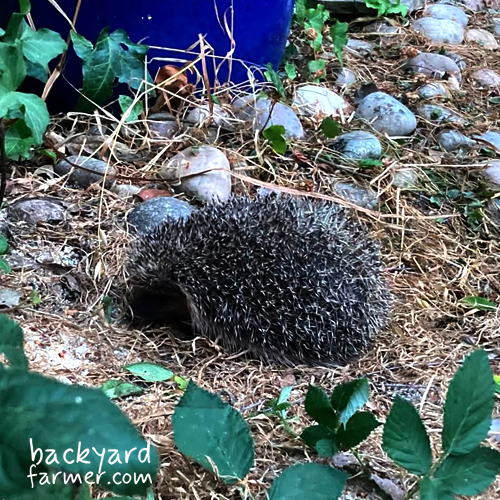
Hedgehogs are mainly nocturnal, so seeing one in daylight can sometimes mean it needs help. Daylight activity alone does not prove that a hedgehog is ill: a bright, alert animal moving with purpose may simply be travelling, nesting or responding to disturbance. A hedgehog that is weak, exposed, wobbly, injured or covered in flies needs prompt intervention.
Quick Answer: Leave, Call or Rescue?
| What you see | What to do |
|---|---|
| Bright, coordinated and purposeful, particularly while carrying leaves or grass | Leave it alone and watch quietly from a distance |
| Active during the day with no clear explanation, repeatedly appearing, near a disturbed nest, or possibly a juvenile | Contact the British Hedgehog Preservation Society for advice |
| Weak, exposed, motionless, wobbly, cold, injured, fly-covered, trapped or involved in an accident | Contain it safely and arrange urgent rescue or veterinary help |
British Hedgehog Preservation Society: 01584 890801
Call a vet urgently if the hedgehog has a severe injury, breathing difficulty, fly eggs or maggots, signs of collapse, machinery injuries or obvious pain.
What to Do If the Hedgehog Needs Help
If the hedgehog appears to be in immediate danger or clearly unwell:
- Put on thick gardening gloves or use a folded towel to protect your hands.
- Lift the hedgehog gently with both hands, supporting its body.
- Place it in a secure, ventilated, high-sided box lined with newspaper, a towel or fleece.
- Keep the box indoors somewhere quiet, away from pets, children, direct sunlight and flies.
- If the hedgehog is cold, weak or wet, place a wrapped warm—not hot—water bottle at one end of the box. Leave enough room for it to move away from the heat.
- Call BHPS, a wildlife rescue or a vet immediately, follow the instructions you are given, and call ahead before travelling.
- Keep the box level and secure during transport, and record the exact location where you found the hedgehog.
Do not delay contacting a rescue or vet in order to provide food. If an alert hedgehog must wait briefly, you may offer a shallow dish of water and a small amount of meaty cat or dog food, unless a professional advises otherwise. Do not give anything by mouth to a collapsed, unresponsive, very cold or unweaned hedgehog without professional direction.
What Not to Do
- Do not give milk or bread.
- Do not syringe food or water.
- Do not bathe or medicate the hedgehog.
- Do not apply cat or dog flea treatments.
- Do not remove ticks, fly eggs or maggots yourself.
- Do not leave an urgent casualty overnight without seeking advice.
- Do not release it in another garden, park or woodland.
When Daytime Activity May Be Normal
A healthy hedgehog may be seen during daylight around dawn or dusk, particularly in summer when nights are short. A bright, coordinated hedgehog travelling directly towards a clear destination may simply be moving between shelter and feeding areas.
A female may carry grass or leaves to build or repair a nest, and a nursing female may briefly leave her young to forage before returning. Daytime movement may also follow accidental disturbance of a resting place, shed, compost area or hedgehog house.
These possibilities are reassuring only if the hedgehog appears alert, coordinated and free from warning signs. Do not follow a possible nursing female, open a hedgehog house or search for her nest. Watch from a distance so she has the best chance of returning without further disturbance.
Once the immediate situation has passed, you can provide an additional quiet shelter elsewhere in the garden. See How to Make a Hedgehog House from Pallet Wood for a practical reclaimed-timber design that can be left undisturbed.
Mild winter weather can also rouse hedgehogs, and some may move between nests or forage briefly. See When Do Hedgehogs Hibernate in the UK? for the normal winter pattern and when activity may be a concern.
Hoglets and Nursing Females
If You Find a Hoglet
Leave an intact nest alone. If a hoglet is alone or you cannot tell whether it is safe, contact BHPS or a wildlife rescue for advice rather than immediately moving it.
Contain a hoglet urgently if it is cold, weak, injured, exposed with siblings, surrounded by flies, beside a dead adult or squeaking with its eyes shut. These signs can indicate that it has been abandoned, separated or is in danger.
Do not routinely catch and weigh a healthy-looking juvenile. Do not rely on a fixed weight or waiting period to decide whether every hoglet should be moved. Do not return a hoglet to a nest or combine unfamiliar animals unless a specialist tells you to do so.
If It May Be a Nursing Female
Leave a bright, purposeful female alone and observe her from a distance. Do not follow her, search for dependent young or disturb a nest. If she is weak, injured, wobbly or covered in flies, seek urgent help and provide the exact location where she was found.
If she has already been contained, contact a specialist before deciding whether to release or transport her. A nursing female may have young nearby, so professional guidance is important.
Dog, Mower, Netting and Other Injuries
Professional assessment is needed after:
- A dog bite, pickup or mouthing
- Mower or strimmer contact
- A road collision
- Entanglement in netting
- Burns or smoke exposure
- Being found cold, exhausted or unresponsive after being trapped in a pond, pool or drain
Hidden injuries may be present even when the hedgehog curls into a ball and no blood is visible. Machinery injuries, severe wounds, flystrike, collapse and breathing difficulties should be treated as emergencies. Call a vet or rescue immediately, call ahead and follow their instructions.
Who to Contact in the UK
- UK-wide hedgehog advice: British Hedgehog Preservation Society — 01584 890801
- England and Wales: A local vet or the RSPCA wildlife advice route
- Scotland: Scottish SPCA — 03000 999 999
- Northern Ireland: USPCA — 028 3025 1000
- Out of hours: Use BHPS’s recorded emergency contacts or call the nearest veterinary practice and ask for the on-call vet
Independent wildlife rescues may be full or unable to collect animals, so always phone before travelling.
Final Verdict
Leave a clearly well, purposeful hedgehog alone and observe it from a distance. If its daytime activity is unexplained, you are unsure about its condition, or it is weak, exposed, injured, trapped or involved in an accident, contact a specialist and follow their advice; contain it safely when instructed.
You can reduce future risks by providing safe access, natural cover and fewer garden hazards. For practical ideas, read How to Attract Hedgehogs to Your Garden.