
If you want to attract hedgehogs to your garden, start by making it easy for them to get in and out. A small opening in the boundary, natural cover, fresh water and a garden free from common hazards are more important than buying specialist products. Supplementary food and a hedgehog house can help, but they are optional extras rather than guarantees that a hedgehog will visit.
The most useful garden is connected to neighbouring gardens, offers places to forage and nest, and is managed safely. These principles also form part of a broader wildlife-friendly approach to gardening in the UK. This guide explains how to create those conditions, what to feed hedgehogs if you choose to do so, and how to reduce the chance of attracting rats.
Quick Answer: Five Ways to Help Hedgehogs Visit Your Garden
- Create a 13 × 13cm opening in or beneath your garden boundary so hedgehogs can enter and leave.
- Leave some dense vegetation, fallen leaves, logs or deadwood to provide cover and natural food.
- Put out a stable, shallow dish of fresh water.
- Remove hazards such as steep-sided ponds, loose netting, open drains and unchecked garden machinery.
- If you feed hedgehogs, offer suitable food in small portions and remove leftovers every morning.
Start with access. Even the most wildlife-friendly garden cannot help hedgehogs if fences, walls or gates prevent them from reaching it.
Start by Giving Hedgehogs Access
Hedgehogs can travel considerable distances at night in search of food, shelter and mates. In built-up areas, fences and walls can divide their habitat into small, isolated spaces. Creating a suitable boundary gap is the essential first step if your garden is otherwise enclosed.
A hedgehog highway should be approximately 13 × 13cm. You could make one:
- Beneath a fence panel
- At the bottom of a gate
- Through a gravel board
- Between adjoining gardens
- By replacing a small section of solid fencing with a suitable gap
Check that the opening has no sharp edges, exposed nails or splintered wood. If you cut through a fence, smooth and protect the edges so the hedgehog cannot injure itself.
One opening is useful, but a connected route through several gardens is much better. Talk to neighbours about creating matching gaps so hedgehogs can move between gardens rather than reaching a dead end. A small hedgehog-highway label can also help prevent someone accidentally blocking the opening later.
Access should remain available throughout the year. Avoid placing heavy objects, stored materials or dense piles of garden waste directly in front of the gap.
Make the Route Through Your Garden Safe
Inviting hedgehogs into an unsafe garden can put them at greater risk, so check the route they are likely to take before adding food or shelter.
- Provide a secure ramp, shallow sloping edge or partially submerged stones in steep-sided ponds and swimming pools.
- Cover open water butts securely.
- Cover open drains, inspection holes and deep trenches.
- Check long grass, borders, compost heaps and vegetation piles before mowing, strimming or using a fork.
- Use robotic mowers only during daylight and inspect the lawn first.
- Keep loose netting raised, taut or safely stored.
- Build or move bonfires on the day they are lit.
- Remove litter such as plastic rings, cans and discarded packaging.
- Supervise dogs in the garden after dark where hedgehogs are known to visit.
Hedgehogs can swim, but they may drown if they cannot climb out. Check that any escape route remains secure and cannot tip over. If you are adding a pond from scratch, our guide to building a wildlife pond in the UK covers shallow edges, planting and safe access for garden wildlife.
Avoid unnecessary pesticide use. If a product is essential, follow the label instructions carefully and keep pets and wildlife away from treated areas as directed.
Create Natural Food and Cover
You do not need to turn your whole garden into a wilderness. A single less-managed corner can provide valuable cover and feeding habitat while the rest of the garden remains tidy and usable.
Consider leaving:
- A patch of longer grass
- Dense shrubs and ground-level planting
- Fallen leaves beneath hedges
- A log or deadwood pile
- An accessible compost heap
- Less intensively tidied areas around boundaries
- Flowering plants that support a wide range of garden invertebrates
Hedgehogs eat a broad range of invertebrates, including beetles, caterpillars, earthworms, earwigs and some slugs. They are not dedicated slug eaters, however, and attracting a hedgehog will not guarantee that it controls a slug problem.
Leaves and vegetation provide nesting material and daytime cover, while logs, leaf litter and undisturbed soil support insects and other invertebrates. Dense planting can also give hedgehogs safer routes through the garden, particularly where open lawns leave them exposed.
Try to avoid clearing every leaf and cutting every border back at the same time. Leaving some natural material in place is often more beneficial than adding a decorative hedgehog product to an otherwise bare garden.
You can also make a bug hotel to provide additional nesting and overwintering spaces for beneficial insects. Treat it as an addition to natural habitat rather than a replacement for deadwood, fallen leaves and dense planting.
Provide Fresh Water
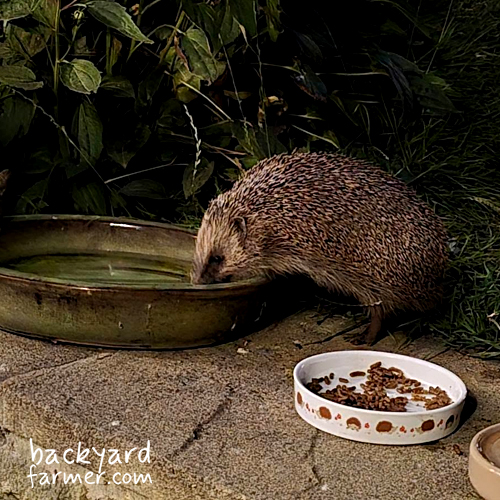
Put out a stable, shallow dish of fresh water at ground level. Choose a location that is sheltered but easy for a hedgehog to reach, and make sure the dish cannot be knocked over easily.
Refresh the water regularly, especially during warm or dry weather. Wash the dish frequently and remove leaves, soil and other debris. If you also provide food, use a separate dish and clean it after use.
Never offer milk. Hedgehogs cannot digest it properly, and it can cause digestive upset.
Should You Feed Hedgehogs?
Feeding is optional. A garden with good natural habitat can support hedgehogs without supplementary food, but a small amount of suitable food may help when natural prey is scarce. It should supplement natural foraging rather than replace it.
Suitable Foods
| Suitable foods | Foods to avoid |
|---|---|
| Meat-based wet cat or dog food | Milk |
| Dry cat, kitten or small dog biscuits | Bread |
| Reputable specialist hedgehog food with a high meat content | Mealworms as a regular or substantial part of the diet |
| Products with meat listed as the first main ingredient | Whole peanuts |
| Sugary, salty or seasoned human leftovers | |
| Large pieces that could present a choking risk |
Choose food appropriate for the animal’s size and avoid large pieces that could be difficult to eat. Avoid using mealworms as a regular or substantial food because an unbalanced diet may contribute to nutritional problems.
Feeding Routine
Put out a small amount around sunset, when hedgehogs are becoming active. Use a clean, shallow dish that is easy to reach but not so large that food is left sitting out unnecessarily.
Remove uneaten food first thing in the morning. Clean the bowl after use and wipe up crumbs or spillages around the feeding area. Keep outdoor feeding equipment separate from household utensils and wash your hands after handling food or dishes.
If you do not see a hedgehog immediately, do not keep increasing the amount of food. Other animals may find it first, and a hedgehog may simply be using a different route through the garden.
For more detail, see What Do Hedgehogs Eat?
How to Feed Hedgehogs Without Encouraging Rats
No ordinary ground-level feeding station can be guaranteed rat-proof. However, controlling when, where and how much food is available can substantially reduce the opportunity for rats.
Use this routine:
- Put out only a small amount of food after sunset.
- Remove all leftovers first thing in the morning.
- Clean up crumbs and spillages around the station.
- Keep unopened food in a secure container.
- Watch for droppings, burrows or repeated daytime rat activity.
- Reduce or temporarily stop feeding if rats continue visiting.
A feeding tunnel with a small entrance or internal baffles may discourage cats or foxes, but it cannot make accessible food reliably rat-proof.
Avoid using poison or indiscriminate traps around a wildlife feeding area, as these can harm hedgehogs, pets and other non-target animals.
A hedgehog house without food inside is not automatically a rat attractant. The main issue is accessible food and the length of time it remains available. Keeping the feeding area separate from any shelter also helps reduce disturbance around a possible nesting site.
For a dedicated feeding routine, see How to Feed Hedgehogs Without Attracting Rats.
Offer Somewhere to Shelter
Natural shelter is often more useful than a purchased house. Dense hedge bottoms, leaf piles, deadwood and undisturbed areas beneath shrubs can all provide places for hedgehogs to rest or build nests.
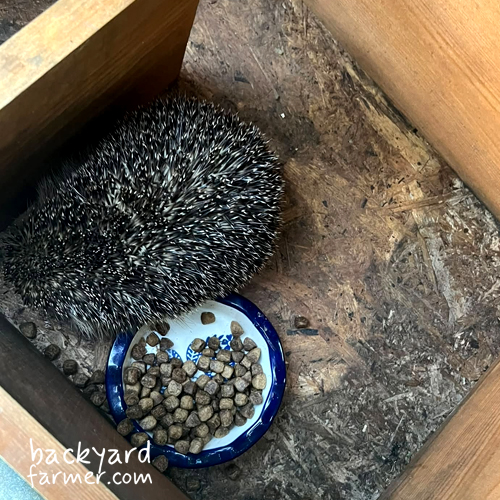
A hedgehog house is an optional extra. Choose a quiet, sheltered location away from regular foot traffic, children’s play areas and direct disturbance. Position the entrance away from strong prevailing winds and likely disturbance from garden equipment.
Place some dry leaves inside and leave additional nesting material nearby so a visiting hedgehog can arrange the nest itself. Do not put food inside the sleeping chamber. Keep the feeding area separate from the house to avoid attracting other animals and to reduce activity around a potential nest.
Never open, move or clean a hedgehog house while it may be occupied. A hedgehog may be hibernating, raising young or resting during the day. Installing a house does not guarantee that it will be used; the animal may prefer a natural shelter elsewhere.
If you would like to add a purpose-built shelter, follow How to Make a Hedgehog House from Pallet Wood for the complete measurements, cut list and step-by-step build.
How to Tell Whether Hedgehogs Are Visiting
The most reliable evidence comes from a wildlife camera or footprints recorded using a tracking tunnel. Other possible signs include:
- Hedgehog droppings
- Small pathways through grass or beneath vegetation
- Night-time snuffling and rustling
- Direct sightings after dark
Disappearing food is not proof that a hedgehog has visited. Cats, foxes, rats and other animals may also take it. A camera can show which species is using the feeding area without requiring you to disturb possible nests or shelters.
Avoid repeatedly searching through leaf piles, compost heaps or hedgehog houses. If a hedgehog is present, leaving it undisturbed is usually the most helpful approach.
When Are Hedgehogs Most Likely to Visit?
Hedgehogs are mainly active after dark, although activity varies with weather, food availability and the individual animal. They may emerge around sunset and return to shelter before dawn, but there is no fixed timetable.
Hibernation commonly occurs between autumn and spring, but there are no exact dates. Hedgehogs may wake and move between nests during milder winter periods. There is also no reliable number of days or weeks in which a hedgehog should appear after you make changes to your garden.
Give the garden time to become part of the local route network. A hedgehog may already be visiting when you are not watching, or it may only pass through occasionally.
What to Do If You See a Hedgehog During the Day
A purposeful hedgehog seen briefly around dawn or dusk may not need help. A nursing female may also occasionally forage during daylight before returning to her young.
However, a hedgehog that is motionless, exposed, lethargic, wobbling, injured or surrounded by flies needs urgent advice. Keep dogs and other animals away and contact the British Hedgehog Preservation Society on 01584 890801, a local wildlife rescue or a vet.
Do not routinely catch, weigh, keep or relocate healthy visitors. Moving a hedgehog to a supposedly “better” location can separate it from its nest, territory or young. Hedgehog protections differ between Great Britain and Northern Ireland, so seek professional advice rather than capturing, keeping or relocating one yourself.
If you are unsure whether the animal needs help, seek advice before handling it unless it is in immediate danger.
For a fuller guide, see What to Do If a Hedgehog Is Out During the Day.
Hedgehog-Friendly Garden Checklist
- Hedgehogs can enter and leave through a 13 × 13cm opening.
- Routes through the garden are free from obvious hazards.
- Some natural cover, leaves and deadwood remain.
- Fresh water is available.
- Supplementary food is managed hygienically.
- Leftovers and spillages are removed to discourage rats.
- Shelters and possible nests are left undisturbed.
- Everyone using the garden knows when a hedgehog may need help.
The best hedgehog garden is not necessarily untidy or filled with specialist products. It is connected, varied, safe and managed with wildlife in mind. Start with access and safety, then add natural cover, water and carefully managed food if appropriate.