
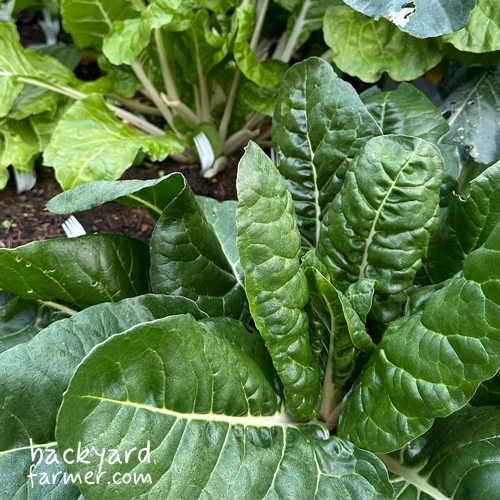
Swiss chard is an easy-to-grow leafy vegetable that produces generous harvests from a relatively small space. Both the leaves and stems are edible, and regular picking encourages fresh growth.
It grows well in UK gardens, allotments, raised beds and containers. With spring and summer sowings, you can enjoy fresh leaves for months, with the possibility of another harvest the following spring.
When to Sow Swiss Chard in the UK
Swiss chard can be started indoors from March or sown directly outdoors between April and July. Early outdoor sowings may take longer to germinate while the soil is still cold.
For most UK growers, two main sowings are enough to provide a long harvest season.
| Sowing time | Expected harvest |
|---|---|
| March–April, indoors | Earlier summer harvests |
| April, outdoors | Summer through autumn |
| July, outdoors | Autumn leaves and potential spring regrowth |
April and July are particularly useful sowing months. April-sown plants provide leaves throughout summer, while July sowings establish plants that can survive winter and produce fresh growth the following spring.
For baby leaves, smaller batches can be sown every few weeks during the growing season.
Best Swiss Chard Varieties to Grow
Most Swiss chard varieties grow in much the same way. The main differences are stem colour, growth habit and flavour.
| Variety | Characteristics | Best for |
|---|---|---|
| White Silver 2 | Broad white stems, large green leaves and reliable yields | Productive growing |
| Bright Lights | Mixture of red, orange, yellow and white stems | Colourful harvests |
| Charlotte | Red stems and dark green leaves | Red-stemmed chard |
BYF Pick: White Silver 2
White Silver 2 is a reliable choice for UK allotments and vegetable gardens. It produces large green leaves with thick white stalks, giving you a useful harvest of both. White-stemmed varieties are generally among the hardiest and most productive, making White Silver 2 a good option for growers prioritising food production.
Where to Grow Swiss Chard
Swiss chard grows best in fertile, moisture-retentive soil with good drainage. It is suitable for open ground, raised beds and larger containers.
Sunlight and Position
Choose a position in full sun or partial shade. Chard tolerates some shade better than many fruiting vegetables, making it useful in gardens that receive limited sunlight.
Light afternoon shade can also help reduce moisture loss during hot weather.
Avoid deep, permanent shade, as plants need reasonable light levels to produce healthy new leaves.
Preparing the Soil
Before sowing, remove weeds and loosen compacted ground where necessary. Incorporate well-rotted compost if the soil needs improving, then rake the surface to create a reasonably fine seedbed.
On established no-dig beds, a surface dressing of compost is usually sufficient.
Avoid poorly drained ground that remains waterlogged.
How to Sow and Plant Swiss Chard
Swiss chard is easy to grow from seed, either directly outdoors or in modules for transplanting later.
Most chard seeds are multigerm seed clusters that can produce several seedlings, so thinning is often necessary.
Sowing Swiss Chard Outdoors
Direct sowing is the simplest method once the soil has warmed in spring.
- Prepare a weed-free seedbed and make a drill approximately 2 cm deep.
- Sow seeds around 10 cm apart, leaving 40–45 cm between rows.
- Cover with soil and water gently.
- Keep the seedbed moist while seedlings establish.
- Thin gradually to approximately 30 cm apart for full-sized plants.
Healthy seedlings removed during thinning can be eaten as young leaves once large enough.
Starting Swiss Chard in Modules
Starting seeds indoors provides more control over germination and protects young seedlings from slugs and unpredictable spring weather.
- Fill module trays with peat-free seed compost.
- Sow one seed cluster per module, around 2 cm deep.
- Keep the compost moist but not waterlogged.
- Thin to the strongest seedling if several emerge.
- Grow somewhere bright until roots are established.
Once seedlings are around 5 cm tall and well rooted, gradually harden them off before planting outdoors.
Avoid exposing young plants to prolonged cold weather, as cold stress can contribute to premature bolting.
Swiss Chard Spacing
Allowing enough room between plants produces larger leaves and makes harvesting easier.
| Growing method | Recommended spacing |
|---|---|
| Full-sized plants | 30 cm apart |
| Baby-leaf crops | 5–8 cm apart |
| Traditional rows | 40–45 cm apart |
Closer spacing is possible when harvesting smaller leaves regularly, but full-sized plants benefit from the extra growing room.
Planning your growing space: Use our Free Allotment Planner to mark out your beds, allocate space for Swiss chard and plan surrounding crops.
Growing Swiss Chard in Pots
Swiss chard grows well in containers, provided the roots have enough room and the compost does not dry out.
Choose a container at least 40 cm wide and deep for one mature plant, with drainage holes in the bottom. Larger troughs can accommodate several plants at suitable spacing.
Fill with good-quality peat-free multipurpose compost and position somewhere sunny or lightly shaded.
Container-grown chard needs more frequent watering than plants in open ground, particularly during warm weather. Avoid overcrowding, as restricted root space and inconsistent watering can limit growth.
Smaller containers are better suited to growing chard for baby leaves.
Caring for Swiss Chard
Once established, Swiss chard needs relatively little maintenance. The main priorities are watering during dry weather, controlling weeds and harvesting regularly.
Young seedlings need consistent moisture while their roots develop. Established plants tolerate some dry weather, but prolonged drought can slow growth, reduce leaf quality and encourage bolting.
Water thoroughly during dry spells, directing water towards the soil rather than repeatedly wetting the foliage.
A layer of garden compost around established plants helps retain moisture and suppress weeds. Leave a small gap around the stems to prevent damp material collecting against them.
Extra feeding is generally unnecessary when growing in reasonably fertile soil, although plants in containers may benefit from occasional feeding as nutrients become depleted.
When and How to Harvest Swiss Chard
Swiss chard is a cut-and-come-again vegetable, meaning plants can be picked repeatedly without removing the entire crop.
This makes it particularly productive in smaller growing spaces.
When Is Swiss Chard Ready to Harvest?
Baby leaves can be picked while still small and tender, often well before the plant reaches maturity. For larger leaves, expect your first substantial harvest around 12 weeks after sowing, depending on growing conditions.
There is no need to wait for the whole plant to mature. Once it has developed enough healthy foliage, you can begin picking a few outer leaves.
Smaller leaves tend to be more tender, while larger leaves produce substantial stems that can be cooked separately.
How to Harvest Swiss Chard So It Keeps Growing
For a steady supply, remove mature outer leaves while leaving the growing centre intact.
- Choose the largest healthy leaves around the outside of the plant.
- Cut each stalk close to its base using a clean knife or secateurs.
- Leave the smaller central leaves and growing point undamaged.
- Allow fresh leaves to develop before harvesting again.
Avoid stripping small plants completely. Leaving several healthy leaves allows them to continue growing between harvests.
Established plants can also be cut back more heavily, but they need longer to recover. Regular outer-leaf harvesting is usually the better method for a continuous supply.
Can You Eat Swiss Chard Stems?
Both the leaves and stems are edible.
Young leaves can be eaten raw in salads, while larger leaves are usually cooked like spinach.
Thick stems take longer to soften, so chop and cook them for a few minutes before adding the leaves.
Chard works well in stir-fries, soups, stews and other dishes that call for leafy greens.
Common Swiss Chard Pests and Problems
Swiss chard is generally a resilient crop, but a few pests and growing problems can reduce the harvest.
Beet Leaf Miner
Beet leaf miner is one of the main pests affecting Swiss chard in the UK. Its larvae feed inside the leaves, creating pale patches that eventually turn brown.
Infestations can spoil otherwise healthy foliage, particularly when growing chard for regular picking.
What to do:
- Check leaves regularly for pale blotches.
- Look underneath leaves for clusters of small white eggs.
- Remove heavily affected leaves before larvae complete their development.
- Use fine insect mesh where infestations are persistent.
- Rotate chard and beetroot crops where leaf miner has been troublesome.
Leaf miner pupae can overwinter in the soil. Covering a new crop on previously infested ground may trap emerging flies beneath the mesh, so crop rotation is worth considering.
Beetroot is affected by the same pest. See our guide to growing beetroot for advice on growing this closely related crop.
Slugs and Snails
Slugs and snails are most troublesome while chard plants are small, particularly during wet weather.
They damage emerging seedlings and leave irregular holes in the leaves.
Check young plants regularly, remove slugs where practical and keep surrounding weeds under control. Established plants generally tolerate minor damage better than seedlings.
Swiss Chard Bolting
Bolting occurs when a plant begins producing flowering stems instead of concentrating on leaf growth.
Swiss chard is naturally biennial, so flowering during its second growing season is normal. However, plants can also bolt prematurely following stress from prolonged drought, hot weather or cold conditions during establishment.
Keep plants watered during dry spells and avoid planting young seedlings into persistently cold ground.
Removing an early flower stem may extend harvesting briefly, but once flowering becomes persistent, leaf production and quality usually decline. Replacing the plant is generally more productive.
Fungal Problems
Persistently damp conditions and poor airflow can encourage diseases such as downy mildew and grey mould.
Remove badly affected foliage, avoid overcrowding and keep the growing area clear of decaying plant material.
Growing Swiss Chard Over Winter in the UK
One of Swiss chard’s most useful characteristics is its ability to survive winter and produce another flush of leaves the following spring.
A July sowing is particularly suitable because plants have time to establish before temperatures fall.
Can Swiss Chard Survive a UK Winter?
Established Swiss chard is relatively hardy and can often survive outdoors without protection.
However, surviving winter does not mean actively growing throughout winter.
Cold weather slows or stops new leaf production, while hard frosts can damage exposed foliage.
In milder areas, plants may retain useful leaves for longer. In colder or more exposed gardens, much of the foliage can deteriorate even when the growing crown survives.
How to Protect Swiss Chard Over Winter
A few simple measures can improve the chances of successful overwintering.
- Establish summer-sown plants before cold weather arrives.
- Choose reasonably sheltered, well-drained ground.
- Remove badly damaged or rotting foliage.
- Protect plants with horticultural fleece or cloches during severe cold.
- Ventilate covers during milder weather.
Avoid leaving plants in saturated soil during prolonged winter rainfall.
Container-grown chard can also be moved into an unheated greenhouse or another sheltered position.
Harvesting Overwintered Chard in Spring
Surviving plants usually begin producing fresh leaves as temperatures and daylight increase.
These early harvests can be useful before newly sown spring crops are ready.
However, overwintered chard is entering its second growing season and will eventually flower. Continue harvesting while the leaves remain worthwhile, but establish replacement plants rather than relying on older ones indefinitely.
What to Grow After Swiss Chard
Once chard begins flowering heavily or stops producing worthwhile leaves, remove the plants and reuse the growing space.
Beds cleared in late spring can be planted with suitable summer crops, such as French beans or courgettes, depending on the space available.
If plants are removed in autumn, the ground can be replanted with suitable overwintering crops or a green manure.
Where beet leaf miner has been troublesome, avoid repeatedly planting chard, beetroot or closely related leaf-beet crops in the same ground.
Our UK Vegetable Planting Calendar can help you identify suitable crops for the time of year.
Frequently Asked Questions
Swiss chard is a biennial plant, meaning its natural lifecycle usually takes two growing seasons. It produces leaves during its first year, may overwinter and then typically flowers during its second. It can regrow after winter but is not a reliably productive perennial crop.
Swiss chard and perpetual spinach are closely related forms of leaf beet. Perpetual spinach generally has thinner stems and smoother, more spinach-like leaves, while Swiss chard varieties often develop larger stalks. Neither is the same species as true spinach (Spinacia oleracea).
Swiss chard grows successfully in partial shade, making it useful for gardens with limited sunlight. However, deep shade slows growth and reduces leaf production. A position receiving several hours of direct sunlight is preferable.
Yes. Young, tender Swiss chard leaves can be eaten raw in salads. Larger leaves are usually better cooked, while thick stems can be chopped and cooked separately.
Swiss chard can self-seed when plants are allowed to flower and set mature seed during their second growing season. Seedlings may appear nearby the following year, although cross-pollination means they may differ from the original variety.