Honey Bee Identification UK: Western Honey Bee Guide (Apis mellifera)

This post may contain affiliate links, which means I earn a small commission at no extra cost to you.

Table of Contents (Quick Nav)

Introduction

The Honey Bee, also known as the Western Honey Bee or European Honey Bee, is one of the bees you are most likely to notice in UK gardens, allotments, orchards and hedgerows. If you see a slim, brownish bee moving steadily from flower to flower, there is a good chance you are looking at Apis mellifera.

However, honey bee identification is not always as simple as spotting a yellow-and-black insect on a flower. UK honey bees vary a lot. Some look warm golden-brown, while others are greyish, dark brown or almost black.

Most honey bees seen on garden flowers are worker bees from managed, feral or mixed colonies. So, rather than relying on colour alone, it is better to look at the bee’s shape, behaviour, legs and where you found it.

For this reason, this guide treats the Honey Bee, Western Honey Bee and European Honey Bee together. They are all commonly used for Apis mellifera, and splitting them into separate beginner profiles would make the ID more confusing than helpful.

western honey bee

In this guide, we’ll look at:

  • How to recognise worker honey bees, queens and drones
  • Why Western Honey Bees and European Honey Bees are treated together here
  • How to tell honey bees apart from bumblebees, wasps, hoverflies and bee-flies
  • What to do if you find a honey bee swarm in the garden

The aim is not to turn this into a beekeeping guide. Instead, this profile is here to help gardeners, wildlife watchers and casual bee recorders make a confident, sensible ID when they see honey bees out foraging.


Quick ID: How to Recognise a Honey Bee

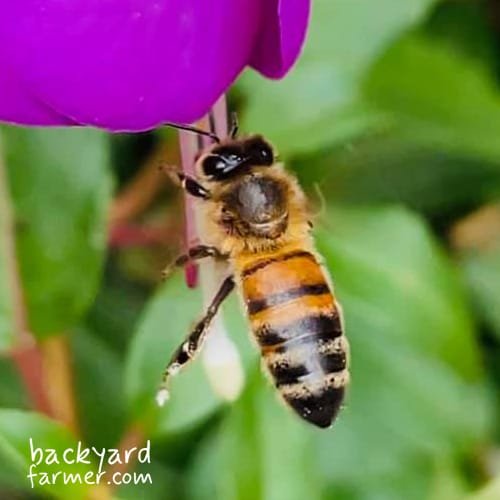
A Honey Bee is usually a slim, tidy-looking bee with a hairy thorax, a striped abdomen and steady flower-to-flower behaviour. It does not look as round or fluffy as a bumblebee, and it usually looks more brown or golden than a typical wasp.

Once you get your eye in, the overall shape is often the first giveaway. Honey bees have that narrow, purposeful look, especially when they are working on herbs, blossoms, or clover on a warm day.

Key things to look for

Most honey bees seen on UK garden flowers are worker honey bees. These are the foragers collecting nectar and pollen, so they are the ones you are most likely to photograph or notice on the allotment.

Look for:

  • A slim, narrow body
  • A hairy thorax
  • A striped or banded abdomen
  • Steady movement from flower to flower
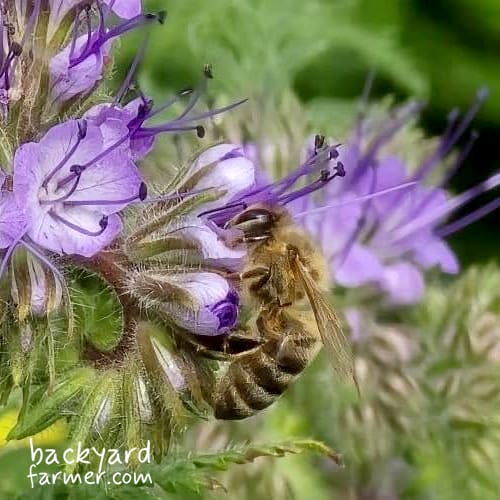
  • Pollen loads on the back legs

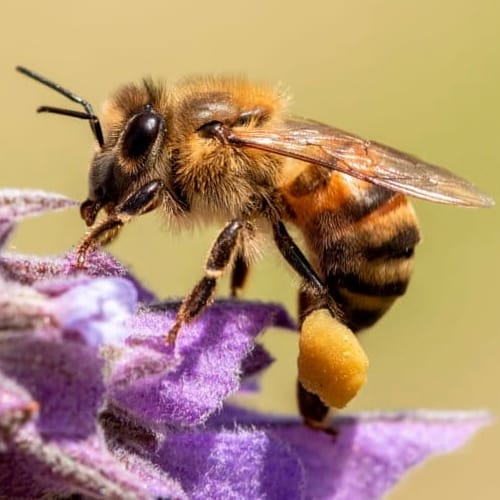
If you see a small, narrow bee working lavender, clover, ivy, fruit blossom, bramble, dandelions or herbs, check the back legs. Worker honey bees may carry visible pollen loads in baskets on their hind legs. These can look like little yellow, orange or cream blobs stuck to the sides of the legs.

Do not rely on colour alone

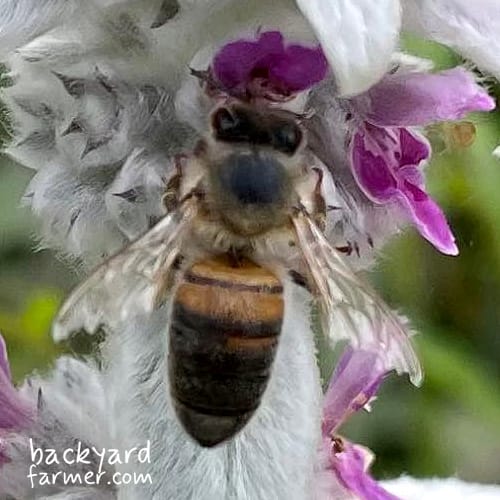
Colour can be misleading. Some honey bees look warm golden-brown, while others are amber-banded, grey-brown, dark brown or almost black.

Because of this, look at the whole insect rather than one detail. Shape, hairiness, leg details, behaviour and the flower it is using will usually tell you more than colour alone.

FeatureHoney Bee clue
ShapeSlim and neat, with a narrower body than most bumblebees
ColourVariable: golden-brown, amber, grey-brown, dark brown or nearly black
ThoraxHairy, but usually not as thickly fluffy as a bumblebee
AbdomenStriped or banded, often with brown, amber or darker bands
LegsWorker bees may carry pollen in baskets on their hind legs
BehaviourSteady flower visits, often moving methodically from bloom to bloom
Common confusionBumblebees, wasps, hoverflies, drone-flies and bee-flies

As a quick rule of thumb, if it looks like a slim, brownish bee rather than a fluffy bumblebee or shiny wasp, and it is calmly working flowers with pollen on its back legs, a honey bee is a good first ID to consider.


Worker, Queen and Drone Honey Bees

Honey bees live in colonies with different types of bees, but you do not need to know the full workings of a hive to identify one in the garden.

For practical honey bee identification, the main thing to remember is this: most honey bees seen on flowers are workers. Queens and drones are part of the colony, but they are much less useful for everyday garden ID.

Worker Honey Bee

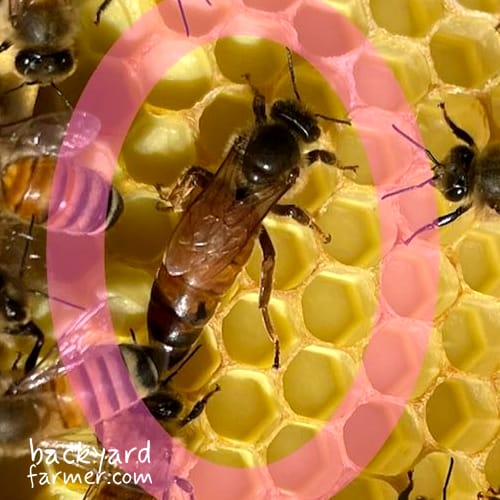
The worker honey bee is the slim flower visitor most people see, often with pollen loads on the back legs.

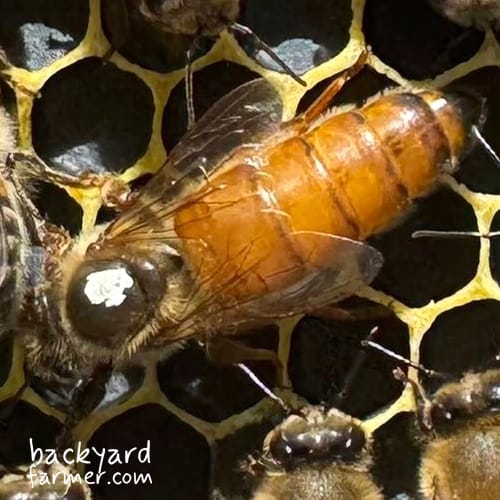
Queen Honey Bee

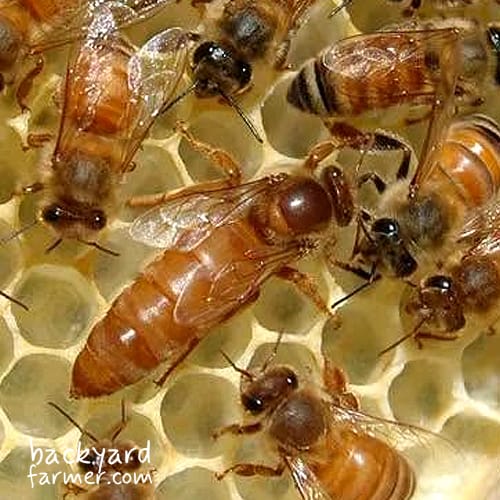
The queen honey bee is larger and longer-bodied, but she is rarely seen outside the hive or colony.

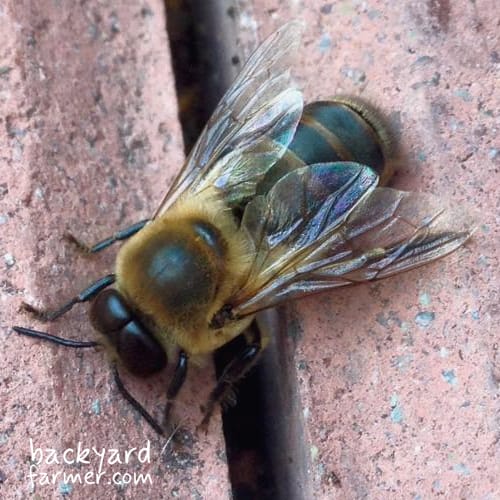
Male Honey Bee (Drone)

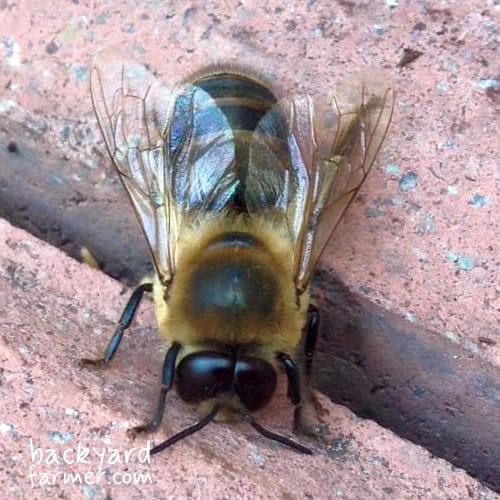
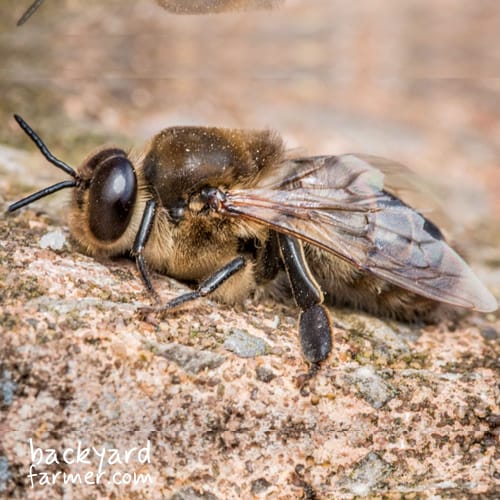
The drone is the stockier male honey bee, with very large eyes, no pollen baskets and no sting.

For most garden sightings, focus on workers.

AttributeDetails
Common NameWestern Honey Bee
Latin NameApis mellifera
Size12–20 mm
LocationWorldwide, native to Europe, Africa, and parts of Asia
Active MonthsMarch–October (varies by climate)
HabitatWoodlands, meadows, gardens, and managed hives
Nesting BehaviorColonies in tree cavities, rock crevices, and man-made hives
Social BehaviorHighly social, living in large colonies with a queen, workers, and drones
Flora & FaunaPrefers nectar-rich flowers such as lavender, clover, apple blossoms, and wildflowers
UK StatusCommon

Is the European Honey Bee Different?

For normal UK garden identification, the Honey Bee, Western Honey Bee and European Honey Bee all point to the same species: Apis mellifera.

You may see these names used in different books, websites or beekeeping circles. However, for a beginner-friendly bee ID guide, they should not be treated as separate species.

Why this guide treats them together

This guide keeps them together because splitting “European Honey Bee” into a separate profile would make things more confusing than helpful.

A reader could easily come away thinking they need to separate two different honey bee species in the garden. In most UK garden sightings, that is not what is going on.

The real complication is not the common name. It is the variation within Apis mellifera itself. Honey bees can differ in colour, size, pattern and ancestry, especially where managed, feral and mixed colonies overlap.

Beekeepers may talk about:

  • Native black bees
  • Italian bees
  • Carniolan bees
  • Buckfast bees
  • Other strains, forms or mixed lines

That is useful in a beekeeping context, but it is a different level of identification. It is not something most gardeners need to split when they see a honey bee working a flower.

Simple naming guide

For most gardeners, wildlife watchers and casual recorders, this is the safest way to think about the names:

Name usedWhat it means in this guide
Honey BeeThe familiar honey bee, Apis mellifera
Western Honey BeeAnother common name for Apis mellifera
European Honey BeeAlso commonly used for Apis mellifera
European Dark Bee / native black beeA more specific form or subspecies discussion, not a beginner garden ID

So, if you see a honey bee visiting flowers in the UK, record it as Honey Bee/Apis mellifera unless you have specialist evidence to go further.

That keeps the ID useful, accurate and honest, which is always better than over-naming something from colour alone.


Honey Bee Forms, Colours and Subspecies

Honey bees are not all the same shade of yellow and brown. In the UK, you may see honey bees that look:

  • Warm golden
  • Amber-banded
  • Grey-brown
  • Dark brown
  • Blackish
  • Somewhere in between

That range is normal. Managed colonies, feral bees and mixed lines all overlap in the UK, so colour can vary a lot from one honey bee to the next.

Why colour can confuse identification

A dark honey bee can easily catch your eye and make you wonder if you have found something different. However, it is still usually safest to record it as Honey Bee/Apis mellifera unless you have stronger evidence.

Colour helps build the picture, but it should not carry the whole ID on its own. A bee’s shape, behaviour, legs and overall structure matter more than whether it looks pale, golden or dark.

What about the native black bee?

You may come across the European Dark Bee, often called the native black bee, in UK beekeeping discussions.

This usually refers to Apis mellifera mellifera, a darker form or subspecies associated with north-west Europe.

However, this is not something most gardeners can identify reliably from a quick photo, dark colouring can be a clue, but it is not proof.

Many honey bees are mixed or hybridised, and reliable subspecies work may involve specialist checks such as:

  • Body measurements
  • Wing features
  • Breeding history
  • Genetic evidence
  • Expert assessment

For a normal garden sighting, that is far beyond what most of us can confirm from a quick look at a bee on lavender or ivy.

Common honey bee colour forms mentioned by beekeepers

Beekeepers may refer to several forms, strains or subspecies of honey bee. These names can be useful in a beekeeping context, but they should not be treated as simple beginner field IDs.

Name you may hearHow to treat it in a garden ID guide
European Dark Bee / native black beeA darker form/subspecies discussion; do not identify from colour alone
Italian BeeOften linked with warmer golden colouring, but not a casual garden ID
Carniolan BeeOften discussed by beekeepers, but not something to split in this guide
Buckfast BeeA managed strain; not a separate wild species for beginner ID
Dark honey beeBest recorded as Honey Bee / Apis mellifera unless specialist evidence is available

The important point is simple: honey bee colour is variable, but the species-level ID is usually enough.

For a practical UK bee record, it is better to be accurate and cautious than to over-name a dark or unusual-looking honey bee.

Takeaway: A dark honey bee is still best recorded as Honey Bee/Apis mellifera unless you have specialist evidence. Dark colouring does not automatically mean European Dark Bee or native black bee.


Honey Bee Lookalikes

Honey bees are familiar, but they are not the only striped insects working flowers in the garden.

In the UK, they are often confused with:

  • Bumblebees
  • Wasps
  • Hoverflies and drone-flies
  • Bee-flies
  • Some solitary bees

The trick is to look at the whole insect rather than one feature on its own. Colour helps, but shape, movement, hairiness, wings and legs usually tell you more.

LookalikeMain difference from a Honey Bee
BumblebeeRounder, furrier and heavier-looking, often with clearer tail colours
WaspSmoother, shinier and brighter yellow-and-black, with a more obvious narrow waist
Hoverfly / drone-flyFly-like eyes, very short antennae, one pair of wings and no pollen baskets
Bee-flyFluffy fly with a long forward-pointing proboscis and hovering flight
Solitary beeVery variable; often smaller, faster or carrying pollen in a different way

Honey Bee vs Bumblebee

Honey bees are usually slimmer, neater and less fluffy than bumblebees. They have a narrower, tidier body shape and can look slightly more wasp-like at first glance, although they are hairier and browner than a typical wasp.

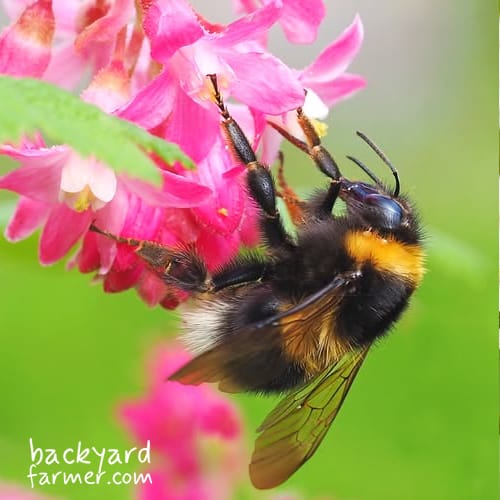
female bombus terrestis buff-tailed bumblebee

Bumblebees usually look:

  • Rounder
  • Chunkier
  • Furrier
  • More “teddy bear-like”
  • More clearly marked with tail colours

Common bumblebee tail colours include white, buff, red, orange and ginger. Once you start noticing the tail colour and body shape, bumblebees become much easier to separate from honey bees.

Small or faded bumblebees can still confuse beginners. Common Carder Bees, for example, are ginger-brown and can look honey bee-like when they are moving quickly between flowers.

Even so, carder bees usually look fluffier and more rounded. Honey bees tend to look slimmer, neater and more sharply banded.

Honey Bee vs Wasp

Wasps are one of the most common honey bee mix-ups, especially later in summer.

That is when people often notice wasps around:

  • Food
  • Bins
  • Ripe fruit
  • Sugary drinks
  • Picnic tables

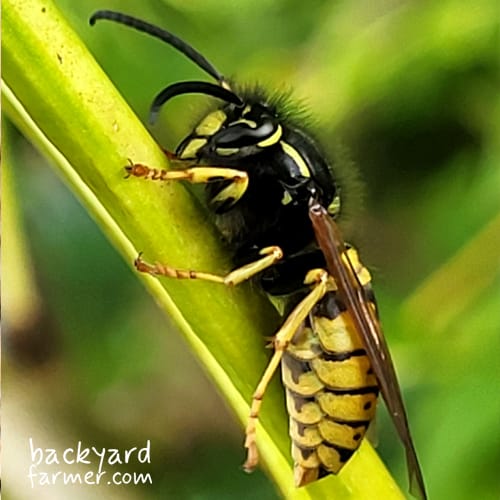
A wasp usually looks smoother, shinier and more brightly marked in yellow and black. It also has a very obvious narrow waist.

A honey bee is hairier, softer-looking, and usually more brown, golden or amber overall. On flowers, a honey bee often looks focused and steady. Wasps tend to look sleeker, sharper and more restless.

FeatureHoney BeeWasp
BodyHairier and softer-lookingSmooth and shiny
ColourBrown, golden, amber or darkerBright yellow and black
WaistLess sharply pinchedVery narrow and obvious
BehaviourOften calmly works flowersOften noticed around food, fruit and bins

Honey Bee vs Hoverfly / Drone-fly

Hoverflies are flies, not bees, but some of them are excellent bee mimics.

The drone-fly is especially easy to mistake for a honey bee. It has a brownish, bee-like body and often visits the same flowers, so this is one of the lookalikes worth taking seriously.

The best clues are the head, wings and behaviour.

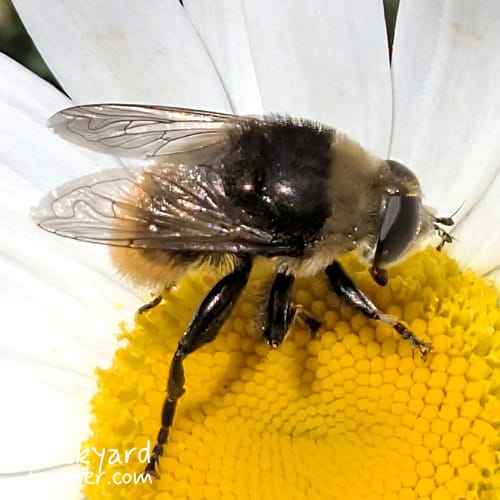
hoverfly

Look for these fly features:

  • Very large, fly-like eyes
  • Very short antennae
  • One pair of wings
  • No pollen baskets
  • Hovering or darting flight

Honey bees usually look hairier, have longer antennae and move more steadily from flower to flower.

If the insect looks like a honey bee but has a very fly-like face, short antennae and a hovering flight, it may be a hoverfly rather than a bee.

Honey Bee vs Bee-fly

Bee-flies are another common spring confusion. They are fluffy, bee-like flies that hover around flowers, but they have a different look once you notice the details.

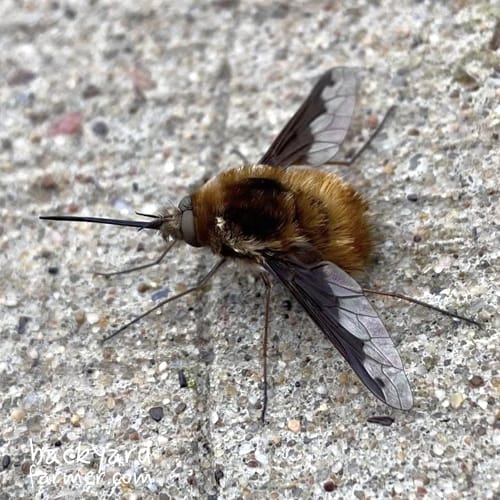
bee fly

A bee-fly often has:

  • A rounded, fuzzy body
  • A long, straight proboscis pointing forward
  • A hovering flight
  • A more fly-like way of moving around flowers

That long forward-pointing proboscis can look like a tiny drinking straw. Honey bees do not have that long forward-pointing spike, and they usually land more firmly on flowers while they forage.

Bee-flies are most likely to confuse people in spring, especially when they hover around primroses, lungwort, blossom and other early flowers.

Honey Bee vs Solitary Bees

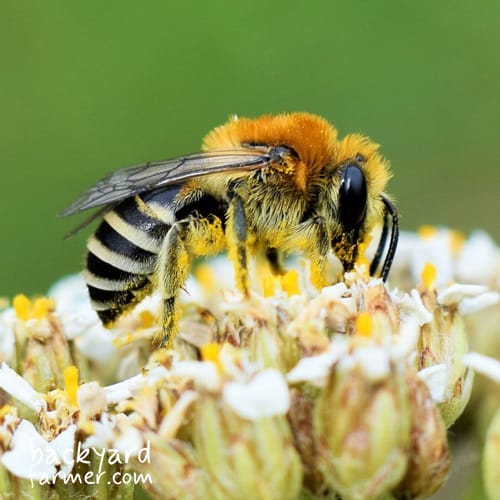
Some solitary bees can look honey bee-like at first glance, especially small brown mining bees and other early-season species.

The difficulty is that solitary bees are a very mixed group, so there is no single quick rule that covers them all.

red-mason-bee

Many solitary bees are:

  • Smaller than honey bees
  • Faster moving
  • More variable in shape and colour
  • Less likely to show obvious pollen baskets
  • Found around bare soil, walls, stems or small nesting holes

Some carry pollen on leg hairs, while others carry it underneath the abdomen rather than in obvious pollen baskets. They also do not live in honey bee-style hives or large colonies.

When in doubt, it is better to record the sighting more cautiously than to force a species-level ID.

A clear photo of the face, side, wings and legs will make a big difference if you want to check it later with a bee ID guide or recording group.


Where and When to See Honey Bees in the UK

Honey bees are common across much of the UK, especially where there are plenty of flowers and suitable forage nearby.

You are most likely to see them in places such as:

  • Gardens
  • Allotments
  • Orchards
  • Parks
  • Hedgerows
  • Farmland edges
  • Wildflower-rich spaces

You do not need to spot a hive nearby to see honey bees. Managed colonies, feral colonies and bees travelling in from nearby hives can all turn up on the same good patch of flowers.

When are Honey Bees active?

Honey bees are most often seen from spring through to autumn, when the weather is warm enough for regular foraging.

On mild days, especially in sheltered sunny spots, they may also fly outside the main season. Even so, winter sightings are usually occasional rather than something to expect every day.

Early spring flowers

In early spring, honey bees are drawn to fresh sources of pollen and nectar. This is when the first warm days can suddenly bring life back into the garden.

Good places to check include:

  • Willow
  • Fruit blossom
  • Dandelions
  • Early garden flowers
  • Flowering shrubs

At this time of year, you may see workers moving steadily between flowers while carrying pale yellow or orange pollen on their hind legs.
Late spring and summer flowers

Through late spring and summer, honey bees use a wide mix of garden, wild and allotment plants.

Common favourites include:

  • Clover
  • Bramble
  • Lavender
  • Thyme
  • Rosemary
  • Oregano
  • Chives
  • Borage
  • Fruit flowers
  • Wildflowers
  • Garden border plants

Allotments can be especially good for honey bees if herbs, soft fruit, beans, peas, squash, flowers and a few flowering weeds are allowed to bloom. It is often the slightly less tidy patches that end up buzzing the most.

Autumn flowers

Later in the year, ivy becomes one of the best flowers to check. On a warm autumn day, flowering ivy can be alive with honey bees, wasps, hoverflies and other insects.

Other useful late-season plants include:

  • Sedums
  • Late daisies
  • Michaelmas daisies
  • Autumn-flowering herbs
  • Other open flowers that still offer nectar

These late flowers can bring honey bees into the garden when many summer blooms have faded.

SeasonWhere to look for Honey Bees
Early springWillow, fruit blossom, dandelions, flowering shrubs and early garden flowers
Late spring to summerClover, bramble, lavender, herbs, wildflowers, allotment crops and garden borders
AutumnIvy, sedums, late daisies, Michaelmas daisies and other late nectar flowers
Mild winter daysOccasional activity on sunny, sheltered flowers if conditions are warm enough

Why lots of Honey Bees may appear at once

Honey bees may appear in large numbers when a strong nectar source is available.

If a patch of ivy, bramble or lavender is suddenly covered in honey bees, it does not always mean there is a nest right beside it. They can travel from nearby colonies and gather where the feeding is best.

For identification, this context helps. A slim brownish bee calmly working flowers in spring, summer or autumn is a much stronger honey bee candidate than a shiny yellow-and-black insect investigating your picnic in late summer.


Honey Bee Nests, Hives and Swarms

Honey bees live in large colonies, which is one of the easiest ways to separate them from most solitary bees.

In the UK, a honey bee colony may be:

  • Kept in a managed hive
  • Living as a feral colony
  • Nesting in a natural or man-made cavity
  • Temporarily gathered as a swarm

Feral honey bee colonies can use places such as tree hollows, old buildings, chimneys, roof spaces or wall cavities. So, if you see honey bees using a gap in a building, it is worth taking a calm, careful look before assuming it is a wasp nest or a temporary swarm.

Hive, colony or swarm?

For a garden observer, it helps to separate three common situations: a managed hive, an established colony and a temporary swarm.

They can all involve honey bees, but they do not mean quite the same thing.

What you are seeingWhat it usually means
Managed hiveA beekeeper’s colony, usually in a purpose-built hive or apiary
Feral or wild-living colonyHoney bees living in a cavity such as a tree hollow, roof space, chimney or wall void
Temporary swarmA large cluster of honey bees is resting while scout bees search for a new home

What does a Honey Bee swarm look like?

A honey bee swarm can look dramatic if you have never seen one before. It may appear suddenly and look like a living clump of bees hanging in one place.

A swarm may look like a:

  • Hanging ball of bees
  • Rugby-ball-shaped cluster
  • Dense clump on a branch
  • Cluster on a fence, post, wall or other surface

This is usually a temporary stage while the bees pause and scout for a suitable new nest site.

Swarms are a natural part of honey bee colony life. However, you do not need to understand the full beekeeping side to respond sensibly. For most readers, the useful thing to know is that a honey bee swarm is different from a wasp nest, a bumblebee nest or a few solitary bees using holes in the ground.

When bees are using a wall, roof or chimney

If you see bees repeatedly flying in and out of a wall, roof, chimney or tree cavity, that may suggest an established colony rather than a temporary swarm.

In that situation, avoid:

  • Blocking the entrance
  • Spraying the bees
  • Sealing them inside
  • Trying to remove them yourself

Established colonies inside buildings may need different advice from a swarm hanging openly on a branch. Blocking bees in can make the problem worse, so it is better to get the ID checked before doing anything drastic.

ID clues around nests and swarms

For identification, look for the same honey bee clues you would use on flowers:

  • Slim brownish bees
  • Steady flight
  • Hairy bodies
  • Workers with pollen baskets
  • Many similar-looking bees clustered together

A honey bee swarm will usually involve many similar-looking bees gathered in one cluster. That is different from a papery wasp nest, a few ground-nesting solitary bees, or a small bumblebee nest tucked into grass, compost or an old mouse hole.


What to Do if You Find a Honey Bee Swarm

Finding a honey bee swarm in the garden can be a bit of a shock, especially if it looks like a big living clump of bees hanging from a branch, fence or wall.

However, most swarms are not looking for trouble. They are usually a temporary cluster of honey bees resting while scout bees search for a new home.

First response: Stay calm and give them space

The best thing you can do is stay calm, keep back and avoid making sudden changes around the swarm.

Do not:

  • Spray the bees
  • Hose them down
  • Knock them from the branch or wall
  • Try to block them into a gap
  • Let children or pets get close

Disturbing a swarm can make the situation worse. It can also put the bees, people and pets at risk for no good reason.

What to do next

What to doWhy it helps
Keep your distanceGives the bees space and reduces the chance of anyone getting stung
Keep children and pets awayStops curious hands, noses and paws from getting too close
Do not spray or disturb themA swarm is usually temporary, and disturbing it can make the bees defensive
Take a clear photo from a safe distanceHelps confirm whether they are honey bees before asking for advice
Check the ID carefullyBumblebees, wasps and hoverflies need different responses
Contact a local swarm collector if neededAccessible honey bee swarms may be collected by a suitable beekeeper or swarm collector

Check they are actually Honey Bees

Before asking for help, try to confirm whether you are actually looking at honey bees.

A honey bee swarm is usually made up of many similar-looking brownish bees clustered together. It is different from:

  • A wasp nest
  • A bumblebee nest in grass, compost or an old mouse hole
  • A group of hoverflies feeding on flowers
  • Solitary bees use small holes in soil, walls or stems

A clear photo from a safe distance can help a beekeeper, swarm collector, or wildlife group confirm what you are dealing with. It is a simple step, but it can save a lot of confusion.

Who can help with a swarm?

Many swarm collectors only deal with honey bee swarms.

They usually cannot collect:

  • Bumblebees
  • Wasps
  • Hoverflies
  • Solitary bees
  • Established honey bee colonies already living inside a roof, chimney or wall

If bees are repeatedly flying in and out of a building, that may need different advice from a temporary swarm hanging in the open.

A simple approach is best: keep people and pets back, take a photo if it is safe, check the ID, and contact a local beekeeper, swarm collector or suitable professional for advice.

Most importantly, do not panic and do not reach for sprays or quick fixes. With swarms, a calm response is nearly always the better one.


Why Honey Bees Matter

Honey bees are important pollinators in gardens, orchards, allotments and farmland edges.

As they move from flower to flower, collecting nectar and pollen, they can help pollinate:

  • Fruit trees
  • Soft fruit
  • Herbs
  • Vegetables
  • Garden flowers
  • Wild plants around the edges of growing spaces

They are also closely tied to food growing and local beekeeping. For many people, the honey bee is the first bee they learn to recognise. It has become a familiar symbol of pollination, honey, summer flowers and productive gardens.

Honey bees are important, but they are not the whole story

It is worth keeping the message balanced. Honey bees matter, but they are not the only bees that matter.

The UK also has many bumblebees and solitary bees, and these wild pollinators need support too. They need flowers, nesting places and pesticide-free spaces just as much as honey bees do.

Keeping honey bees is not the same as “saving the bees”. Managed hives can be valuable, especially when cared for responsibly, but pollinator decline is also about wider habitat problems.

These include:

  • Habitat loss
  • Lack of wildflowers
  • Pesticide pressure
  • Disease risk
  • Loss of nesting sites for wild bees
  • Gaps in forage through the year

That is why a bee-friendly garden should not be built around one species alone. Honey bees are part of the picture, but they sit alongside bumblebees, solitary bees, hoverflies, butterflies, moths and plenty of other useful insects.

Why balance matters

In some places, large numbers of managed honey bees may add pressure to wild pollinators by competing for the same flowers.

That does not mean honey bees are bad, and it does not mean beekeeping is a problem by default. It simply means the best gardens offer enough food and habitat for a wide mix of pollinators, not just the most familiar ones.

Honey bees help byWild bees also need
Pollinating fruit, herbs, vegetables and garden flowersFlowers across the whole growing season
Supporting local beekeeping and honey productionNesting sites in soil, stems, walls, banks and undisturbed corners
Encouraging people to care about pollinatorsPesticide-free gardens and more varied habitats
Bringing visible life to gardens and allotmentsProtection from habitat loss and poor forage gaps

The best approach is to value honey bees while also making room for the wild bees and other insects that quietly do their bit in the background.

A garden buzzing with different pollinators is far stronger than one designed around honey bees alone.


How to Help Honey Bees and Wild Bees

The best way to help honey bees is also one of the best ways to help wild bees: grow more flowers, reduce chemical use and make the garden useful to pollinators for as much of the year as possible.

Honey bees need nectar for energy and pollen for protein. They do best where there is a steady run of flowers from early spring through to autumn, rather than one short burst of colour in summer.

A garden with blossom, herbs, flowering weeds, wildflowers and late-season blooms will support far more insects than a spotless space with only a few ornamental plants. In my experience, the slightly messy, useful corners are often where the most life turns up.

Grow flowers across the seasons

Try to include plants that flower at different times of year. This gives honey bees and wild bees a better chance of finding food whenever they are active.

Aim for a mix of:

  • Early flowers to help bees after winter
  • Summer flowers for the busiest part of the season
  • Autumn flowers for late nectar and pollen
  • Simple, open flowers that insects can actually use
SeasonUseful garden forage
Early springWillow, fruit blossom, dandelions, lungwort, flowering currant and early herbs
Late spring to summerClover, lavender, thyme, rosemary, chives, borage, bramble, beans and wildflowers
AutumnIvy, sedums, Michaelmas daisies, late herbs, late daisies and other open flowers

You do not need a perfect wildflower meadow to make a difference. A patch of clover in the lawn, a few herbs in flower, a fruit tree, an untidy corner or a strip of ivy can all become useful feeding places.

Leave some useful “weeds” where you can

Dandelions, clover, bramble and ivy are often treated as problems, but they can be excellent pollinator plants.

That does not mean letting the whole garden run wild if that does not work for you. Instead, leave a few useful patches where they are not causing trouble.

On an allotment, this might mean:

  • Allowing some herbs to flower
  • Leaving clover around paths
  • Keeping a small wildlife edge
  • Letting a bramble patch flower before cutting it back later in the year
  • Leaving a few dandelions in quieter corners

This is usually the easiest win. You are not buying anything, building anything or turning the plot upside down. You are just letting a few useful plants do their job.

Avoid pesticides on flowering plants

Avoid using pesticides on plants that are in flower or likely to be visited by bees.

Even products sold for garden use can cause problems if they are applied carelessly, especially on open blooms where bees, hoverflies and other insects are feeding.

A healthier approach is to build a more balanced garden with:

  • Mixed planting
  • Healthy soil
  • Wildlife habitat
  • Natural predators
  • Fewer quick chemical fixes

Ladybirds, lacewings, hoverflies, birds and wasps all play their part in keeping pest numbers in check. So, before reaching for a spray, it is worth asking whether the garden can do some of that work for you.

Provide safe water

Honey bees and other insects may use shallow water, especially in dry weather.

You can use:

  • A shallow dish
  • A bird bath edge
  • A tray with stones or gravel
  • Floating corks or twigs as landing points

The important thing is to give bees somewhere to land without drowning. Keep the water shallow, top it up during dry spells, and clean it now and again so it does not become stagnant.

Remember the wild bees too

Honey bees are only part of the pollinator picture. Bumblebees, solitary bees, hoverflies, butterflies, moths and beetles all use gardens in different ways.

Some need flowers. Some need bare soil. Some use hollow stems. Others shelter in hedges, walls, banks or undisturbed corners.

To help the wider pollinator community, leave a mix of habitats where you can:

  • Bare soil for mining bees
  • Hollow stems for cavity nesters
  • Long grass for shelter
  • Native hedging
  • Log piles
  • Leaf litter
  • Undisturbed sunny edges

The aim is not to create a perfect show garden. It is to build a living space with enough food, shelter and variety to keep pollinators coming back.


Common Honey Bee Misconceptions

Honey bees are familiar insects, but there is still plenty of confusion around them.

Some of that comes from common names. Some comes from colour variation. And some comes from the way “save the bees” gets talked about online. It is well-meaning, but it can sometimes blur the difference between managed honey bees and wild pollinators.

Common points of confusion

Here are the main honey bee misconceptions worth clearing up.

MisconceptionWhat is more accurate
European Honey Bee is a separate UK speciesIn this guide, Honey Bee, Western Honey Bee and European Honey Bee all refer to Apis mellifera.
A dark honey bee must be a native black beeDark colour alone is not enough to confirm a European Dark Bee or native black bee.
Honey bees are always yellowUK honey bees can look golden, brown, amber-banded, greyish, dark brown or almost black.
Keeping honey bees saves the beesHoney bees matter, but wild bees, bumblebees and solitary bees also need habitat, flowers and protection.
All swarms are dangerousMost honey bee swarms are temporary and not looking for trouble, but they should still be left alone.
Any striped insect on flowers is a honey beeWasps, hoverflies, drone-flies, bee-flies, bumblebees and solitary bees can all cause confusion.
Beekeepers will remove any beesMany swarm collectors only deal with honey bee swarms, not wasps, bumblebees, hoverflies or established colonies inside buildings.

A sensible approach to Honey Bee ID

The safest approach is to avoid over-identifying.

If you see a slim brownish bee with a hairy thorax, striped abdomen and pollen baskets on the back legs, Honey Bee/Apis mellifera is a sensible ID to consider.

However, it is worth checking the lookalikes before deciding, especially if the insect is:

  • Very shiny
  • Very fluffy
  • Hovering like a fly
  • Bright yellow and black
  • Nesting in a different way
  • Missing obvious pollen baskets

Good bee identification is not about forcing every insect into a named box. That is where mistakes creep in, especially with flies and small bumblebees.

Instead, notice the useful details, stay honest about uncertainty, and give the sighting the most accurate name you can. Sometimes that means stopping at Honey Bee/Apis mellifera, and sometimes it means admitting that the insect needs a closer look.


FAQs

Is a Western Honey Bee the same as a European Honey Bee?

Yes. For normal UK garden identification, Honey Bee, Western Honey Bee and European Honey Bee all refer to Apis mellifera.
This article treats them together because splitting them into different beginner profiles would make the ID more confusing than helpful.

How do I identify a Honey Bee in the UK?

Look for a slim, neat-looking bee with a hairy thorax, a striped abdomen and steady flower-to-flower behaviour. Worker honey bees may also carry yellow, orange or cream-coloured pollen loads in baskets on their hind legs.
Colour can vary from golden-brown to dark brown or almost black, so shape, behaviour and pollen baskets are more useful than colour alone.

What is the difference between a Honey Bee and a bumblebee?

Honey bees are usually slimmer, narrower and less fluffy than bumblebees.
Bumblebees look rounder, heavier and more teddy bear-like. They often have clearer tail colours, such as white, buff, red, orange or ginger.
Honey bees usually look neater and more evenly banded, especially when seen foraging on flowers.

How can I tell a Honey Bee from a wasp?

A Honey Bee is hairier, softer-looking, and usually more brown, golden or amber overall.
A wasp is usually smoother, shinier and more brightly marked in yellow and black, with a narrower waist. Honey bees are often seen calmly working flowers, while wasps are more commonly noticed around food, fruit, bins and sugary drinks later in the year.

How can I tell a Honey Bee from a hoverfly?

Hoverflies have very short antennae, large fly-like eyes, one pair of wings and no pollen baskets. Many also hover or dart in mid-air.
Honey bees are hairier, have longer antennae, and worker bees may carry pollen on their hind legs. Drone-flies can look especially honey bee-like, so check the face, wings and legs carefully before deciding.

Can you tell honey bee subspecies apart by sight?

Usually not reliably. Honey bee colour varies a lot, and many UK honey bees are managed, mixed or hybrid forms.
Specialist checks may involve measurements, wing features or genetic evidence. For most garden sightings, Honey Bee/Apis mellifera is the safest and most useful identification.

Does a dark Honey Bee mean it is a native black bee?

No. Some honey bees are naturally darker, but dark colour alone is not enough to identify a European Dark Bee or native black bee.
Unless you have specialist evidence, a dark honey bee seen in the garden should still be recorded as Honey Bee/Apis mellifera.

Do Honey Bees sting?

Worker honey bees can sting, but foraging honey bees are usually focused on flowers and are not looking for trouble.
They are more likely to sting if they are handled, trapped, crushed, disturbed near a colony, or defending a nest, hive or swarm. Give them space and avoid disturbing colonies or swarms.

Are Honey Bees endangered?

Honey bees face pressures from parasites, disease, pesticides and habitat loss, but managed honey bees are not the same conservation issue as many declining wild bees.
The best garden approach is to support a wide range of pollinators, including honey bees, bumblebees, solitary bees, hoverflies, butterflies, moths and other useful insects. Flowers, habitat and pesticide-free spaces help far more than focusing on one species alone.

What should I do if I find a Honey Bee swarm?

Keep your distance, keep children and pets away, and do not spray, hose, knock down or disturb the bees.
If it is safe, take a clear photo from a distance. This can help confirm whether the insects are honey bees before anyone gives advice.
If it appears to be a honey bee swarm, contact a local swarm collector, beekeeper or beekeeping association for guidance.

What should I do if Honey Bees are in my roof or wall?

Do not block the entrance or spray them.
If bees are repeatedly flying in and out of a roof, wall, chimney or cavity, it may be an established colony rather than a temporary swarm.
Take a photo if it is safe, confirm whether they are honey bees, and contact a local beekeeper, swarm collector or suitable pest/wildlife professional for advice

Facebook
X
Pinterest
Reddit

Related Articles

Scroll to Top