
Introduction
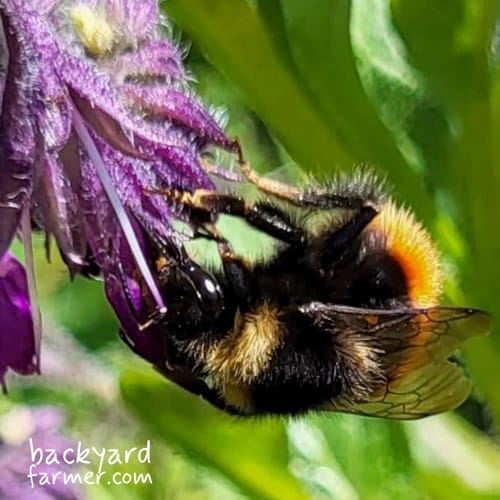
The Bilberry Bumblebee (Bombus monticola) is a small upland bumblebee found mainly on UK moorland, heathland and flower-rich hillsides. The main field marks are two yellow thorax bands and a broad red-orange tail that covers much more than just the tip.
It can be confused with other red-tailed species, so the safest identification comes from the full pattern, not habitat alone. Check the size of the tail, the yellow thorax bands and the overall impression before ruling out lookalikes such as the Early Bumblebee, Red-tailed Bumblebee and Heath Bumblebee.
How To Identify A Bilberry Bumblebee
Start with the overall pattern. A Bilberry Bumblebee is usually a small to medium-sized bumblebee with:
- two yellow thorax bands
- a darker front section to the abdomen
- a broad red-orange tail that covers much more than just the tip
The tail is often the quickest clue. Many red-tailed bumblebees show red only at the rear end, but on a Bilberry Bumblebee the coloured section is usually much broader and more obvious.
The yellow banding matters just as much. If the thorax looks clearly banded and the tail looks extensively red-orange, you are on the right lines. If one feature looks weak or unclear, step back and judge the whole bee, not one blurred detail.
Habitat can help, but only as support. This species is strongly linked with upland moorland, heathland and flower-rich hillsides, yet the safest ID still comes from the pattern first.
Once the basic pattern fits, the next step is to check which caste you are looking at, because queens, workers and males can each look slightly different in the field.
Queen Bilberry Bumblebee
The queen is the largest caste and usually the first to appear in spring.
Look for:
- two yellow thorax bands
- a darker front section to the abdomen
- a broad red-orange tail
- a bulkier shape than workers
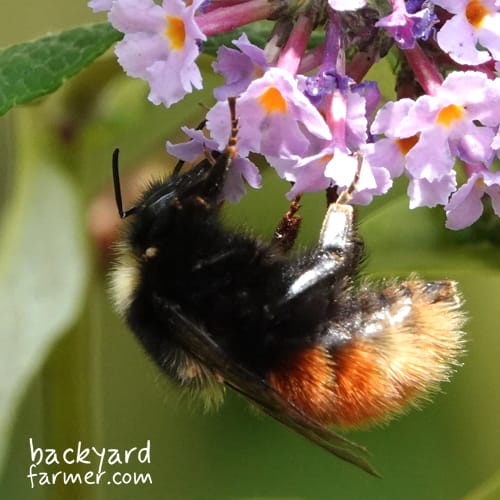
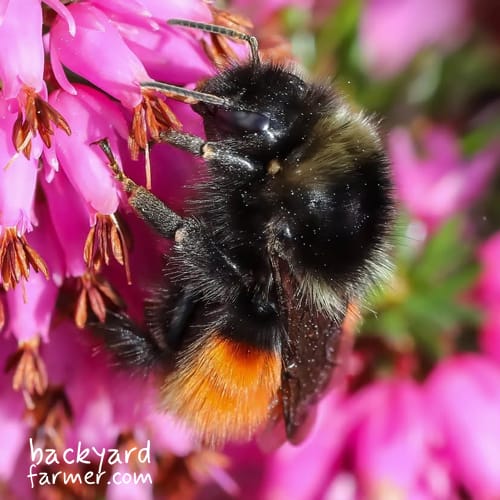
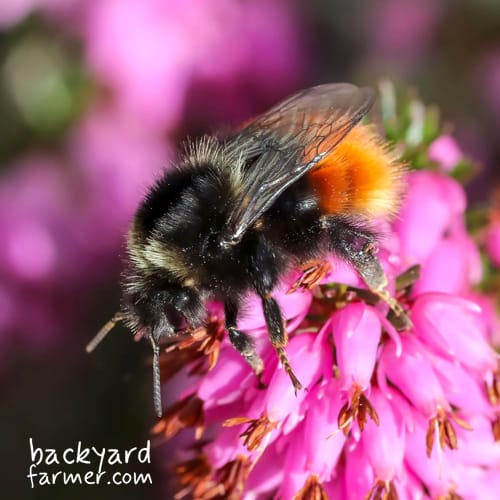
Spring timing can help, especially in upland habitat, but it should only support the identification. The best check is still the tail and thorax pattern together, not size alone.
Female Worker Bilberry Bumblebee
Workers are smaller than queens and usually the caste you will see most often through the main season.
Look for:
- the same basic pattern as the queen
- two yellow thorax bands
- a darker front section to the abdomen
- a broad red-orange tail
- a neater, less bulky shape than a queen
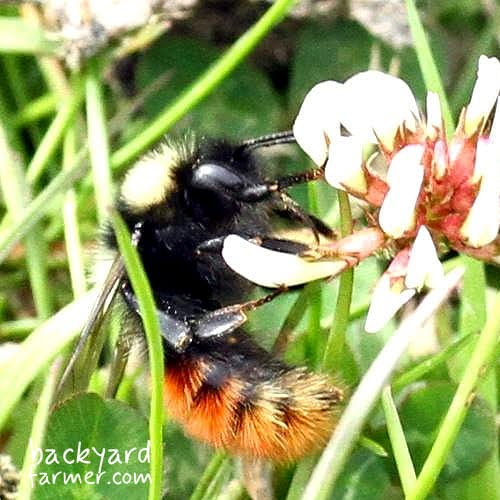
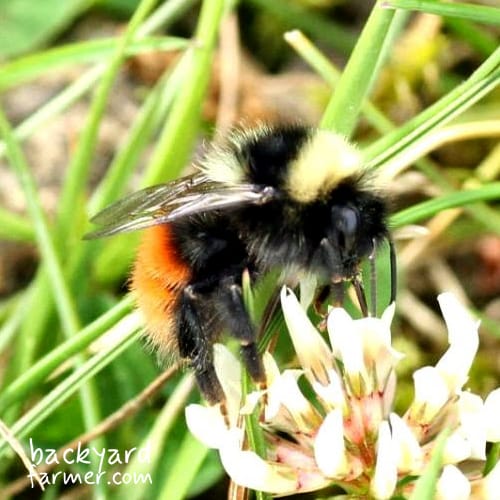
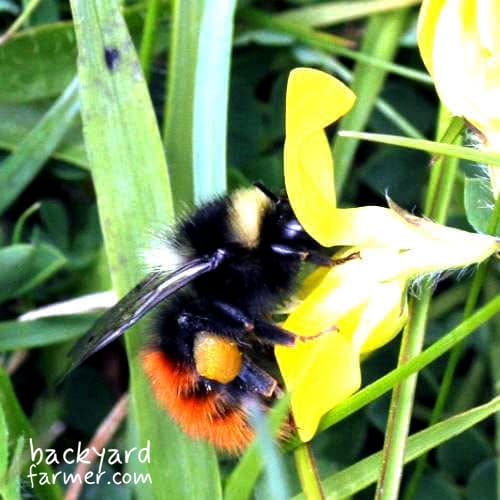
In a clear view, workers may carry pollen on the hind legs, which confirms a female. Even so, the safest ID is still the tail and thorax pattern together, not behaviour or size alone.
Male Bilberry Bumblebee
Males usually appear later in the season and can look slightly slimmer than females.
Look for:
- the same basic pattern as the females
- two yellow thorax bands
- a darker front section to the abdomen
- a broad red-orange tail
- longer antennae than females
- a brighter yellow face in a good view
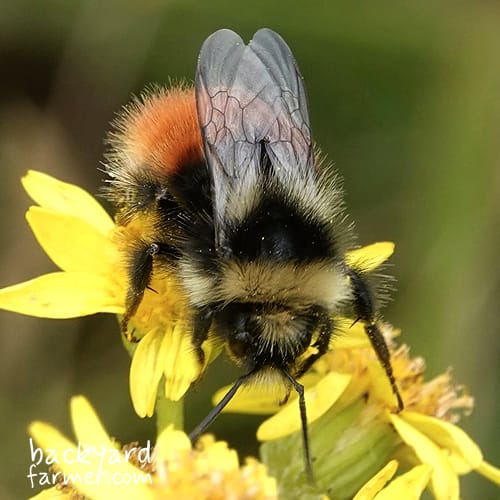
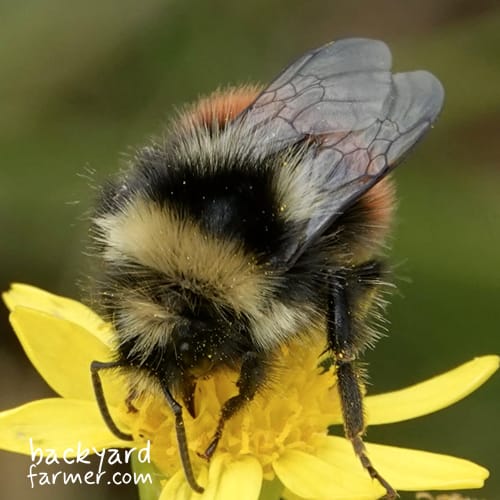
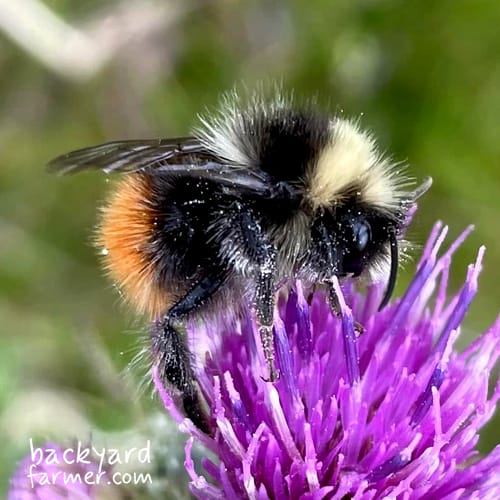
Male features can help, but the safest ID is still the tail and thorax pattern together. Face colour and antennae are supporting clues, not the whole identification.
Bilberry Bumblebee Identification And Key Facts
Use this as a quick-reference check.
| Feature | Bilberry Bumblebee |
|---|---|
| Scientific name | Bombus monticola |
| Other names | Also called the Blaeberry Bumblebee or Mountain Bumblebee |
| Best beginner clue | Two yellow thorax bands and a broad red-orange tail |
| Overall size | Small to medium-sized bumblebee |
| Queens | Largest caste, usually seen first in spring |
| Workers | Smaller and neater than queens, and usually the most often seen |
| Males | Usually seen later in the season, often with a brighter yellow face and longer antennae |
| Tail colour | Broad red-orange tail, not just a red tip |
| Main habitats | Upland moorland, heathland, flower-rich grassland and hillsides |
| Typical UK range | Mainly the north and west, where suitable upland habitat remains |
| Active months | Usually spring to late summer, sometimes into early autumn |
| Important flowers | Bilberry, heather, clovers, bird’s-foot trefoil, thistles and bramble |
| UK status | Scarce and localised upland species |
The key field check is still the same: two yellow thorax bands, a darker front to the abdomen, and a broad red-orange tail. If that full pattern is not there, check the similar species before confirming the ID.
Similar Species
The easiest way to avoid a wrong ID is to compare the full pattern, not just the red-orange tail.
Check these first:
- how much of the abdomen is red-orange
- whether the thorax has clear yellow bands
- the bee’s overall shape and setting
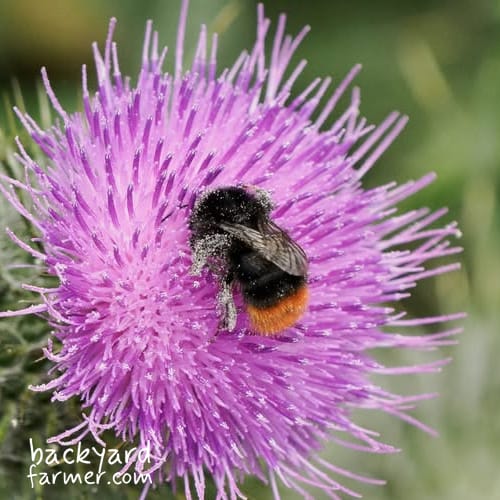
Red-tailed Bumblebee
This is a common confusion species because it also has a red tail.
Best separator: female Red-tailed Bumblebees are usually mostly black with a red tail. They do not show the same clear yellow thorax bands as a Bilberry Bumblebee.
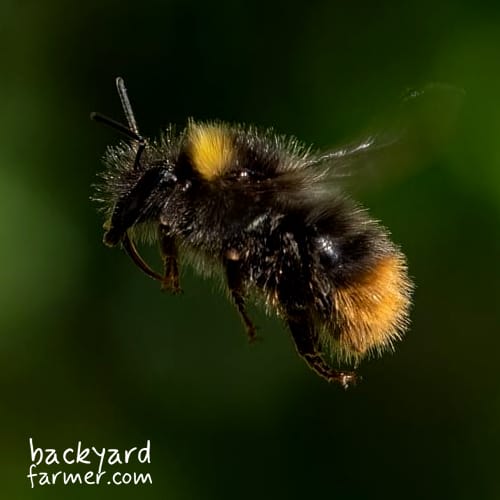
Early Bumblebee
This is often the most realistic lookalike because it is also small and can show yellow banding with a red tail.
Best separator: on an Early Bumblebee, the red-orange is usually limited to the tip of the abdomen. On a Bilberry Bumblebee, the coloured section is usually much broader.
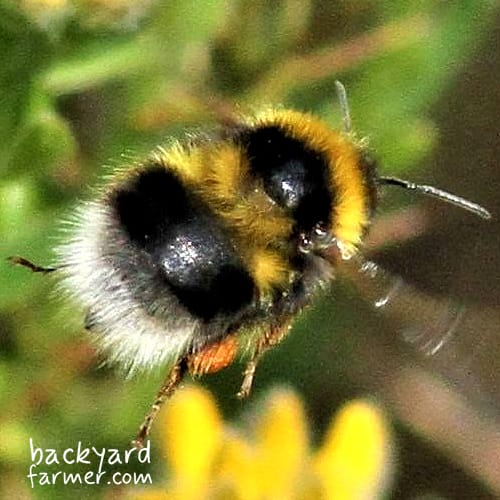
Heath Bumblebee
This species can occur in similar upland habitat, which is why beginners sometimes mix the two up.
Best separator: a Heath Bumblebee usually has a pale or whitish tail, not a broad red-orange tail.
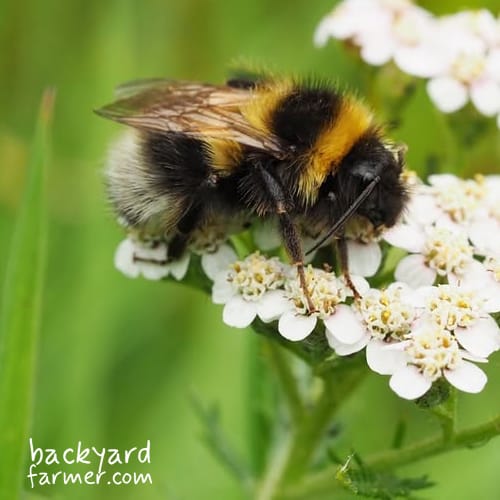
Garden Bumblebee
This is less of a direct red-tail confusion species, but it can still cause problems because of the yellow banding.
Best separator: Garden Bumblebees have a longer face and usually a pale or buff tail, not the broad red-orange tail of a Bilberry Bumblebee.
If the pattern still does not feel right, leave the identification open rather than forcing it. A clear photo of the thorax and abdomen together usually makes later checking much easier.
Where To See Bilberry Bumblebees In The UK
The Bilberry Bumblebee is mainly found in the north and west of the UK, especially in upland areas with good forage.
Most likely places to look:
- moorland and heathland
- rough upland grassland
- flower-rich hillsides
- sunny, sheltered edges with bilberry or heather
It is much less likely to turn up in ordinary lowland gardens or urban areas. Habitat can point you in the right direction, but it should only support the identification. The final check still comes from the bee’s pattern, not the location alone.
Flight Period And Active Months
The Bilberry Bumblebee is usually on the wing from spring to late summer, and sometimes into early autumn.
A simple pattern to remember:
- Queens appear first in spring
- Workers follow through the main season
- Males and new queens appear later in summer
Season can support the identification, but it should not confirm it on its own. A spring queen in upland habitat fits well, but the safest check is still the colour pattern, not the date.
Late spring and summer are usually the best times to look, especially in flower-rich upland habitat.
Flowers And Forage Plants
The Bilberry Bumblebee is strongly linked with flower-rich upland habitat. As the name suggests, bilberry is one of its best-known forage plants, but it also feeds on other nectar-rich flowers through the season.
Common plants to check:
- bilberry
- heather
- clovers
- bird’s-foot trefoil
- thistles
- bramble
These flowers can help place the bee in context, but they do not confirm the identification on their own. Other bumblebees use the same plants, so the safest check is still the colour pattern first, then the flower and habitat.
Devil’s-bit scabious can also be visited later in the season where the habitat and timing fit, but it is better treated as a supporting forage plant than a main clue.
Why The Bilberry Bumblebee Matters
The Bilberry Bumblebee is a scarce and localised upland species, not a common bee you will see everywhere. When it turns up, it often points to healthy moorland, heathland or flower-rich upland habitat.
That matters because these habitats are easily lost or worn down. When forage, shelter and nesting ground decline, so do the bees that depend on them.
For most readers, the main point is simple: this is a species worth noticing and recording. A clear photo, date and location can all be useful, especially for a bee that is localised and easy to overlook.
What To Do If You Think You’ve Seen One
If you think you have found a Bilberry Bumblebee, try to collect a few clear details before it disappears.
Most useful things to note:
- a clear photo of the thorax and tail
- the location and habitat
- the date
- the flower it was visiting, if you saw one
If you are unsure, compare it with the main lookalikes rather than forcing the identification. A careful possible Bilberry Bumblebee record with a good photo is more useful than a confident guess.
Well-documented sightings can also be worth submitting to a local records centre, county recorder or national recording scheme.
Frequently Asked Questions
Yes. The Bilberry Bumblebee is best treated as a scarce and localised species in the UK. It is strongly tied to suitable upland habitat, especially in the north and west, so most people will not come across it often in everyday lowland settings.
It is mainly found in upland parts of the north and west of the UK, especially where there is a mix of moorland, heathland, rough grassland and flower-rich hillsides. It is far less likely to be seen in ordinary urban or suburban gardens.
The most useful check is the extent of the red-orange tail. On an Early Bumblebee, the colour is usually more limited to the tip of the abdomen. On a Bilberry Bumblebee, the red-orange section is usually broader and covers much more of the rear end.
It is closely associated with bilberry and often uses heather in suitable habitat. It may also visit clovers, bird’s-foot trefoil, thistles, bramble and other nectar-rich upland flowers through the season.
The species is usually active from spring into late summer, sometimes into early autumn depending on local conditions. Queens appear first in spring, workers follow through the main season, and males are usually seen later in summer.
It can do, especially where late-season flowers, suitable habitat and flight time overlap. However, Devil’s-bit scabious is better treated as a supporting forage plant rather than the main flower most people associate with the species.
The best beginner clue is the combination of two yellow thorax bands and a large red-orange tail that covers much more of the abdomen than just the tip. That broad tail pattern is often the quickest thing to check in the field.