
The Large Garden Bumblebee (Bombus ruderatus), also called the Ruderal Bumblebee, is a scarce British species found mainly across southern England. Despite its name, it is not simply a large bumblebee commonly found in big gardens.
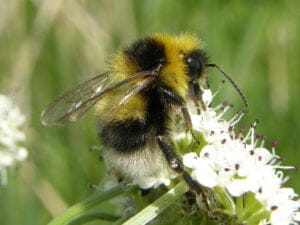
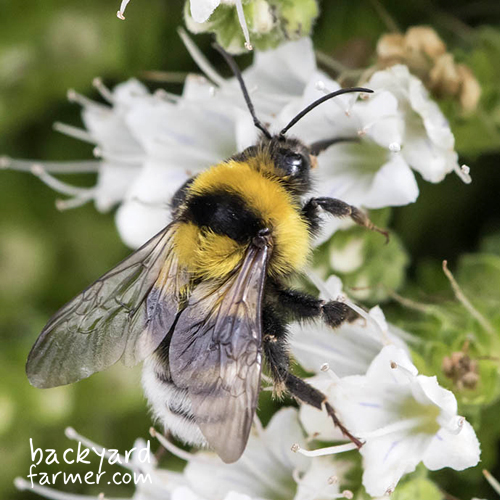
A normally marked individual has a very long face, three pale bands and a white tail. However, the Garden Bumblebee, Bombus hortorum, shares the same broad pattern. Banded individuals can be extremely difficult to separate, and one photograph may only support a possible identification.
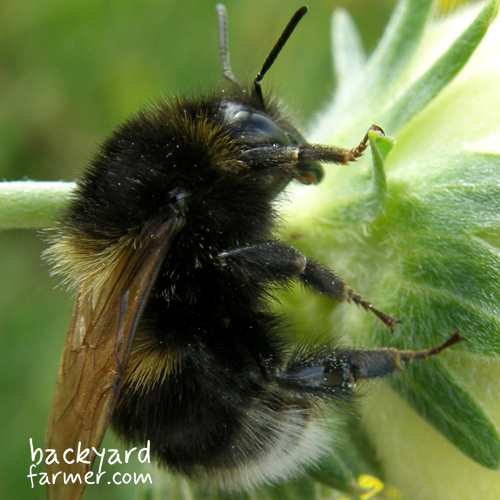
Large Garden Bumblebees can also be partly or almost entirely black. Colour form, coat and band shape can all help, but several clear photo angles are often needed.
How to Identify the Large Garden Bumblebee
Start with the face rather than the bee’s size. The face and tongue are both very long, allowing the bee to reach nectar in deep flowers such as red clover, comfrey and foxgloves.
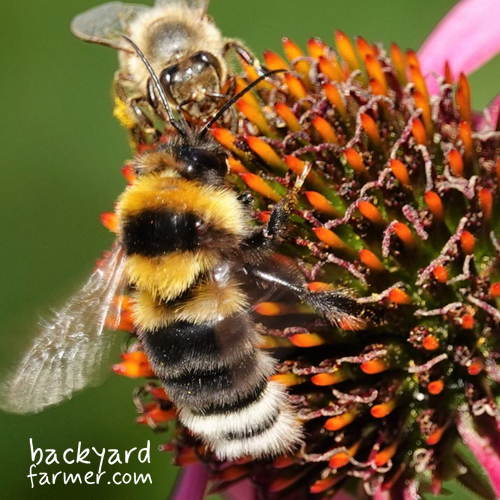
On the normal banded form, look for:
- a yellow or yellow-brown collar at the front of the thorax;
- a second pale band at the back of the thorax;
- a third pale band at the front of the abdomen;
- a white tail;
- a comparatively short, neat coat and often elongated build.
These marks usually identify the difficult ruderatus-hortorum pair, but do not confirm Large Garden Bumblebee on their own. Size, flower, location and date can provide context but should never be used as proof.
Banded, Intermediate and Black Forms
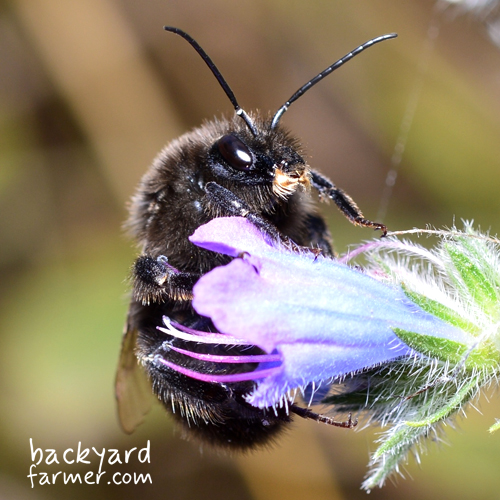
- Banded: All three pale bands and the white tail are visible.
- Intermediate: The bands are brownish, narrowed, broken or faint, and the tail may be reduced.
- Fully melanic: Most or all of the bee appears black, sometimes with faint markings visible only in strong light.
Melanic simply means unusually dark. An almost entirely black social bumblebee within the species’ English range is a strong clue, but dark Garden Bumblebees and other black species still need to be considered.
Large Garden Bumblebee vs Garden Bumblebee
Both species have a very long face and tongue, three pale bands and a white tail. The differences below are useful tendencies rather than firm rules.
| Feature | Large Garden Bumblebee | Garden Bumblebee | Identification value |
|---|---|---|---|
| Coat | Often shorter and neater | Often longer and shaggier | Supporting only |
| Bands | Often muted yellow-brown, narrower or more curved | Often brighter lemon-yellow and straighter across the body | Supporting only; lighting and wear matter |
| Build | Often looks larger or more elongated | Can be similarly large | Weak to supporting |
| Melanism | Frequent; fully black forms are an important clue | Dark forms also occur | Strongly suggestive only in context |
| Male jaw hairs | Golden | Black | Useful specialist feature, but requires a sharp macro image |
If a banded bee shows only the shared long-faced pattern, Garden or Large Garden Bumblebee may be the most accurate identification. A short coat, muted bands, strong melanism and a plausible place and date can strengthen the case, but many females remain unresolved from photographs.
Queen Large Garden Bumblebee
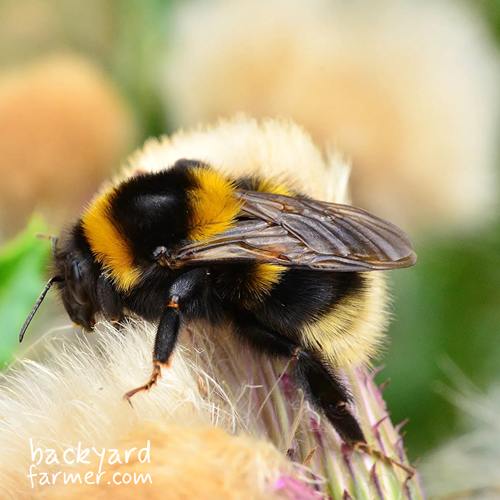
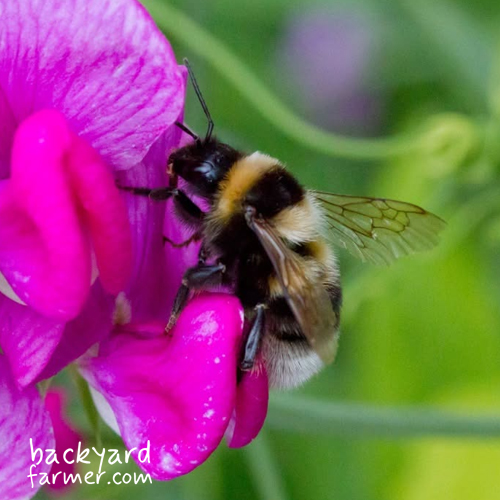
Queens are approximately 18-24 mm long and usually look the largest and most elongated. They are mainly seen from April to June. Size overlaps large Garden Bumblebee queens, so it should not be treated as a deciding feature.
Female (Worker) Large Garden Bumblebee
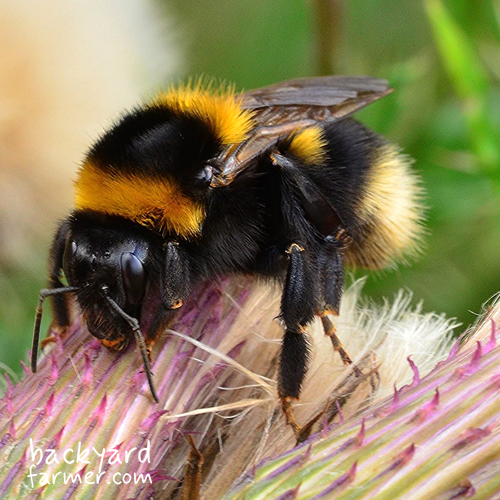
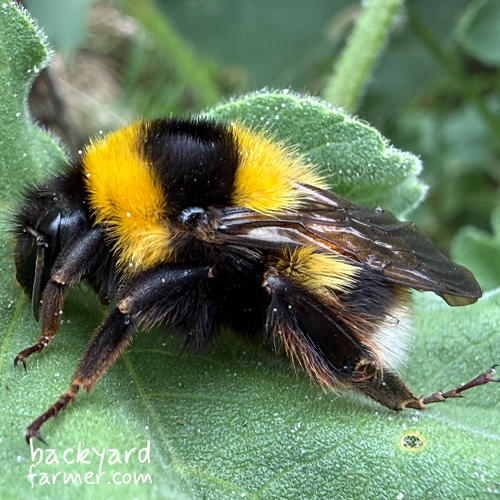
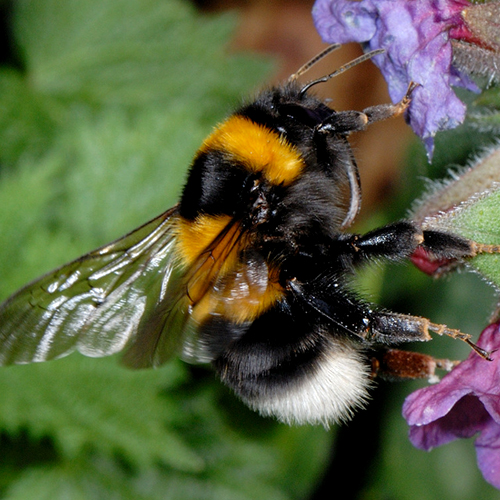
Workers are approximately 11-18 mm long and share the queen’s markings. Their coat may look noticeably short and neat, but banded workers can be particularly difficult to separate from Bombus hortorum. They are mainly active from May or June to August.
Male (Drone) Large Garden Bumblebee
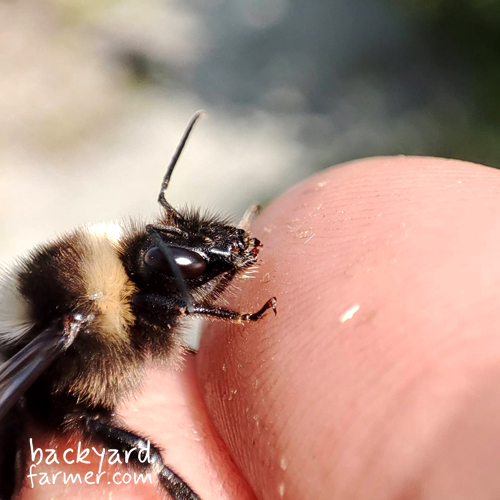
Males are approximately 14-17 mm long and may be banded or melanic. They do not have an obviously yellow face. In a sharp close-up, the small beard of hair on the jaws is golden in B. ruderatus and black in B. hortorum, although this is a specialist feature rather than an easy field mark.
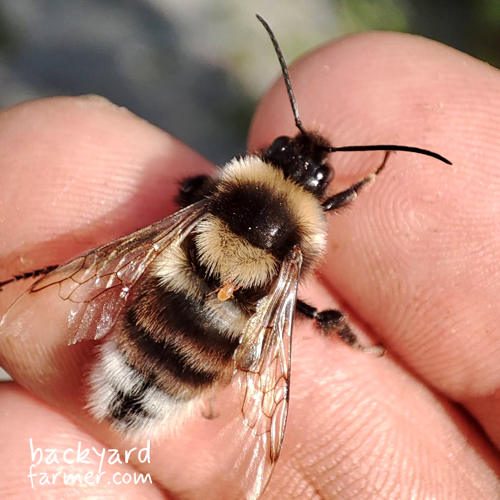
Published measurements vary, so all sizes above are approximate and non-diagnostic.
Identification & Key Facts
| Attribute | Details |
| Common name | Large Garden Bumblebee; also called the Ruderal Bumblebee |
| Latin name | Bombus ruderatus |
| Size | Queens about 18-24 mm, workers 11-18 mm, males 14-17 mm; approximate only |
| UK status | Scarce and sporadic; strongly southern-centred in Britain |
| Active months | Mainly April to September, occasionally extending into October |
| Habitat | Flower-rich lowland grassland, river valleys and legume-rich field margins; gardens are occasional habitat within its range |
| Nesting behaviour | Usually nests underground in old rodent burrows |
| Colony size | May exceed 150 workers, although published estimates vary |
| Key ID features | Very long face and tongue; normally three pale bands and a white tail; banded, intermediate and fully melanic forms |
| Useful flowers | Red clover, comfrey, foxgloves, honeysuckle, woundworts and other legumes |
Similar Species
The Large Garden Bumblebee is most easily confused with other banded, pale-tailed species. The Garden Bumblebee is by far the main identification problem.
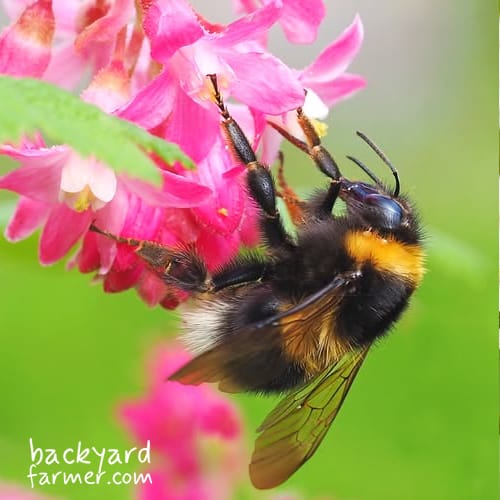
Garden Bumblebee (Bombus hortorum)
The Garden Bumblebee has the same very long face, three-band pattern and white tail. It often looks shaggier, with brighter and broader yellow bands, but these features overlap. Many banded bees cannot be separated confidently from normal photographs. See the full Garden Bumblebee identification guide.
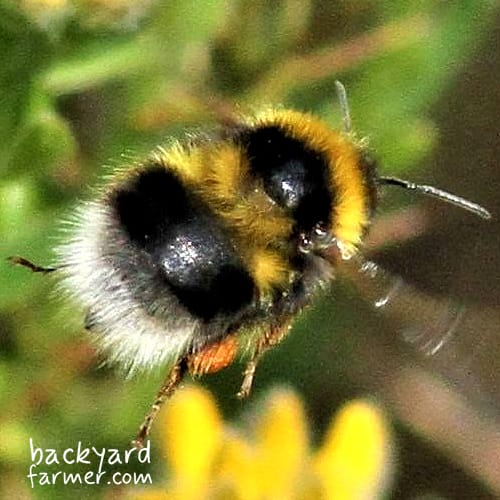
Heath Bumblebee (Bombus jonellus)
The Heath Bumblebee can show three pale bands and a white tail. It is usually smaller and fluffier, with a short face and tongue. Males have a yellow face.
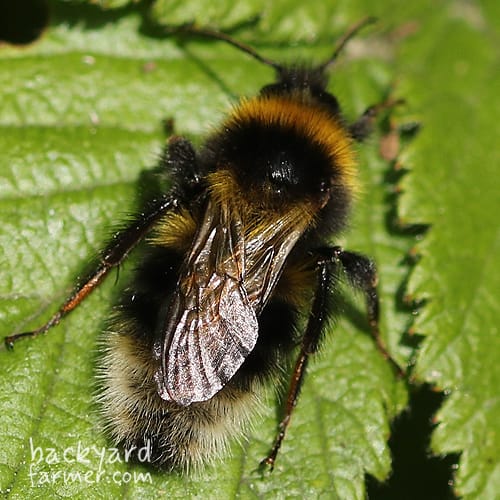
Barbut’s Cuckoo Bumblebee (Bombus barbutellus)
Barbut’s Cuckoo Bumblebee has a shorter face, boxier head, darker wings and fully hairy hind legs without pollen baskets. It has no worker caste.
Buff-tailed and White-tailed Bumblebees
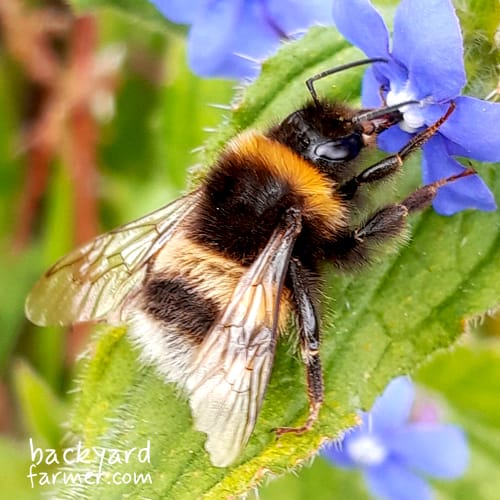
These common bees usually have one yellow collar on the thorax and one yellow abdominal band rather than the Large Garden Bumblebee’s three-band arrangement. They also have much shorter faces and tongues.
Around the Short-haired Bumblebee reintroduction landscape in Kent, Bombus subterraneus creates an additional expert-level complication and should not be separated from photographs by general readers.
Want to check a different bee? Use the wider UK Bee Identification Guide or try the free UK Bee Identification Tool. A tool result can narrow the options, but it cannot confirm the ruderatus-hortorum pair.
Why the Large Garden Bumblebee Matters
The Large Garden Bumblebee has declined as flower-rich grassland has been lost, fragmented or managed more intensively. It is now scarce in Britain and strongly centred on southern England, with very few records in Wales and none in Scotland in current Bumblebee Conservation Trust material.
Good records help specialists understand its present range, which makes careful photographs and honest identification particularly valuable.
How You Can Help
Plant Red Clover and Deep Flowers
Grow red clover alongside comfrey, foxgloves, honeysuckle and other long-tubed flowers. Aim for a continuous supply from spring into late summer.
Protect Flower-rich Areas
Avoid insecticides and weedkillers where possible, especially on open flowers. Cut meadow or rough patches in stages so some forage always remains.
Leave Nesting Space and Record Sightings
Leave a quiet rough area and avoid disturbing old rodent burrows. Record possible sightings with several photographs and accurate field notes.