
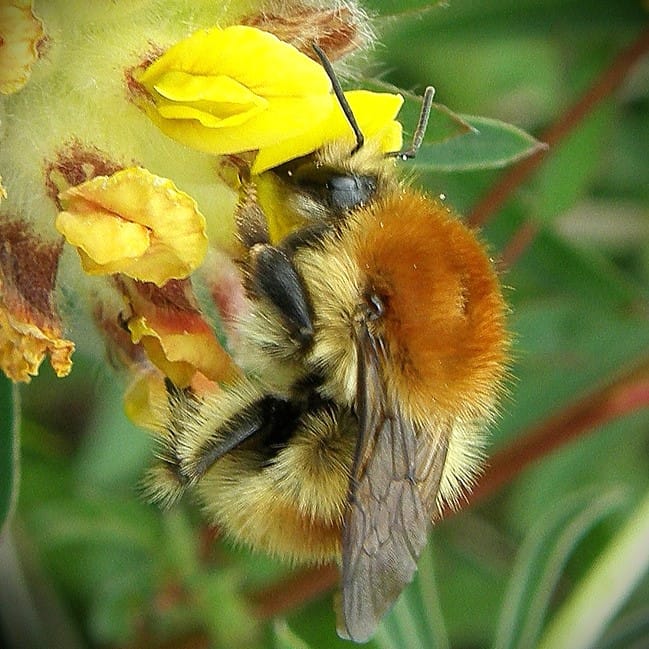
Brown-banded Carder Bees are best identified from several features together, not from the brown abdominal band alone. Fresh, well-marked bees are easier to assess, while wear, lighting and poor photo angles can obscure the key differences.
Queen, Worker and Male Identification
Queens, workers and males share the same basic ginger-buff colouring. Size, body shape, antennae and pollen-carrying behaviour help separate them.
Queen Brown-banded Carder Bee
- Robust build, approximately 16–20 mm
- Relatively short antennae
- Chestnut thoracic top with much paler sides
- Pale buff abdomen with a darker T2 band
- No black hairs on the abdomen
- Mainly seen from May, sometimes from April
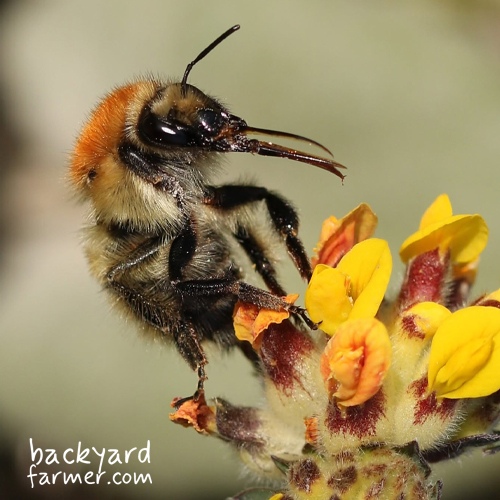
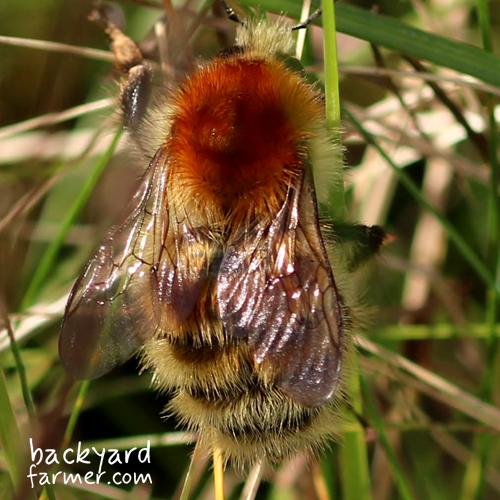
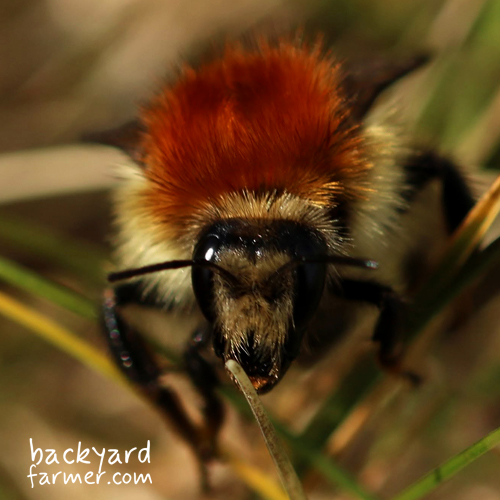
Fresh, strongly marked queens are often the easiest to assess from photographs. However, Moss Carder and pale Common Carder queens can still look very similar.
Female Worker Brown-banded Carder Bee
- Smaller than the queen, approximately 10–15 mm
- Same chestnut, pale-sided coat pattern
- May carry pollen on the hind legs
- Darker T2 band clearest on fresh workers
- Mainly seen from June to September
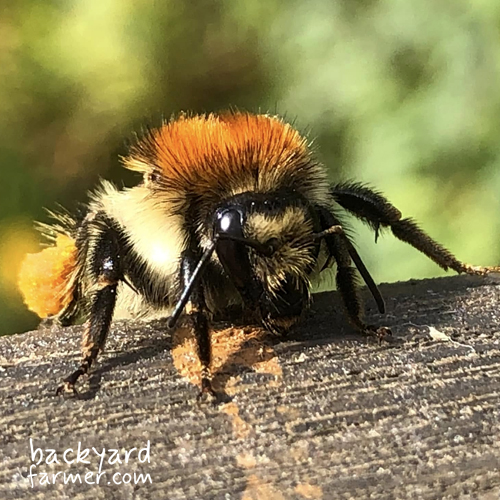
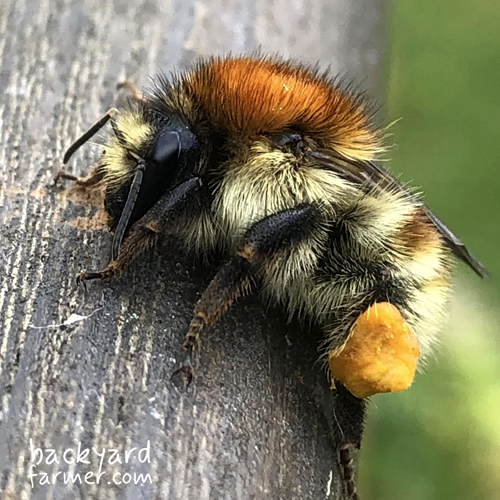
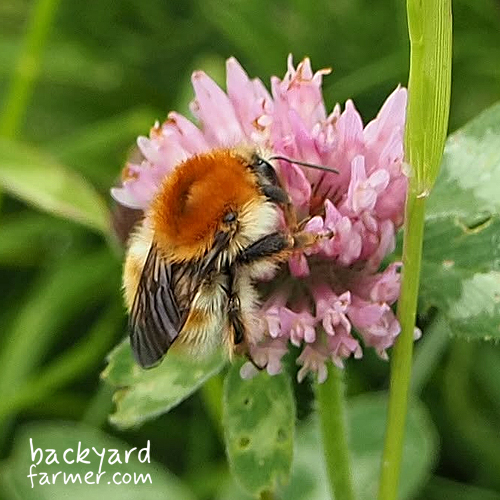
Very small or worn workers can be difficult to confirm because fading reduces the contrast between the main markings.
Male Brown-banded Carder Bee
- Worker-sized or slightly larger
- More elongate body
- Noticeably longer antennae
- Never carries a pollen load
- Cannot sting
- Similar ginger-buff coat when fresh
- Mainly seen in August and September, sometimes from July
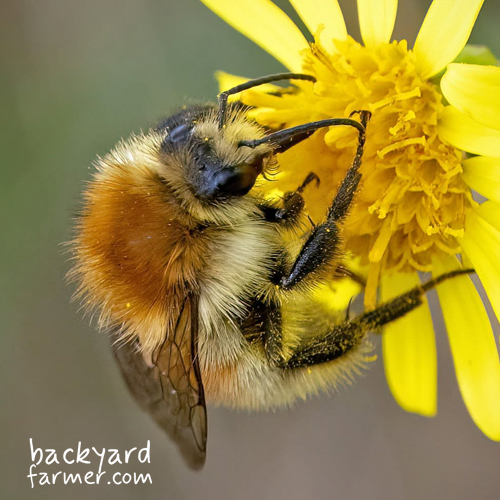
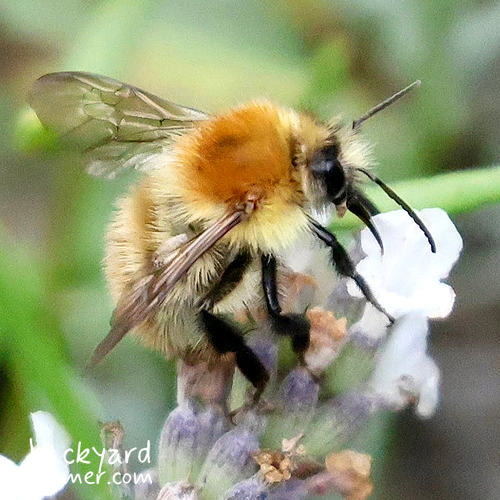
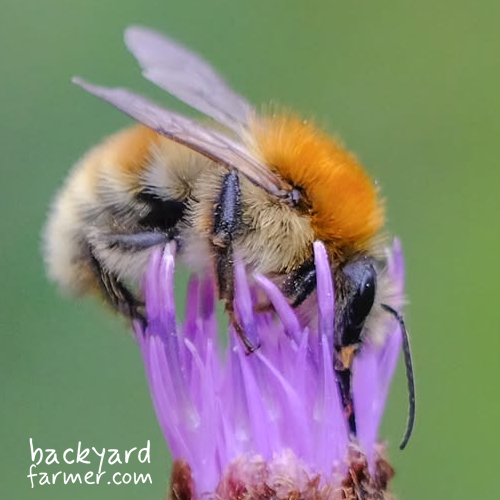
Faded males can closely resemble worn Common or Moss Carder Bees and may require specialist examination.
Key Identification Features
Look for several features together rather than relying on the brown abdominal band alone. Fresh, well-marked bees are easier to assess than worn or poorly photographed individuals.
| Feature | What to look for | Important limitation |
| Thorax | Warm ginger or chestnut hair across the top, with noticeably paler sides | Lighting and wear can weaken the two-toned appearance |
| Abdomen | Pale buff or ginger-yellow | Pollen, shadows and camera exposure can alter the apparent colour |
| Brown band | A darker ginger-brown or chestnut band across the second abdominal tergite, known as T2 | It may be faint, uneven or incomplete rather than a sharp stripe |
| Abdominal hairs | No black hairs mixed through the abdomen | Very pale Common Carder Bees may show few obvious black hairs in photographs |
| Wing bases | A few sparse black hairs may be present | These may require a close photograph or hand lens to see |
| Tail | Similar in colour to the rest of the abdomen, without a contrasting white or red tip | Useful supporting evidence, but not diagnostic alone |
| Coat condition | Fresh bees usually show clearer colour boundaries and banding | Worn bees may appear faded, patchy or almost unbanded |
A visible brown band does not confirm the species by itself. Moss Carder Bees can show similar abdominal darkening, while pale Common Carder Bees may lack obvious black hairs in photographs. Where the key features are unclear or the closest species cannot be ruled out, the bee is safest recorded simply as a carder bee.
Similar Species
The Brown-banded Carder Bee belongs to a difficult group of ginger-brown bumblebees. Common, Moss and Brown-banded Carder Bees can overlap closely, and some worn individuals cannot be separated confidently in the field.
Common Carder Bee
Features favouring a Common Carder Bee include:
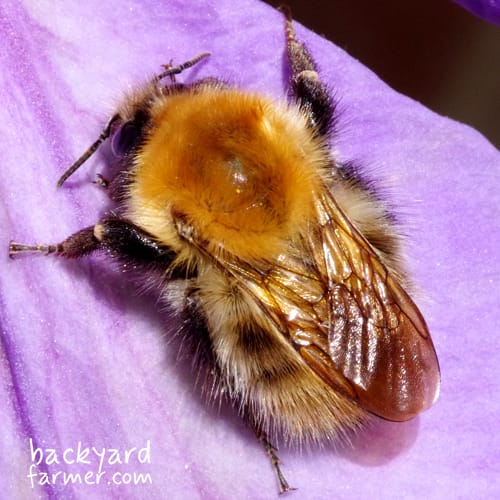
- Black hairs mixed through the abdomen
- A longer, scruffier-looking coat
- Duller or more uneven ginger-brown colouring
- No convincing dark band across T2
Common Carder Bees are also extremely widespread, including in ordinary gardens. However, very pale individuals may show few obvious black abdominal hairs in photographs. Their apparent absence is not enough by itself to confirm a Brown-banded Carder Bee.
Moss Carder Bee
Features favouring a Moss Carder Bee include:
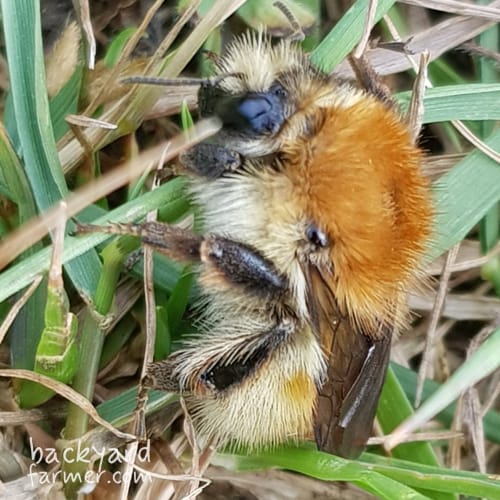
- A neat, dense or clipped-looking coat
- A more evenly pale abdomen
- A ginger thoracic patch bordered by paler hair
- No black hairs around the wing bases
Moss Carder Bees are often associated with suitable coastal habitats, although location should only support the visual evidence. Some queens can show darker abdominal hair resembling a band, and worn Moss and Brown-banded Carder Bees may be impossible to separate reliably from photographs.
Shrill Carder Bee
Features favouring a Shrill Carder Bee include:
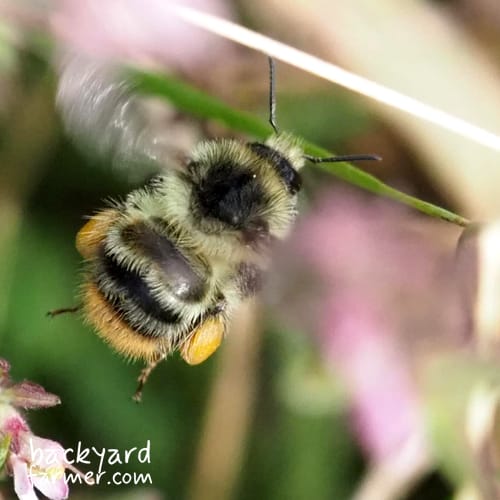
- A paler straw-grey coat
- A broad black band between the wing bases
- Dark abdominal bands
- A reddish or orange tail
- A slimmer body shape
Its high-pitched buzz may draw attention to the bee, but sound should not be used as confirmation without the visual markings.
Similar-Species Comparison
| Species | Features favouring it | Important limitation |
| Brown-banded Carder | Chestnut thoracic top with pale sides, darker T2 band and no black abdominal hairs | Moss Carders can show similar abdominal darkening |
| Common Carder | Usually scruffier, often with black abdominal hairs and no convincing T2 band | Very pale individuals may show few obvious black hairs |
| Moss Carder | Neater coat, more uniformly pale abdomen and no black wing-base hairs | Worn bees may be impossible to separate from Brown-banded Carders |
| Shrill Carder | Black thoracic band, dark abdominal bands and reddish-orange tail | Usually easier to separate when the full pattern is visible |
Can You Identify a Brown-banded Carder Bee From a Photograph?
One clear photograph may not be enough to confirm a Brown-banded Carder Bee. Common and Moss Carder Bees can look very similar, so several views of the same bee are far more useful.
Photographs to Take
Try to photograph:
- The bee from directly above
- An angled side view
- The darker second abdominal segment, known as T2
- The pale sides of the thorax and the wing bases
- The abdomen and tail
- The face, antennae and hind legs
Take several angles where possible. Camera exposure can alter ginger, yellow and brown tones, while shadows may create a false band. Wings can hide T2, pollen may change the apparent colour and worn hair can blur the markings. Small workers may also be too detailed to identify from a distant photograph.
When to Leave It as a Carder Bee
Avoid identifying the bee as Bombus humilis when:
- It is worn or faded
- T2 cannot be seen clearly
- Only one distant photograph is available
- Black abdominal hairs cannot be checked
- The wing bases or pale thoracic sides are hidden
- Common and Moss Carder Bees remain equally plausible
An uncertain identification is not a failure. Where the evidence is incomplete, carder bee is the more accurate record.
Range, Habitat and Seasonal Clues
The Brown-banded Carder Bee is scarce and local in England and Wales, with most populations concentrated in southern and western areas. Many occur in coastal landscapes, although the species is not exclusively coastal. Important inland populations also survive, including on Salisbury Plain. It is not regarded as an established Scottish species.
A sighting is most plausible in flower-rich grassland, coastal grazing marsh, dunes, flowery brownfield sites and other connected open habitats. Garden records are possible near known populations, but sightings far outside the established range need particularly strong photographic evidence.
Seasonal Clues
- Queens: mainly May, sometimes from April
- Workers: June to September
- Males: mainly August and September, sometimes from July
Location, habitat and date can support an identification, but they cannot replace clear visual evidence. A poorly photographed bee should not be confirmed as Bombus humilis simply because it was found in suitable habitat.
Frequently Asked Identification Questions
It usually has a chestnut or ginger top to the thorax, much paler sides and a pale buff abdomen. A darker band often crosses T2, and there should be no black hairs mixed through the abdomen.
The band crosses the second abdominal tergite, known as T2, near the front of the abdomen rather than across the tail. It is often clearest from above or at an oblique angle.
No. It may be faint, uneven, hidden by the wings or lost as the coat wears. Colour alone cannot confirm the species, so also check the thoracic sides, abdominal hairs and wing bases.
Common Carder Bees usually have black abdominal hairs, a longer or scruffier coat and no convincing T2 band. However, very pale individuals may show few obvious black hairs, so some photographs remain inconclusive.
Moss Carder Bees often have a neater coat, a more evenly pale abdomen and a ginger thoracic patch bordered by paler hair. They lack black wing-base hairs, but worn individuals may be impossible to separate reliably.
Shrill Carder Bees have a broad black band between the wings, darker abdominal bands and a reddish-orange tail. Their coat is generally paler and greyer, making clear individuals easier to distinguish.
All three share similar ginger-buff colouring. Queens are larger and robust, workers are smaller and may carry pollen, while males are more elongate with longer antennae. Fresh, strongly marked queens are often the easiest to assess.
Yes, particularly near known populations and connected flower-rich habitat. However, a garden sighting does not prove the identification, especially where the species has not previously been recorded nearby.
Use a broader identification when the bee is worn, T2 is hidden, only one distant photograph is available, or Common and Moss Carder Bees cannot be excluded confidently.
Final Identification Recap
The Brown-banded Carder Bee is a warm ginger-buff bee with a chestnut thoracic top, much paler sides and a darker band across T2. It has no black hairs on the abdomen, although a few sparse black hairs may occur around the wing bases. Compare any possible sighting carefully with Common and Moss Carder Bees, and use several clear photographs from different angles. Worn or incomplete examples are best recorded simply as carder bees. See the UK bumblebee identification guide for further comparisons.