
The Early Bumblebee (Bombus pratorum) is one of the first bumblebees you are likely to see in the UK each spring. Small, quick-moving and often active from March onwards, it is an important early pollinator for garden plants, fruit blossom, wildflowers and hedgerow plants.
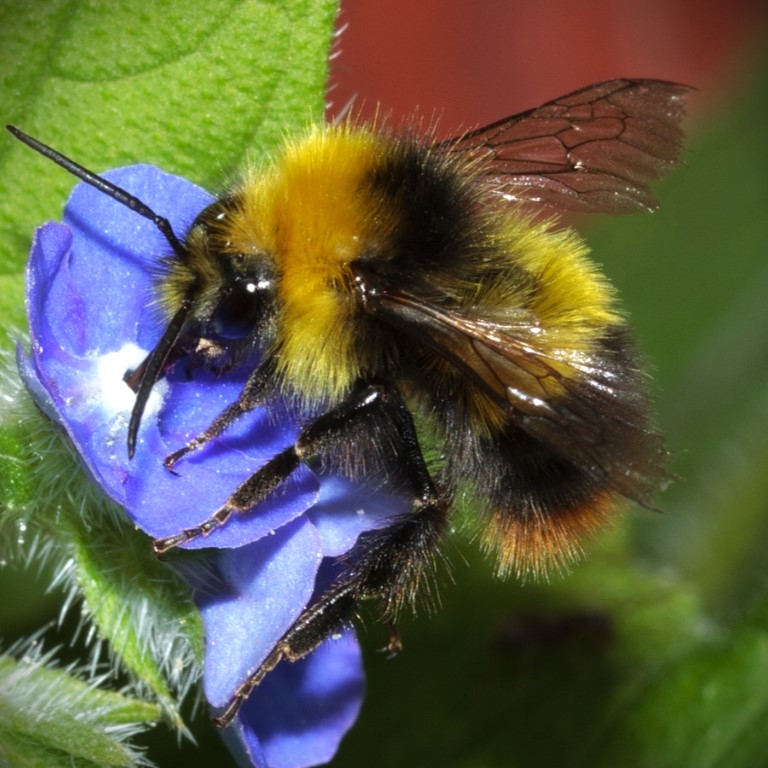
This species is usually recognised by its yellow bands, small size and orange-red tail. Queens, workers and males can look slightly different, but the reddish tail is often the quickest clue once you know what to look for.
In this guide, you’ll learn how to identify the Early Bumblebee, how to tell it apart from similar UK bumblebees, where it nests, what flowers it visits, and how to make your garden more useful for early-season pollinators.
How to Identify the Early Bumblebee
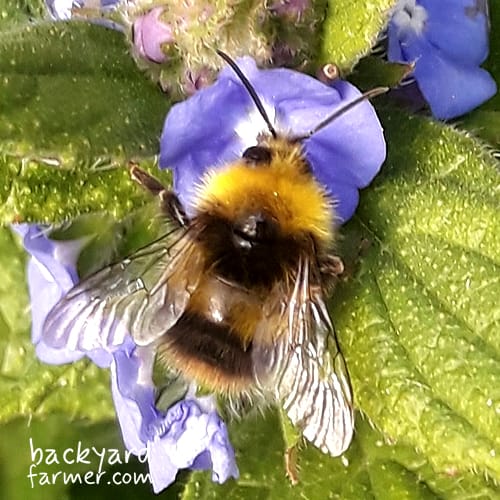
Early Bumblebee identification is usually based on three features: small size, yellow banding and a small orange-red tail.
Queens and workers are black with a yellow band at the front of the thorax and often another yellow band near the front of the abdomen. However, in workers, the abdominal yellow band can be faint or missing. Males tend to show more yellow overall, including yellow facial hair.
Because this species moves quickly and is smaller than many common bumblebees, it is worth checking the tail colour carefully before confirming an ID.
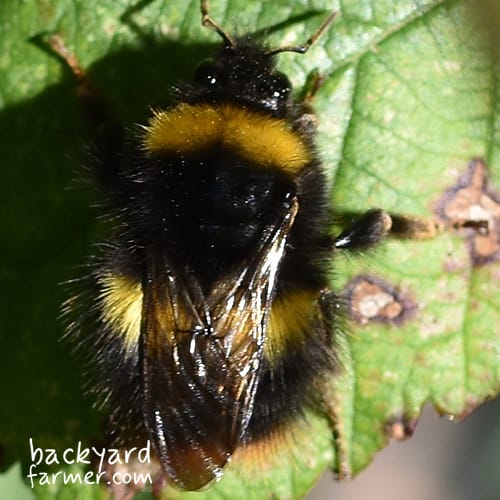
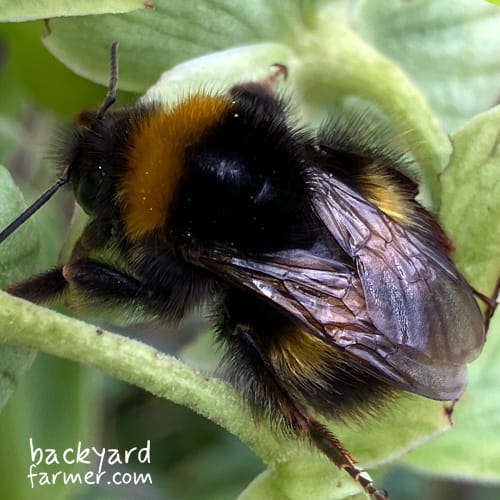
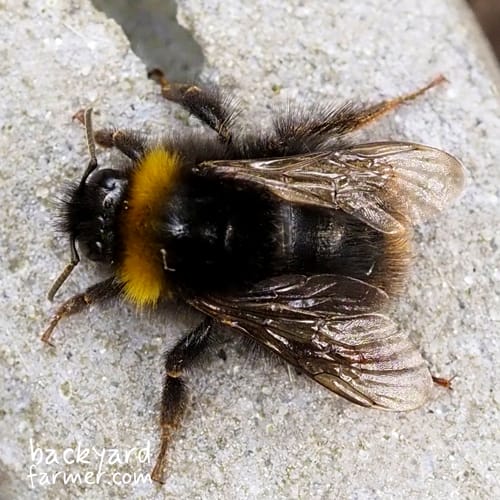
Queen Early Bumblebee
Queens are around 15–17mm long. They are black with a yellow band at the front of the thorax, a yellow band on the abdomen, and a distinct orange-red tail.
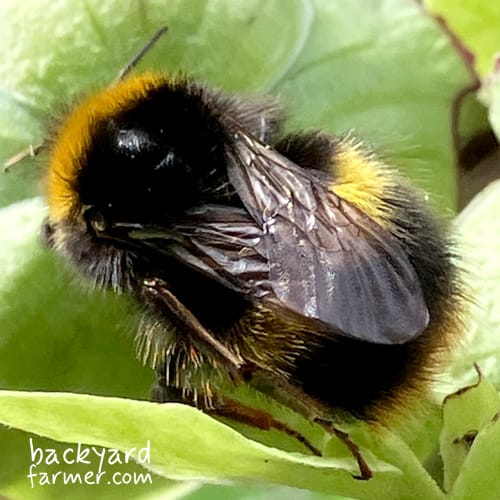
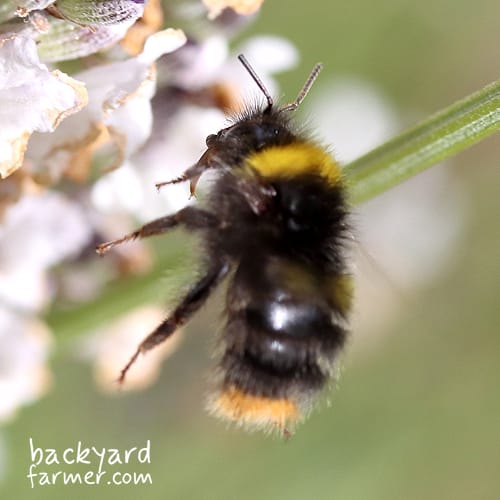
Female (Worker) Early Bumblebee
Workers are smaller, usually around 10–14mm. They look similar to queens, but the yellow abdominal band is often less obvious and may be missing.
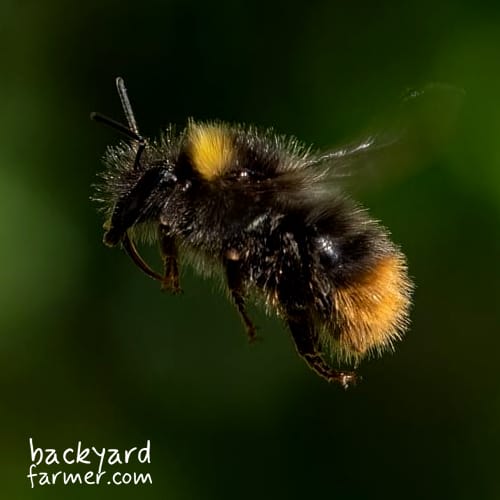
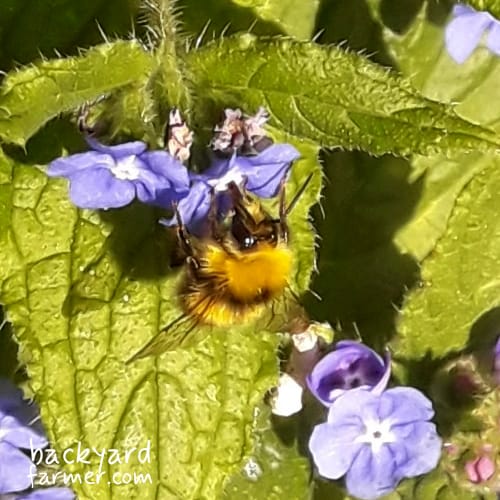
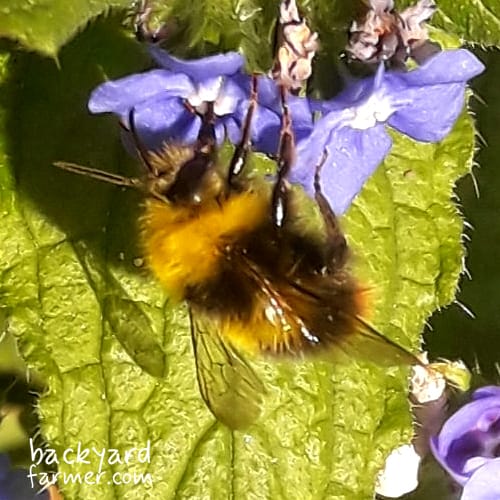
Male (Drone) Early Bumblebee
Males are around 11–13mm. They often have more yellow hair than workers, including yellow facial hair and longer antennae. They also have the same orange-red tail.
Identification & Key Facts
| Attribute | Details |
|---|---|
| Common name | Early Bumblebee |
| Latin name | Bombus pratorum |
| Size | Queens: 15–17mm, workers: 10–14mm, males: 11–13mm |
| UK status | Common and widespread |
| Active months | Usually March to July, sometimes later in mild areas |
| Habitat | Gardens, woodland edges, hedgerows, grassland, parks and allotments |
| Nesting behaviour | Often uses old rodent nests, bird boxes, tree holes, compost heaps and other sheltered cavities |
| Colony size | Small colonies, usually fewer than 100 workers |
| Key ID features | Small bumblebee, yellow bands, orange-red tail |
| Useful flowers | Bramble, raspberry, dandelion, dead-nettle, borage, fruit blossom, lavender, sage, clover and other garden flowers |
Similar Species
The Early Bumblebee can be confused with other red or orange-tailed bumblebees, especially when it is moving quickly.
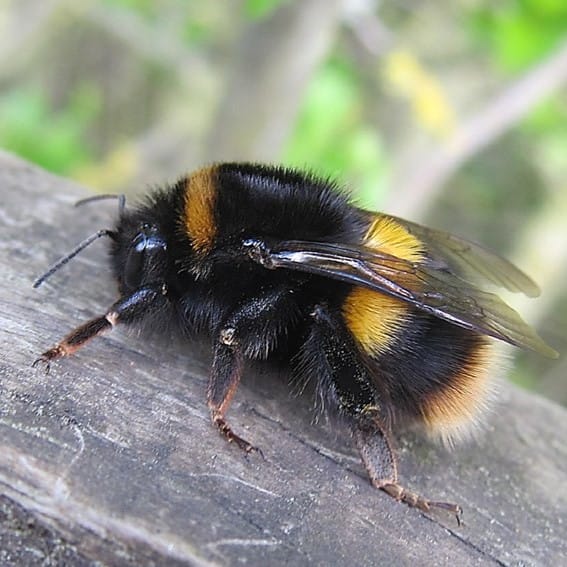
Buff-tailed Bumblebee (Bombus terrestris)
Larger and bulkier, with a buff or off-white tail rather than a bright orange-red one.

Red-tailed Bumblebee (Bombus lapidarius)
Females are mostly black with a red tail and no yellow bands. Males may show yellow markings, but they are usually larger and more robust than Early Bumblebees.
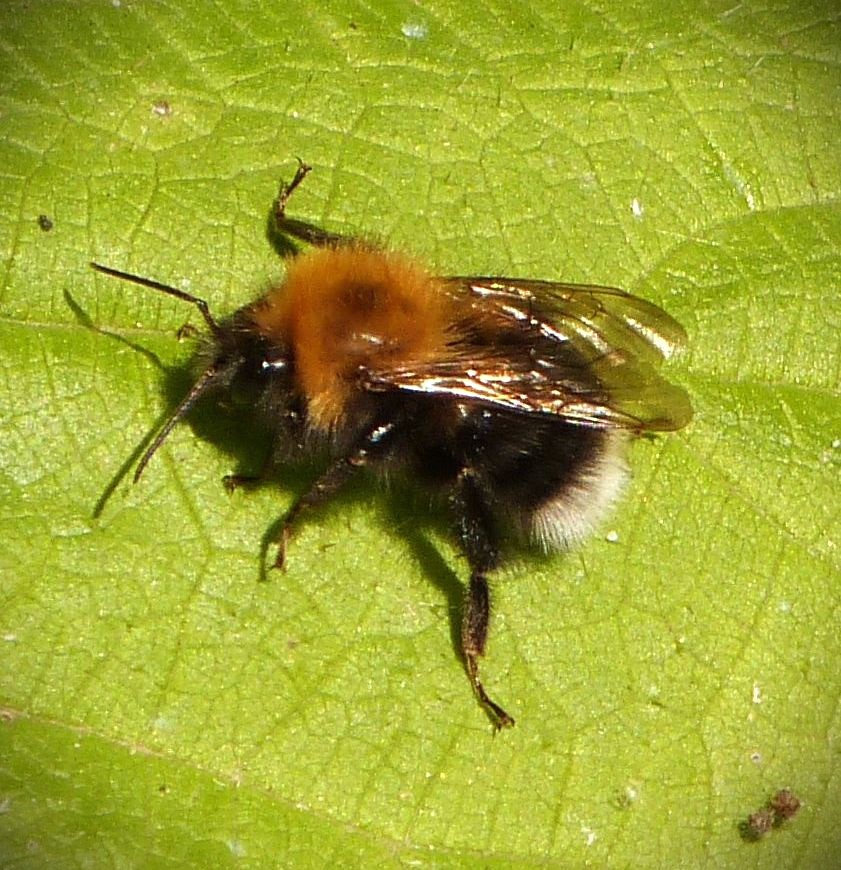
Tree Bumblebee (Bombus hypnorum)
Has an orange-brown thorax, black abdomen and white tail, making it quite different once you check the full colour pattern.
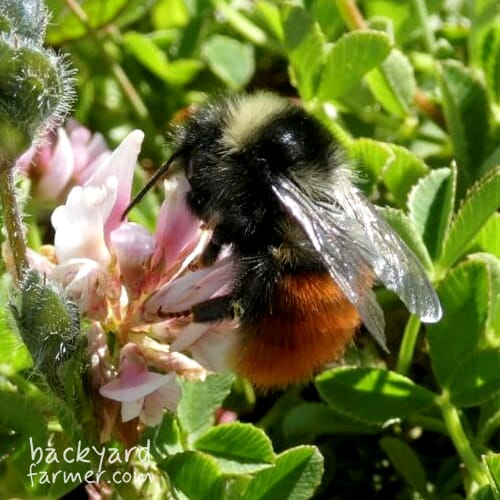
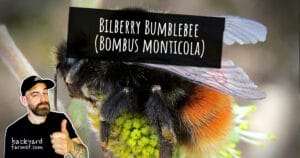
Bilberry Bumblebee (Bombus monticola)
Also has yellow banding and a red tail, but the red tail is much more extensive, covering at least half the abdomen.
Want to improve your bee identification skills? Check out our comprehensive Bee Identification Guide for more tips or our Free Interactive Bee ID App.
Why the Early Bumblebee Matters
The Early Bumblebee is especially useful because it appears early in the year, when many fruit trees, soft fruit canes and spring wildflowers are coming into bloom. It helps pollinate plants such as raspberries, blackberries and garden flowers, while also supporting wider biodiversity.
Although the Early Bumblebee is still common in the UK, bumblebees as a group face pressure from habitat loss, fewer wildflowers, pesticide use and more extreme weather patterns. Creating better garden habitat can make a real difference locally.
How You Can Help
You can support Early Bumblebees and other pollinators by making your garden useful from early spring onwards.
Plant Bee-Friendly Flowers
Grow a mix of early and long-season flowers such as dandelion, dead-nettle, bramble, raspberry, borage, lavender, sage, clover, comfrey and fruit blossom.
Avoid Harmful Pesticides
Avoid insecticides where possible, especially on flowering plants. Many pest sprays can harm bees directly or contaminate the pollen and nectar they feed on.
Provide Nesting Spaces
Leave some quiet, undisturbed areas in the garden. Rough grass, old mouse holes, compost heap edges, old bird boxes and sheltered corners can all provide potential nesting spots.
By giving bumblebees food, shelter and chemical-free spaces, you’ll make your garden more useful for the Early Bumblebee and plenty of other pollinators too.
Check out these WWF bee-friendly gardening tips to start making a difference today!