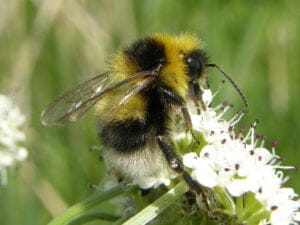

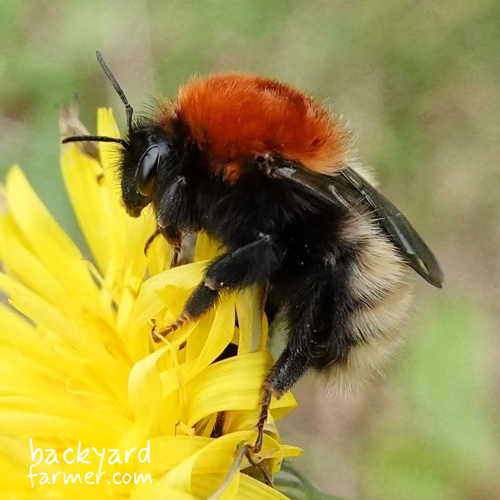
The Moss Carder Bee is a warm ginger-brown bumblebee with pale thoracic sides, a fairly even abdomen and usually little obvious black hair. However, it can closely resemble the Common and Brown-banded Carder Bees, so colour alone is not enough for a secure identification.
Queens, workers and males differ in size, build and visible features. The sections below show what to look for in each caste.
How to Identify a Moss Carder Bee
Look for a neat ginger-brown coat, pale sides to the thorax and a fairly even abdomen. Dark abdominal hairs may suggest a Common Carder Bee, while a distinct darker band may point towards a Brown-banded Carder Bee.
Use clear views from above and from the side wherever possible. Caste, wear, lighting and location can all affect the bee’s appearance, so never rely on one feature alone.
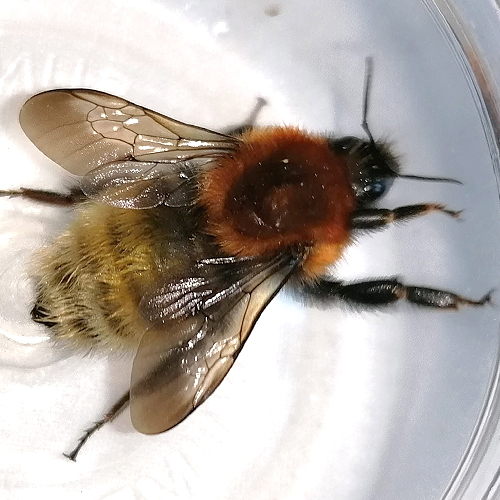
Queen Moss Carder Bee
Queens are the largest and most robust caste. They have a warm ginger-brown coat, pale thoracic sides and a fairly even abdomen, usually without obvious black hairs or a distinct dark band. Founding queens are mainly seen in spring, with new queens appearing later in summer.
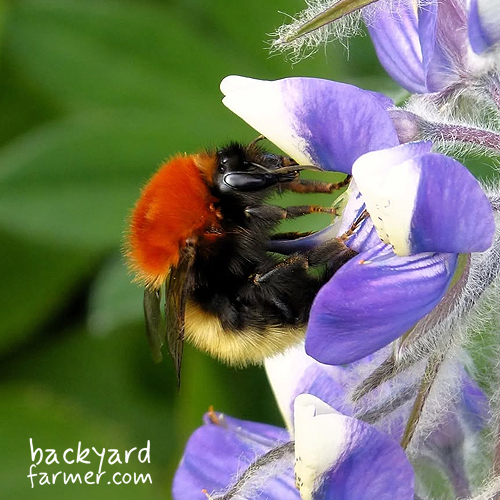
Worker Moss Carder Bee
Workers are smaller and more variable than queens but usually share the same warm ginger-brown coat, pale thoracic sides and fairly even abdomen. They have female antennae and pollen baskets on the hind legs. Very small, worn or distant workers can be difficult to separate from Common and Brown-banded Carder Bees and may be best recorded simply as carder bees.
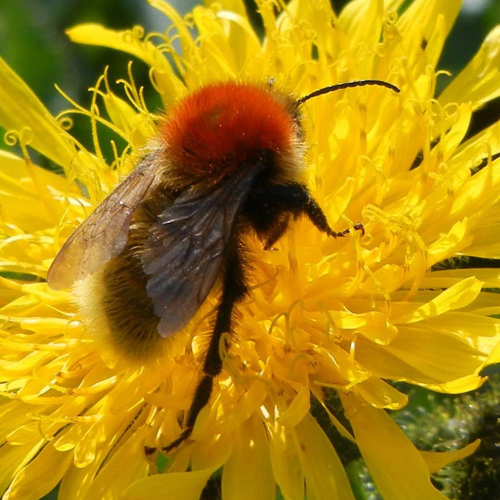
Male Moss Carder Bee
Males are slimmer than queens and workers, with longer antennae, hairier hind legs and no pollen baskets. They usually have the same warm ginger-brown coat, pale thoracic sides and fairly even abdomen, although the facial hair may appear paler. Most are seen later in summer and can be difficult to separate from male Common and Brown-banded Carder Bees without clear views of the thorax and abdomen.
Identification & Key Facts
| Attribute | Details |
| Common name | Moss Carder Bee |
| Scientific name | Bombus muscorum |
| Size | Queens are the largest caste; workers are smaller and variable; males are slimmer |
| UK status | Scarce and local, with many populations in coastal areas and the Scottish Highlands and islands |
| Active months | Usually April to September |
| Key ID features | A neat ginger-brown coat, pale thoracic sides and a fairly even abdomen with usually little obvious black hair |
Similar Species
The Moss Carder Bee is most likely to be confused with the Common and Brown-banded Carder Bees. Compare the coat, abdominal hairs and location rather than relying on colour alone.
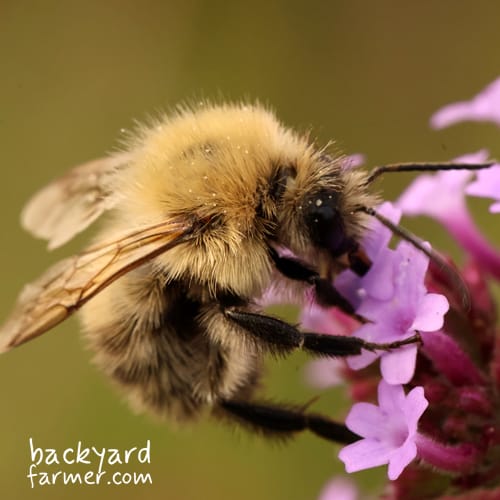
Common Carder Bee (Bombus pascuorum)
Usually duller brown or beige, with longer, less tidy hair and at least a few dark abdominal hairs. It is common and widespread, so it should normally be considered before the much scarcer Moss Carder Bee.
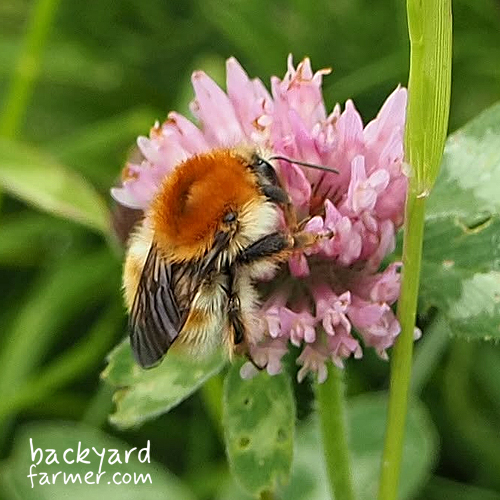
Brown-banded Carder Bee (Bombus humilis)
A close match, with bright ginger colouring, pale thoracic sides and little black hair on the abdomen. Look for a darker band across the second abdominal segment and scattered dark hairs around the wing bases, although both can be difficult to see.
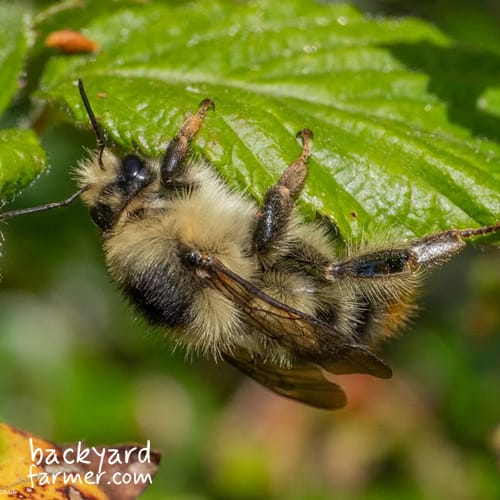
Shrill Carder Bee (Bombus sylvarum)
Usually paler and more strongly patterned, with a black band between the wing bases and a distinct orange-red tail. Once the full pattern is visible, it should not closely resemble the more evenly coloured Moss Carder Bee.
How Wear, Lighting and Pollen Can Mislead
A single photograph can be deceptive. Ginger hairs fade and become patchy with age, while shadows may create a false abdominal band and overexposure can remove genuine contrast. Reflected light can also shift ginger, yellow and brown tones.
Wings may hide the thoracic sides, wing bases or abdomen, while pollen can alter the colour of the legs and underside. Use several clear views rather than judging the bee by colour alone.
Habitat, Distribution & Ecology
| Attribute | Details |
| Where found | Mainly flower-rich coastal grassland, grazing marsh, wetlands, moorland and other extensive open habitats. Suitable brownfield sites may also support the species within its known range. |
| Habitat requirements | Requires continuous forage alongside long grass, moss or other dense vegetation for nesting. Large, connected habitats are especially valuable because the species generally forages close to its nest. |
| UK distribution | Scarce and local. English and Welsh populations are mainly associated with coastal areas, while Scottish populations are concentrated in the northwest Highlands and islands. |
| Nesting behaviour | Nests on or just below the ground among long grass, moss and plant litter. Suspected nests should always be left undisturbed. |
| Identification caution | Habitat and location can support an identification, but they cannot replace visible features. Records far outside the known range require particularly strong evidence. |
See the Bumblebee Conservation Trust species profile for a current UK distribution map.
When to Look for Moss Carder Bees
The main UK flight period is usually April to September, although timing varies with weather, latitude and local conditions.
| Month | Queens | Workers | Males |
| April | First queens may emerge | — | — |
| May | Establishing nests | — | — |
| June | Occasional queens | First workers may appear | — |
| July | New queens may appear | Active | First males may appear |
| August | New queens present | Active | Most likely period |
| September | Late queens | Declining | May remain active |
Flowers Visited
| Evidence | Flowers and groups |
| Frequently recorded | Red clover and bird’s-foot trefoil are particularly well documented. |
| Other useful forage | Clovers, vetches, dead-nettles, woundworts, knapweeds and thistles can provide forage through the season. |
| Identification caution | Flower choice can support an identification, but many other bumblebees visit the same plants. |
Conservation Status and Threats
The Moss Carder Bee is scarce and of high conservation importance in the UK, with many remaining populations small and isolated. Habitat loss, fragmentation, unsuitable grazing or cutting, and gaps in flowering can remove both nesting cover and reliable forage. Because the species usually forages close to its nest, disconnected habitats may be especially difficult for colonies to use.
Accurate records supported by clear photographs, dates and locations help track its distribution. However, a single sighting only confirms that one bee was present and does not prove that the local population is large, stable or healthy.
How to Help Moss Carder Bees
The best support comes from protecting large, connected habitats that provide both nesting cover and flowers throughout the colony season.
- Maintain flower-rich grassland and link it with margins or corridors so forage remains available from spring to autumn.
- Retain tussocky vegetation, moss and undisturbed ground, and avoid cutting every area at the same time.
- Reduce unnecessary mowing during the active season.
- Avoid pesticide use on or near flowering plants.
- Submit credible sightings with clear photographs, dates and location details to an appropriate wildlife-recording scheme.
Frequently Asked Questions
No. Several UK bumblebees can appear ginger, buff or brown, especially the Common and Brown-banded Carder Bees. Moss Carder Bee identification should also consider the coat texture, pale thoracic halo, hairs around the wing bases, abdominal markings and location.
The Moss Carder Bee usually has a shorter, denser and more even coat, with a chestnut patch on top of the thorax surrounded by paler hairs. Common Carder Bees are generally longer-haired and scruffier, and usually show at least some black hairs on the abdomen, although these may be difficult to see in pale or worn individuals.
Brown-banded Carder Bees typically show a persistent chestnut-brown band across the second abdominal segment, known as T2, and may have a few black hairs around the wing bases. Moss Carder Bees usually have a paler abdomen, a clearer thoracic halo and no obvious black wing-base hairs. These differences are not complete, however, and some individuals cannot be confirmed from photographs alone.
No. Only queens and workers have pollen baskets on their hind legs. Males have narrower, hairier hind legs without the smooth pollen-carrying surface, as well as longer antennae and a more rounded abdominal tip.
Moss Carder Bees now have a restricted and fragmented UK distribution, with many populations associated with coastal areas, western and northern regions and offshore islands. They can also occur in suitable flower-rich marsh, moorland and grassland habitats. Location can support an identification, but it cannot replace visible identification features.
Yes. The Moss Carder Bee is scarce and localised in the UK, having disappeared from much of its former range. A possible sighting is therefore worth photographing carefully and submitting for expert review.
Sometimes, but not every individual can be confirmed from photographs. Several sharp views are normally needed to show the thoracic pattern, wing bases and abdomen. Worn, distant or poorly lit bees—and some Moss and Brown-banded Carder Bees—may be safest left as unidentified carder bumblebees.
Record the date, precise location and habitat, and take several unedited photographs from above and from the side. Try to show the complete thorax, both wing bases, abdomen, face and hind legs. The sighting can then be submitted through iRecord or shown to an experienced bee recorder for assessment.
Conclusion
Moss Carder Bee identification depends on a combination of features rather than colour alone. Look for the short, neat coat, chestnut patch with a pale thoracic halo, the absence of obvious black hairs around the wing bases and upper abdomen, and no persistent dark band across T2. These features should then be compared with the Common, Brown-banded and Shrill Carder Bees, while habitat and location are used only as supporting clues.
Clear photographs from several angles can sometimes support a confident identification, but worn, distant or poorly lit bees may remain uncertain. Where the key features cannot be seen clearly, it is more accurate to record the insect cautiously as a carder bumblebee than to force a species-level identification.