
Introduction
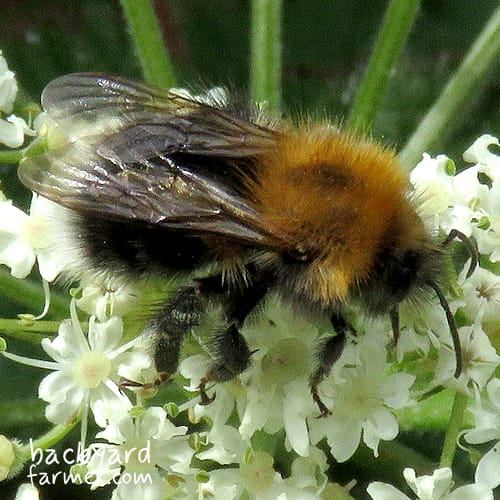
The Tree Bumblebee (Bombus hypnorum) is one of the easiest UK bumblebees to recognise once you know what to look for. It has a ginger-brown thorax, a black abdomen and a pale or white tail, giving it a clear three-colour pattern that stands out from many other common garden bees.
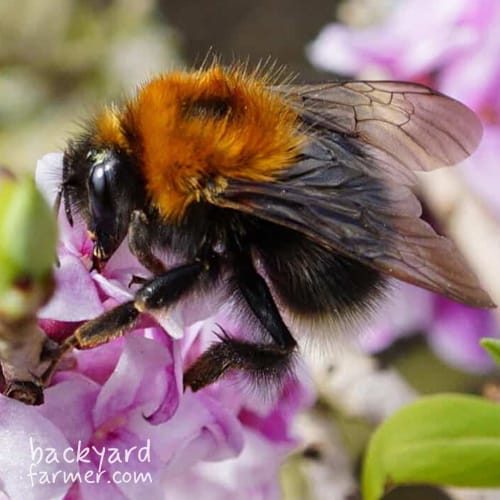
First recorded in the UK in 2001, the Tree Bumblebee has spread quickly and is now common across much of England, Wales and Scotland. You’ll often see it in gardens, parks, woodland edges, hedgerows and urban areas, especially around spring flowers, fruit blossom, bramble, raspberry and cotoneaster.
One of the things that makes this species especially noticeable is its habit of nesting above ground. Tree Bumblebees often use old bird boxes, roof spaces, tree cavities and other sheltered gaps around buildings. In this guide, you’ll learn how to identify Tree Bumblebee queens, workers and males, how to tell them apart from similar UK bumblebees, and what to do if you find a Tree Bumblebee nest.
Learn more in our Bee Identification Guide.
What Does a Tree Bumblebee Look Like?
The Tree Bumblebee has a simple but distinctive colour pattern. Look for:
- Ginger-brown thorax
- Black abdomen
- White or pale tail
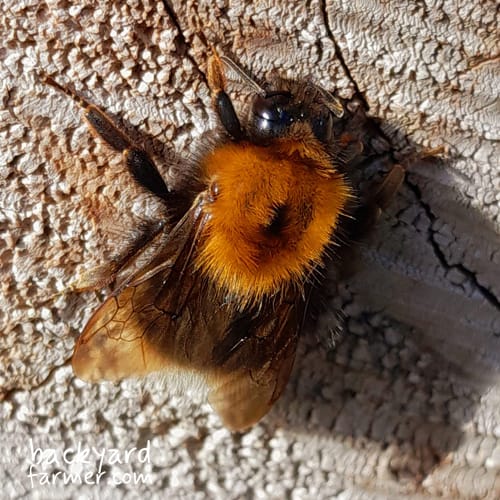
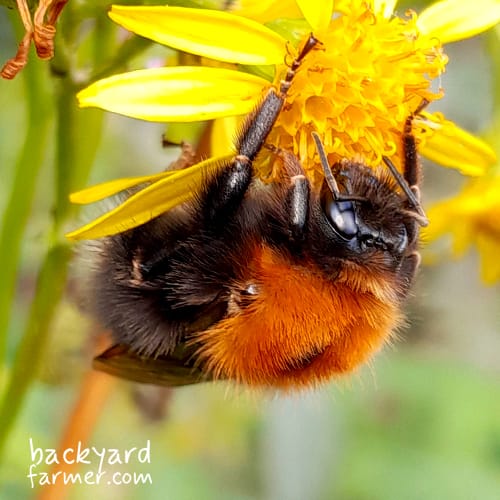
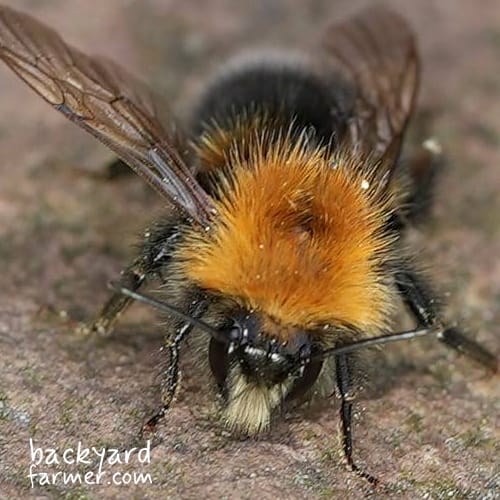
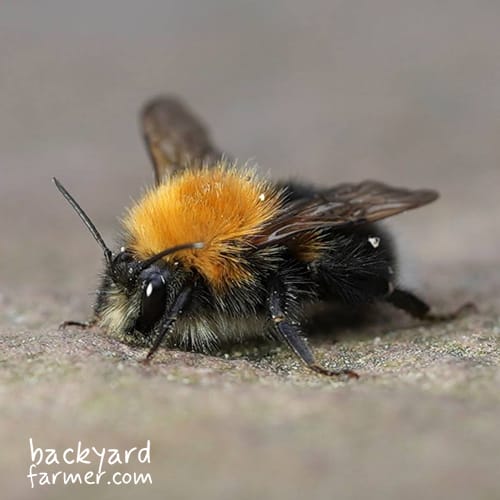
All three castes — queens, workers and males — share this same basic pattern, although size, facial hair and antenna length can vary. Some individuals can also look darker than usual, but the white tail is still an important clue.
These bees are commonly seen in gardens, parks, woodland edges and urban areas, where they visit a wide range of flowers.
Queen Tree Bumblebee
Queen Tree Bumblebees are the largest caste, usually around 15–20mm, with a ginger-brown thorax, dark abdomen and pale or white tail. They are most often seen in early spring, when they emerge from hibernation and search for nest sites in bird boxes, roof spaces, tree holes and other sheltered cavities.
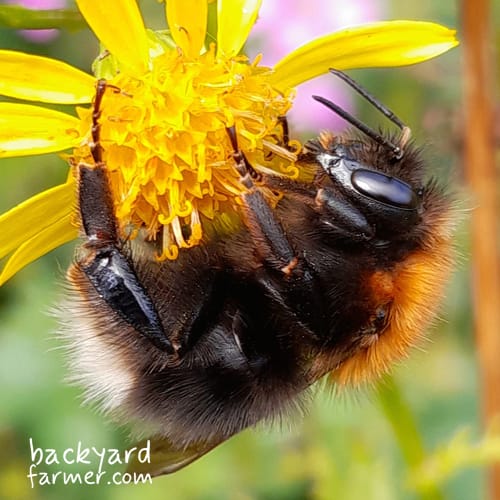
Female (Worker Tree Bumblebee)
Worker Tree Bumblebees are smaller than queens, usually around 10–14mm, but have the same ginger-brown thorax, dark abdomen and pale or white tail. These are the Tree Bumblebees most often seen foraging in gardens, collecting nectar and pollen for the colony.
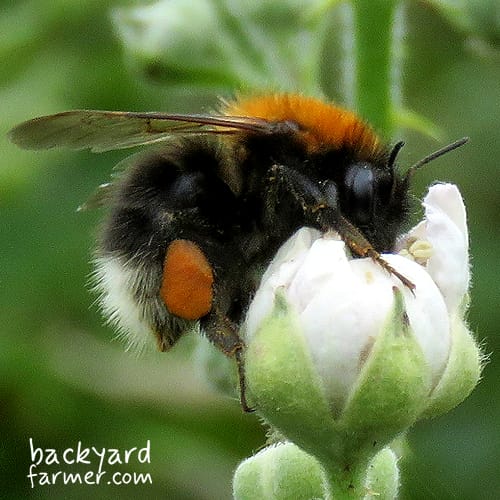
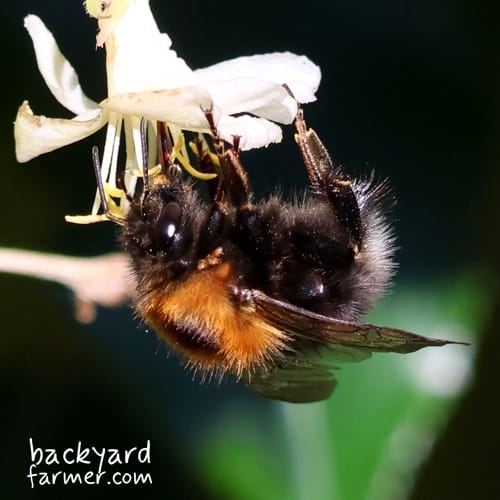
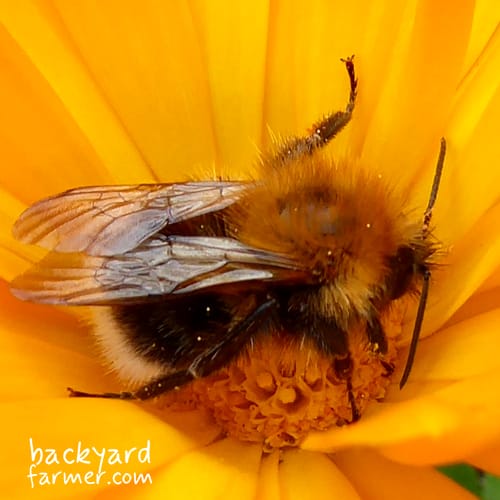
Male (Drone Tree Bumblebee)
Male Tree Bumblebees are usually around 12–16mm and share the same basic colour pattern as females. They often have longer, more curved antennae and noticeable pale facial hair. In early summer, males may hover around nest entrances waiting for new queens to emerge; this can look worrying, but males do not sting.
Tree Bumblebee Identification & Key Facts
| Attribute | Details |
|---|---|
| Common name | Tree Bumblebee |
| Latin name | Bombus hypnorum |
| Size | Queens: approx. 15–20mm; workers: 10–14mm; males: 12–16mm |
| UK range | Widespread across England, Wales and much of Scotland |
| Active months | Queens from February/March; most active spring to late summer, sometimes later in mild years |
| Habitat | Gardens, parks, woodland edges, hedgerows and urban areas |
| Nesting behaviour | Usually nests above ground in bird boxes, roof spaces, tree cavities and sheltered gaps |
| Social behaviour | Social bumblebee forming annual colonies |
| Food plants | Bramble, raspberry, cotoneaster, fruit blossom, willow, comfrey and many garden flowers |
| UK status | Common recent arrival and now one of the more familiar UK bumblebees |
Tree Bumblebee vs. Other UK Bumblebees
The Tree Bumblebee is sometimes mistaken for other species due to its coloration. Here’s how to tell them apart:
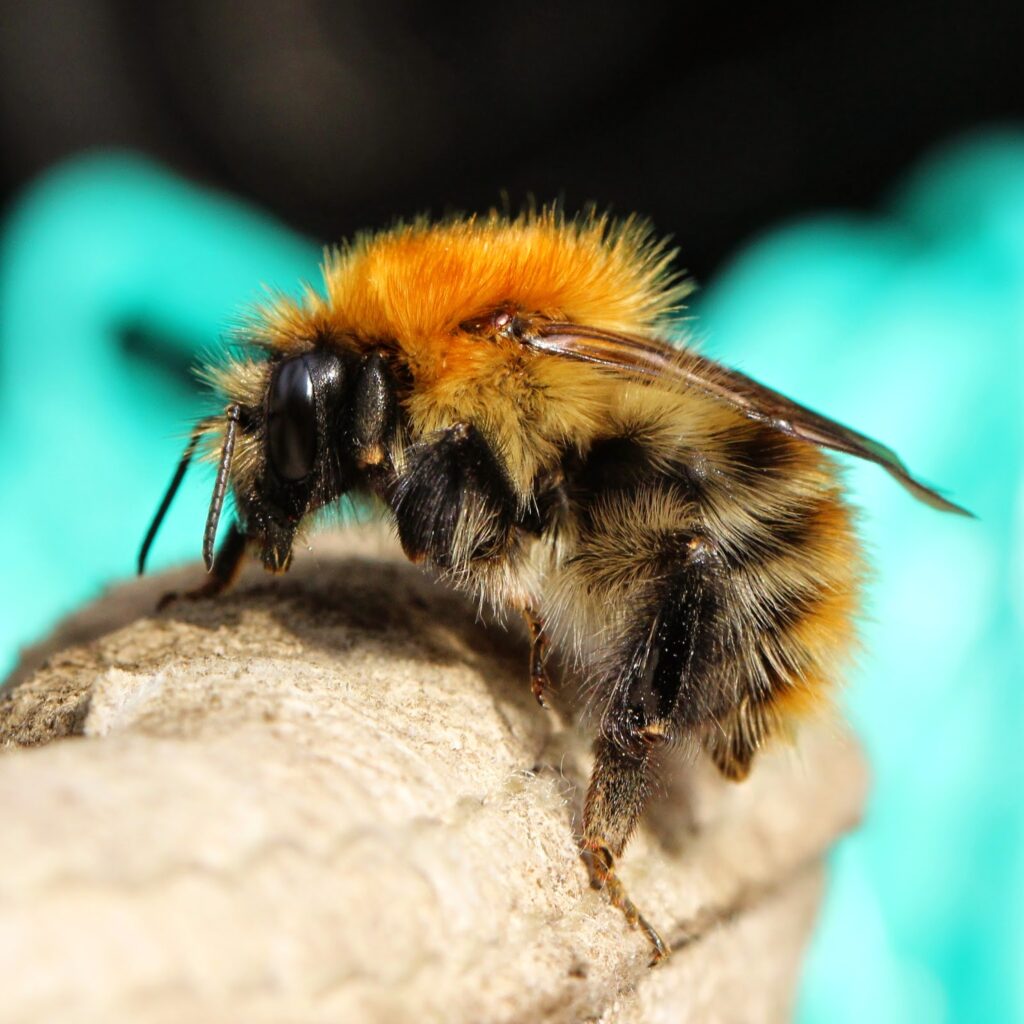
Common Carder Bee (Bombus pascuorum)
Common Carder Bees can also look ginger or tawny, but they do not have a clean white tail. Their body is usually more evenly ginger-brown, with a softer, less sharply divided colour pattern.
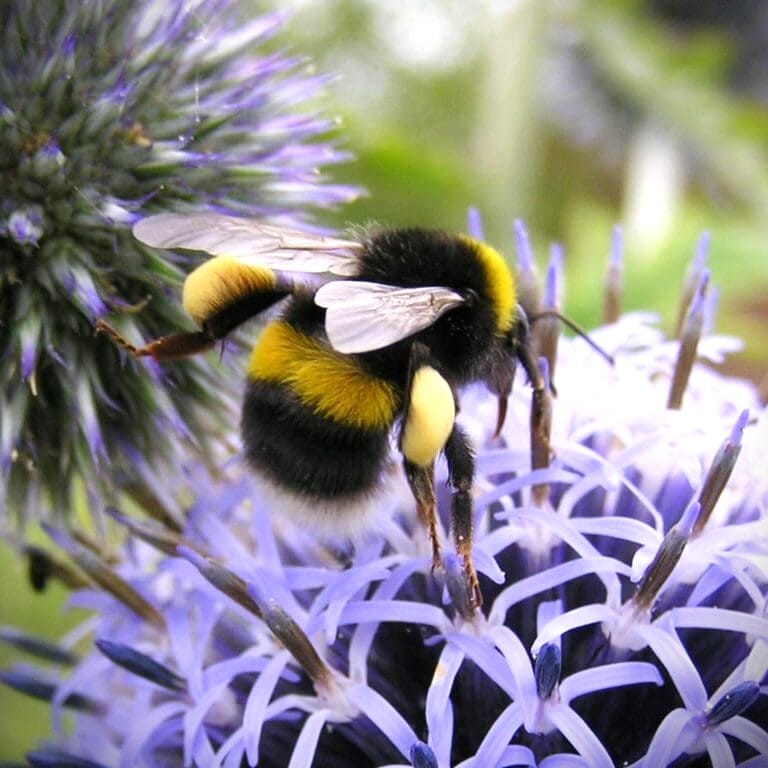
White-tailed Bumblebee (Bombus lucorum)
White-tailed Bumblebees have a white tail, but they also have yellow bands on the thorax and abdomen. They lack the Tree Bumblebee’s solid ginger-brown thorax.
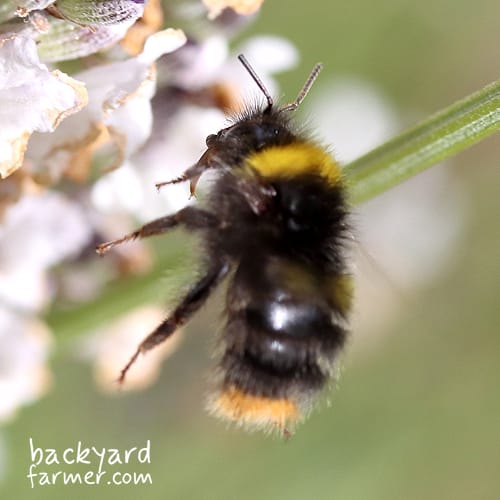
Early Bumblebee (Bombus pratorum)
Early Bumblebees are usually smaller and have yellow banding with an orange-red tail. Males can also have noticeable yellow facial markings, which may cause confusion at a quick glance.
What do Tree Bumblebee Nests look like?
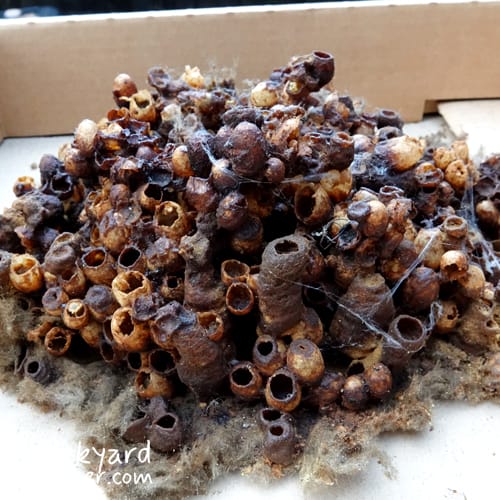
Tree Bumblebees usually nest above ground, often in old bird boxes, roof spaces, wall cavities, tree holes, sheds and other sheltered spaces. The nest itself is normally hidden inside old nesting material, insulation, moss or similar soft material, with waxy cells and pots inside.
If Tree Bumblebees are nesting in a bird box or roof space, you may see bees coming and going from one entrance. In May and June, males can sometimes gather outside the nest entrance and hover in a loose cloud. This is mating behaviour, not an attack. However, worker bees can defend the nest if it is knocked, shaken or disturbed, so it is best to leave active nests alone where possible.
Why Are Tree Bumblebees Important?
The Tree Bumblebee is a useful pollinator of garden plants, wildflowers, soft fruit and flowering shrubs. Because it is adaptable and willing to nest in bird boxes, roof spaces and other human-made spaces, it has become one of the more familiar bumblebees in UK gardens.
It is not currently a rare species, but it still benefits from the same things that help other pollinators: more flowers, less pesticide use, safe nesting spaces and gardens with a mix of early, mid-season and late nectar sources.
How Can You Help Protect Tree Bumblebees?
You can support Tree Bumblebees by making your garden more useful for pollinators throughout the growing season.
Best Flowers for Tree Bumblebees
- Other open, nectar-rich garden flowers
- Bramble and raspberry flowers
- Apple, cherry and other fruit blossom
- Willow catkins
- Cotoneaster
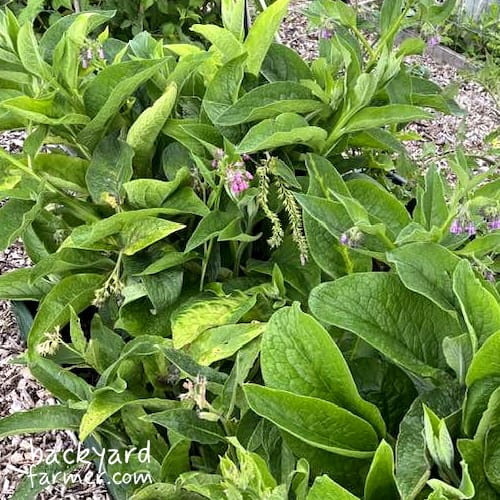
- Comfrey
- Clover and vetches
Avoid Disturbing Nests
If Tree Bumblebees move into a bird box, roof space or shed, the best option is usually to leave them alone. Bumblebee nests are temporary and naturally die out later in the season. Avoid moving active nests unless absolutely necessary.
Reduce Pesticide Use
Avoid spraying insecticides on flowering plants, especially when bees are active. Where possible, choose pollinator-friendly growing methods and leave a few wild or untidy areas for insects to feed and shelter.
Provide Nesting Opportunities
Tree Bumblebees use existing cavities rather than digging their own burrows. Old bird boxes, tree holes, sheltered gaps and natural garden edges can all provide useful nesting opportunities.
Tree Bumblebees are not usually aggressive while foraging, but workers may defend the nest if it is knocked or disturbed. Males often hover around nest entrances in early summer, but they do not sting.