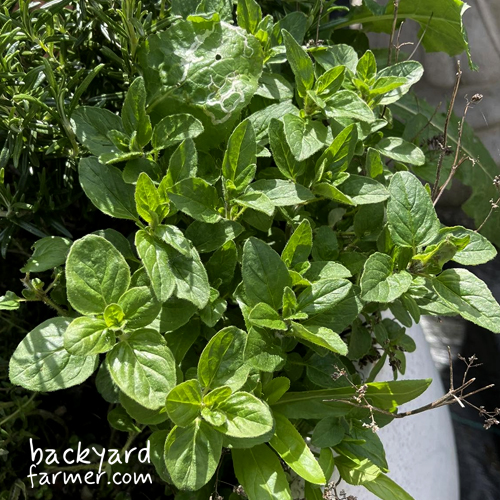
Marjoram is a fragrant culinary herb that’s easy to grow in the UK during summer. Sow seeds indoors in March or April, then plant outside in a sunny, well-drained spot after the last frost. Sweet marjoram grows well in pots or herb beds, producing aromatic leaves throughout summer, but needs protection to survive winter.
Which marjoram are we growing? This guide covers sweet marjoram (Origanum majorana), a tender culinary herb with a mild, sweet flavour. Wild marjoram (Origanum vulgare), commonly known as oregano, is a related but much hardier plant that can survive outdoors through UK winters.
When to Sow and Plant Marjoram in the UK
Sow marjoram seeds indoors in March or April, when increasing daylight helps seedlings establish before summer.
Seeds germinate best at around 20°C, making a warm windowsill or heated propagator useful for starting them off.
Young plants can move outdoors in May or June, once the risk of frost has passed. Gardeners in northern, upland or exposed areas may need to wait a little longer.
Marjoram needs warmth to establish, so avoid planting outside while nights are still cold.
Spring-sown plants generally provide their first useful harvests during early to midsummer, with regular picking possible until autumn.
How to Grow Marjoram from Seed
Sweet marjoram is straightforward to grow from seed, although its tiny seeds need careful handling.
Sowing Marjoram Seeds
- Prepare the compost. Fill small pots or a seed tray with moist, peat-free seed compost and gently firm the surface.
- Sow the seeds. Scatter them thinly over the surface, pressing gently without covering them with compost.
- Provide warmth. Place the tray in a propagator or cover it with a clear lid. Aim for approximately 20°C.
- Keep the compost moist. Water gently to avoid disturbing the seeds, keeping the surface lightly moist rather than saturated.
- Watch for germination. Seedlings usually emerge within 7–21 days. Remove the covering once they appear and provide plenty of light.
Avoid keeping the compost constantly wet. Excess moisture and poor ventilation can encourage damping off, a disease that causes young seedlings to collapse.
Potting On and Hardening Off
Once seedlings have developed several true leaves and are large enough to handle, transfer them into individual 7.5cm pots filled with peat-free potting compost.
Keep them somewhere bright, watering when the compost begins to dry. Insufficient light can cause seedlings to become weak and stretched.
Before planting outdoors, gradually introduce the plants to outside conditions over approximately one to two weeks. Start with a sheltered position during the day, bringing them indoors overnight.
Once hardened off and the risk of frost has passed, they’re ready for planting.
Where to Plant Marjoram
Marjoram grows best in full sun, where its leaves develop their characteristic fragrance and flavour.
Choose a warm, sheltered position with free-draining soil. Sweet marjoram prefers neutral to slightly alkaline conditions, although drainage is more important than achieving an exact soil pH.
Space plants approximately 25cm apart to allow their bushy growth to develop.
Marjoram doesn’t need heavily enriched soil, so avoid adding large amounts of fertiliser or rich compost before planting.
If you’re planning a mixed herb bed, our beginner’s guide to growing a herb garden explains how to choose suitable herbs and arrange them together.
Growing Marjoram in Clay Soil
Heavy clay can be challenging for marjoram, particularly where the soil remains wet for long periods.
Choose the best-drained area of your garden. Planting on a raised mound or in a raised bed may help if it provides better drainage around the roots.
Where clay soil regularly becomes waterlogged, growing sweet marjoram in a container is usually the more reliable option.
Recommended Variety — Sweet Marjoram (Origanum majorana)
Sweet marjoram produces aromatic, grey-green leaves with a delicate flavour, making it ideal for vegetable dishes, soups and sauces.
The species holds the RHS Award of Garden Merit and is suitable for growing in sunny herb beds or containers.
How to Grow Marjoram in Pots
Growing marjoram in pots is particularly useful in UK gardens with heavy soil. It also makes protecting plants through winter much easier.
Choose a container with drainage holes, at least 15cm wide and deep for a young plant. A larger pot will accommodate a mature plant and reduce how quickly the compost dries out.
Fill it with peat-free, soil-based compost, adding horticultural grit if necessary to improve drainage.
Place the pot somewhere warm and sunny, such as a sheltered patio or beside a south-facing wall.
Water when the compost begins drying out, checking more frequently during hot weather. Make sure excess water drains freely from the bottom, and avoid leaving the pot standing in water.
One advantage of container growing is that the entire plant can be moved somewhere frost-free when colder weather arrives.
Planning a herb bed? Use our free Allotment Planner to work out where to grow your marjoram alongside vegetables and other crops.
How to Care for Marjoram
Established marjoram needs relatively little attention. Plenty of sunshine, suitable drainage and occasional trimming will usually keep plants productive.
Watering and Feeding
Water young plants while their roots establish, allowing the soil surface to begin drying between waterings.
Established marjoram growing in open ground rarely needs additional water except during prolonged dry spells.
Container-grown plants dry out more quickly, particularly during summer. Check the compost regularly rather than following a fixed watering schedule.
Marjoram doesn’t need heavy feeding. Plants growing in reasonably fertile garden soil generally manage without additional fertiliser.
Container plants that have been growing in the same compost for more than a year may benefit from a light application of balanced fertiliser in late spring or early summer.
Pinching Out and Flowering
Pinching out the growing tips encourages marjoram to develop side shoots, producing a fuller plant with more leaves to harvest.
Once the plant is growing strongly, remove the tips of longer stems just above a pair of leaves. Repeat as necessary during the growing season.
Marjoram also produces small flowers that attract visiting bees and other pollinators.
If you’re growing it primarily for cooking, harvest leafy stems regularly before flowering. Alternatively, leave a few stems to bloom while continuing to harvest the rest.
How and When to Harvest Marjoram
Marjoram can be harvested throughout summer once plants have developed plenty of healthy foliage.
Young leaves and shoots have a delicate, sweet flavour that’s generally at its best before flowering.
Harvesting Fresh Marjoram
Use clean scissors to cut leafy stems just above a pair of leaves, leaving enough foliage for the plant to recover.
New side shoots will develop from the remaining growth, so regular light harvesting helps keep plants compact and productive.
Avoid removing large amounts from young plants. Instead, take a few stems at a time until they’re well established.
Fresh marjoram works particularly well with roasted vegetables, potatoes, tomato dishes, soups and sauces.
Its delicate aroma can fade during prolonged cooking, so try adding fresh leaves towards the end.
Drying and Storing Marjoram
Drying surplus marjoram is a useful way to preserve leaves for winter.
Cut healthy stems, remove damaged foliage and tie them into small, loose bundles.
Hang them somewhere dry, warm and well ventilated, away from strong direct sunlight.
Once the leaves are completely dry and crumble easily, strip them from the stems and store them in a clean, airtight container somewhere cool and dark.
You can also chop fresh leaves and freeze them in small portions for later use.
Can Marjoram Survive Winter in the UK?
Sweet marjoram is a tender perennial, but it’s not reliably frost-hardy in Britain. Most gardeners should treat it as an annual unless they can provide suitable winter protection.
Freezing temperatures can damage the plant, while persistently wet winter soil increases the risk of root problems.
To keep sweet marjoram for another year, move container-grown plants into a bright, frost-free greenhouse, conservatory or indoor windowsill before the first frost.
An ordinary unheated greenhouse may not provide enough protection during freezing weather, so check that temperatures remain above freezing.
Water sparingly during winter, allowing the compost to dry slightly between waterings. Growth will slow considerably when temperatures and daylight levels fall.
Some gardeners report marjoram surviving outdoors for several years, but these experiences often involve hardier types, including wild or golden marjoram.
If you don’t have space to overwinter a mature plant, take softwood cuttings during summer. Rooted cuttings can be kept in small pots under frost-free conditions until spring.
Alternatively, sow fresh seeds each year.
For more advice on maintaining herbs on a windowsill, see our guide to growing herbs indoors.
Common Marjoram Growing Problems
Sweet marjoram is generally trouble-free when grown in a sunny position with good drainage.
Most problems are related to unsuitable growing conditions rather than serious pest infestations.
| Problem | Possible cause | What to do |
|---|---|---|
| Seeds fail to germinate | Low temperatures or unsuitable moisture | Maintain warmth, surface-sow and keep compost lightly moist |
| Seedlings collapse | Damping off or excessive moisture | Remove affected seedlings, improve ventilation and avoid saturated compost |
| Yellowing leaves | Waterlogging, root stress or other growing problems | Check soil moisture and drainage before adjusting care |
| Weak, stretched growth | Insufficient light | Move plants somewhere brighter |
| Slow growth | Cold conditions or inadequate sunlight | Provide warmth and a sunnier position |
| Dusty orange, yellow or dark pustules | Possible mint rust | Remove affected foliage, improve airflow and avoid propagating infected plants |
| Winter dieback | Frost or prolonged cold | Move plants into frost-free conditions before winter |
Aphids and occasional leaf-feeding insects may also appear, particularly on tender shoots. Small populations can often be tolerated or removed by hand.
Providing warmth, sunlight and good drainage will help prevent many common growing problems.
Frequently Asked Questions
Sweet marjoram is a tender perennial, meaning it can live for several years under suitable conditions. However, it isn’t reliably frost-hardy in Britain and is commonly grown as an annual. Plants can be kept for another season by overwintering them indoors or somewhere frost-free.
Yes, marjoram can grow indoors if it receives plenty of sunlight and has good drainage. A bright, sunny windowsill is a suitable starting point. Growth may slow during winter because of reduced daylight, so avoid overwatering when plants aren’t actively growing.
No, although they’re closely related. Sweet marjoram (Origanum majorana) has a milder, sweeter flavour and is less winter-hardy. Oregano, often called wild marjoram (Origanum vulgare), generally has a stronger flavour and is hardy enough to survive outdoors in most UK gardens.
You can allow marjoram to flower, particularly if you want to provide nectar for visiting pollinators. However, leaves generally have their best flavour before flowering. For a balance between harvesting and supporting wildlife, cut most stems regularly and leave a few to bloom.