
Introduction
The Common Mourning Bee (Melecta albifrons) is a solitary bee species commonly found in the UK and Europe. Unlike most bees, it doesn’t collect pollen or build its own nest. Instead, it is a cleptoparasite, meaning it lays its eggs in the nests of other solitary bees, particularly the Hairy-footed Flower Bee (Anthophora plumipes). Although it doesn’t pollinate plants directly, it still plays a crucial role in maintaining bee population balance. Spotting one in your garden is a sign of a healthy ecosystem with thriving host species.
Common Mourning Bee Identification: How to Recognize Melecta albifrons
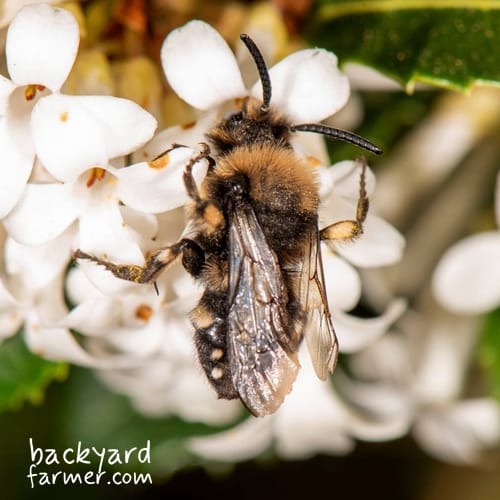
The Mourning Bee stands out with its compact, hairy body and distinct black and grey markings. Many people mistake it for a bumblebee due to its stocky build, but it lacks pollen-collecting structures. You’ll often see it hovering near Hairy-footed Flower Bee nests, looking for an opportunity to lay eggs.
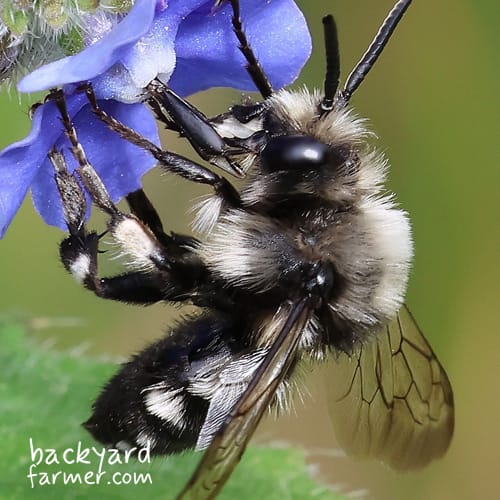
Female Mourning Bee
Size: 10-14mm, black body with grey or white hair patches, no pollen baskets.
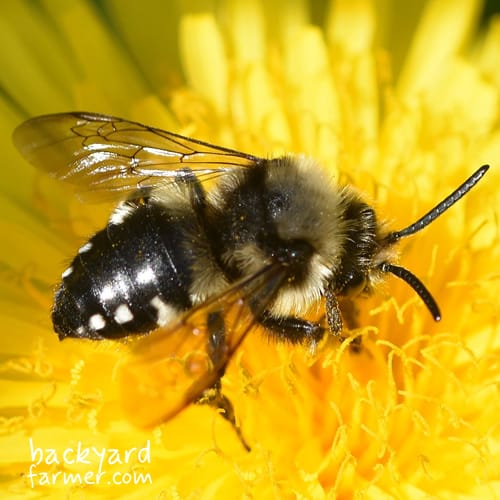
Male Mourning Bee
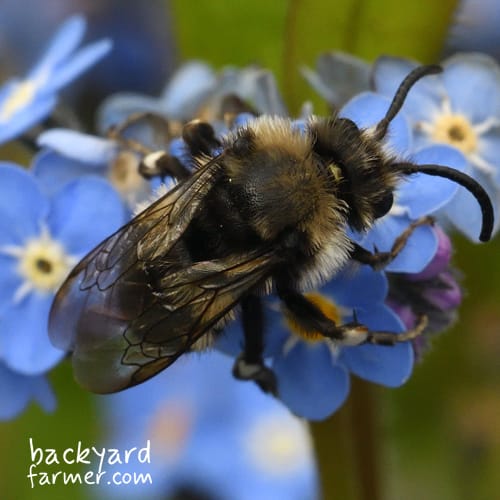
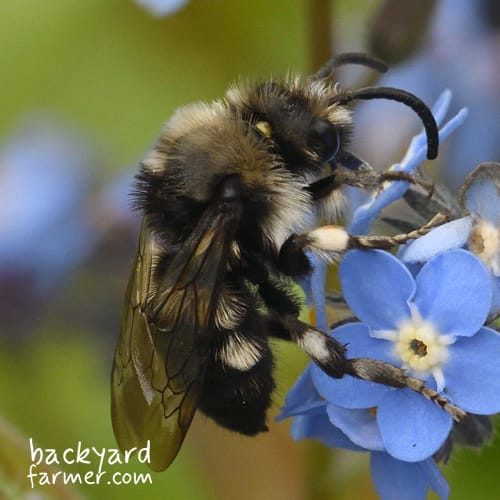
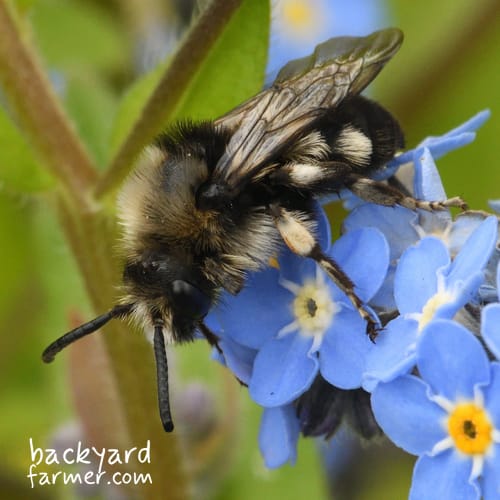
Size: 8-12mm, slimmer than the female, with white markings on the face.
Antennae Sensors (Advanced Male ID Feature)
One subtle but reliable way to identify a male mourning bee is by looking closely at the antennae. In strong light or macro photos, these ridged segments often catch the light slightly differently, making them easier to spot than you’d expect.
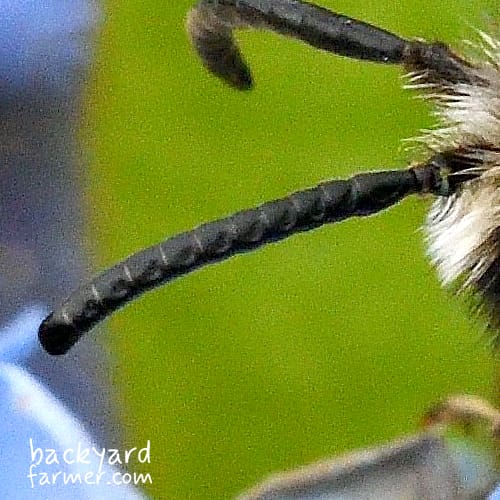
Males have specialised sensory organs (tyloids) along the antenna segments. These appear as slightly swollen, ridged, or textured sections, often easier to spot in macro photos than with the naked eye.
These structures are used to detect female pheromones, helping males locate mates. Females don’t have these enlarged sensory patches, so their antennae look more uniform and smooth by comparison.
In good light (or zoomed photos), this can be a useful extra clue when size and markings alone aren’t quite enough to confirm sex.
Flight Behaviour (Male vs Female Clue)
Another useful way to tell male and female mourning bees apart is by watching how they behave in flight.
Male mourning bees often hover and patrol the same area repeatedly, especially near patches where host bees are active. They tend to move in short loops or hold position mid-air, scanning for females.
Females, on the other hand, are usually more direct and purposeful. Instead of hovering aimlessly, they’ll fly with intent—often dropping down to investigate nest entrances of their host species.
In the garden, this means:
- A bee hovering persistently in one spot is more likely a male
- A bee moving in and out of ground nests or inspecting holes is more likely a female
Like the antennae sensors, this isn’t always obvious at first—but once you notice it, it becomes a reliable extra clue when visual identification alone isn’t enough.
Identification & Key Facts
| Attribute | Details |
|---|---|
| Common Name | Mourning Bee / Melecta albifrons |
| Latin Name | Melecta albifrons |
| Size | 10-14mm (females), 8-12mm (males) |
| Location | Found across the UK and Europe |
| Active Months | February – July |
| Habitat | Prefers sandy or loose soil near host bee nests |
| Nesting Behavior | Cleptoparasitic – lays eggs in host nests |
| Social Behavior | Solitary |
| Flora & Fauna | Often seen near host species’ foraging sites |
| UK Status | Common but often overlooked |
Bees That Look Like the Mourning Bee
Because of its dark, hairy appearance, the Mourning Bee is often confused with other species. Here’s how to tell them apart:
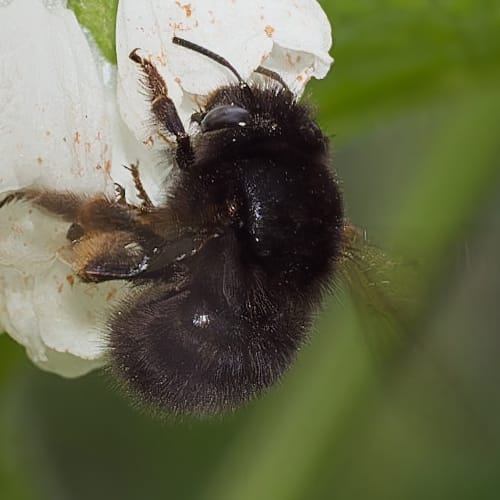
Hairy-footed Flower Bee (Anthophora plumipes) – The primary host species; larger, with orange or brown hairs on females and a faster flight pattern.
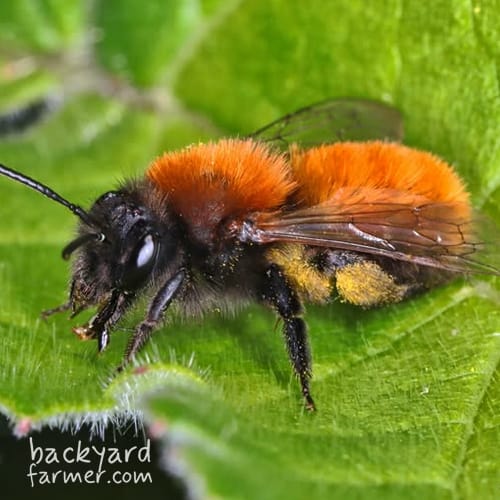
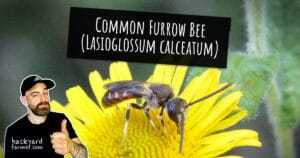
Tawny Mining Bee (Andrena fulva) – Lives in similar habitats but has a bright orange body and does not parasitize other bees.
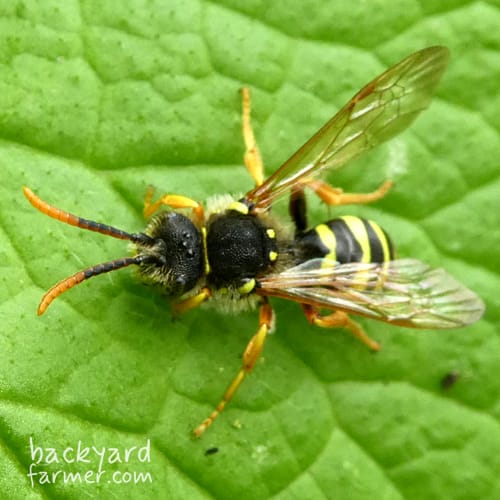
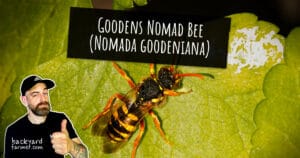
Gooden’s Nomad Bee (Nomada goodeniana) – Another cleptoparasite, but with striking yellow and black wasp-like markings.
Read our Bee Identification Guide for more tips on distinguishing UK bee species.
The Ecological Role of the Common Mourning Bee
Although the Mourning Bee does not pollinate directly, it still plays an important role in the ecosystem. Since it relies on its host species to survive, its presence indicates a strong population of Hairy-footed Flower Bees. Understanding this species helps us gain deeper insight into pollinator health and biodiversity conservation.
How You Can Help Mourning Bees and Their Host Species
Healthy bee populations benefit both pollinators and cleptoparasitic species like the Mourning Bee. Here’s how you can support them:
Plant Bee-Friendly Flowers
Support host bees (Anthophora plumipes) by growing nectar-rich plants like lungwort (Pulmonaria), dead-nettles (Lamium), and comfrey (Symphytum).
Avoid Harmful Pesticides
Many insecticides harm bees and disrupt ecosystems. Instead, opt for organic gardening methods to keep pollinators safe.
Protect Nesting Sites
Leave patches of sandy soil or bare ground where Hairy-footed Flower Bees build their nests. Providing suitable nesting areas helps maintain a stable bee population.
Frequently Asked Questions (FAQ)
The Mourning Bee has a compact, black body with grey or white hair patches. Males are slightly smaller and have white markings on their face.
No, these bees are not aggressive and will only sting if handled roughly.
Not in the traditional sense. Since they do not collect pollen, they don’t contribute to pollination the way other bees do. However, they may passively transfer small amounts of pollen when visiting flowers.
You’ll most likely spot them in gardens, urban areas, and sandy or clay-based soils, especially near Hairy-footed Flower Bee nesting sites.
Although not as well-known as other bee species, Melecta albifrons is fairly common in the UK and Europe.
No, it is harmless to humans and does not damage gardens or structures.
Plant a variety of nectar-rich flowers, leave undisturbed soil patches for nesting, and avoid using chemical pesticides.
You can support pollinators like the Common Mourning Bee by creating a bee-friendly garden—check out WWF’s tips on how to help bees for simple and effective ways to make a difference.
Continue your bee identification journey
Bee facts – An accessible overview of key bee biology, behaviour, and why bees matter in gardens and wild spaces
Winter Bee Feeding Recipe for Healthy Hives – Learn how to keep hives ticking over the winter with this Winter Feed Recipe for Bees
How to Make a Bug Hotel: DIY Insect Shelter Ideas for Bees, Beetles & More – Keep solitary bees safe through all seasons with a bug hotel!