Cucamelons (Melothria scabra) are climbing plants that produce small fruits resembling miniature watermelons, with a crunchy texture and tangy, cucumber-like flavour. Also known as Mexican sour gherkins, they’re an unusual edible crop that can be grown outdoors or under cover in the UK.
Sow cucamelon seeds indoors in April or May, then plant them outside after the last frost. They need warmth, shelter and climbing support, but once established, the vines can produce plenty of fruit throughout late summer and into autumn.
When to Sow and Plant Cucamelons in the UK
The best time to sow cucamelons in the UK is April to May, starting the seeds indoors where they can germinate in consistent warmth. Plants can usually move outdoors from late May or June, once the risk of frost has passed.
| Growing stage | UK timing |
|---|---|
| Sow seeds indoors | April–May |
| Plant in an unheated greenhouse | May onwards, when conditions are sufficiently warm |
| Plant outdoors | Late May–June |
| Harvest cucamelons | July–September, sometimes October |
These are general growing windows rather than fixed dates.
Cucamelons dislike cold conditions, and planting too early can leave young plants struggling to establish. Even an unheated greenhouse may become cold enough overnight to damage tender growth.
Gardeners in milder southern areas may be able to plant outdoors towards the end of May, while those in northern England, Scotland and exposed locations may need to wait until June.
Warm soil and reliably mild nights matter more than the exact planting date. A healthy plant moved outdoors in early June may establish faster than one planted several weeks earlier into cold conditions.
How to Grow Cucamelons from Seed
Cucamelons are straightforward to grow from seed when provided with consistent warmth. A heated propagator is useful during a cool UK spring, although another reliably warm location can work.
- Prepare the pots. Fill small pots or modules with moist, peat-free seed compost.
- Sow the seeds. Place one seed approximately 0.5–1cm deep in each pot or module and cover lightly with compost.
- Provide warmth. Maintain temperatures around 22–24°C to encourage germination.
- Keep the compost moist. Seeds usually germinate within 7–21 days. Avoid allowing the compost to become saturated.
- Provide plenty of light. Once seedlings emerge, remove any propagator cover and move them somewhere bright, ideally around 18–21°C.
- Pot on when needed. Move seedlings into individual 7.5–9cm pots once they’re large enough to handle, providing more space as their roots develop.
Keep young plants protected from frost until outdoor conditions are suitable.
Avoid sowing too early unless you have enough indoor growing space and light to maintain healthy plants while they wait for warmer weather.
Why Are Cucamelon Seedlings So Slow to Grow?
Cucamelon seedlings can develop slowly at first, particularly during cool spring weather. UK gardeners often report little visible growth for several weeks before their plants suddenly begin producing vigorous vines.
This can be normal, but persistent slow growth may indicate insufficient warmth, poor light, waterlogged compost or restricted roots.
Check the growing conditions before adding fertiliser or making unnecessary changes. Once temperatures improve and the root system establishes, growth often accelerates considerably.
Recommended seeds: Cucamelon (Melothria scabra) – DT Brown
Where to Grow Cucamelons
Cucamelons grow best in full sun, with shelter from cold winds and moist but well-drained soil.
They can be grown in outdoor vegetable beds, greenhouses, polytunnels or containers. The best choice depends on your local conditions and available space.
Growing Cucamelons Outdoors
Outdoor growing is possible across much of the UK, particularly in warm, sheltered gardens.
Choose a sunny position protected from strong winds, with fertile soil that drains well. A sheltered spot beside a wall, fence or established trellis can work well.
The main challenge is allowing enough time for plants to establish and produce fruit before autumn temperatures fall.
In a warm summer, outdoor cucamelons can produce excellent harvests. Cooler or wetter seasons may result in slower growth and fewer fruits.
For exposed allotments or gardens with cold, heavy soil, wait until conditions have improved before planting.
Cucamelons belong to the same family as cucumbers and share several growing requirements. Our guide to growing cucumbers in the UK covers many of the same principles.
Growing Cucamelons in a Greenhouse or Polytunnel
A greenhouse or polytunnel provides additional warmth, making protected growing particularly useful in cooler parts of the UK.
Plants may establish earlier and continue fruiting later into autumn, provided temperatures remain suitable.
However, cucamelons can become vigorous climbers, with vines spreading into neighbouring crops. Give them a dedicated support and train the growth upwards to prevent overcrowding.
Good ventilation is also important. Open greenhouse doors and vents during suitable weather to prevent excessive heat and allow pollinating insects access to the flowers.
Remember that unheated greenhouses can still experience damaging overnight temperatures in spring.
Growing Cucamelons in Pots
Cucamelons grow well in containers, making them suitable for patios, small gardens and growing spaces without permanent vegetable beds.
A container holding around 20 litres or more per plant is a useful starting point, giving the roots room to develop while reducing how quickly the compost dries out. This is a practical recommendation rather than an absolute minimum.
Use a good-quality peat-free growing medium and ensure the container has adequate drainage holes.
Position it somewhere warm and sunny, with a sturdy trellis, bamboo wigwam or mesh support for the vines.
Container plants generally require more frequent watering than those growing in the ground. Check the compost regularly during warm weather, watering thoroughly when the upper layer begins to dry.
Planting Out and Supporting Cucamelons
Cucamelons should be planted into their final growing position once they have developed healthy growth and temperatures are reliably mild.
Because they’re tender plants, seedlings raised indoors need time to adjust before being moved outside permanently.
Hardening Off and Planting Out
Gradually harden off cucamelons over approximately two to three weeks, adjusting the process to suit the weather.
Start by placing plants outdoors in a sheltered position during mild daytime conditions, bringing them back under protection overnight. Gradually increase their exposure to outdoor conditions without subjecting them to cold or frost.
Once the risk of frost has passed and conditions are suitable:
- Prepare the soil by loosening it and incorporating mature compost where needed.
- Space plants approximately 40–45cm apart when growing them vertically.
- Dig a planting hole large enough to accommodate the root ball.
- Position the plant at approximately the same depth as it was growing in its pot.
- Firm the soil gently, water thoroughly and guide the young shoots towards their support.
Avoid planting into cold, saturated soil, which can restrict root development and increase the risk of damage.
Keep an eye on newly planted seedlings during wet weather, particularly where slugs and snails are active.
How Big Do Cucamelon Plants Grow?
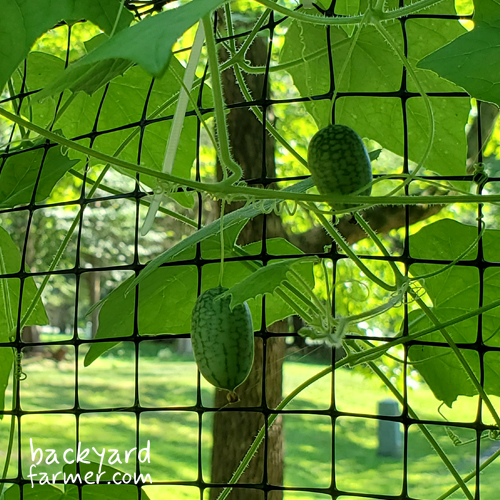
Although cucamelon fruits are only around 2–3cm long when harvested, the vines can reach approximately 2.5–3m in favourable growing conditions.
Their slender stems produce tendrils that attach to nearby structures, allowing the plants to climb naturally.
Trellis netting, wire mesh, bamboo supports and sturdy garden frames are all suitable.
Vertical growing makes harvesting easier and prevents the vines from spreading across neighbouring vegetables.
Allow some space for side shoots, as established cucamelons can produce dense foliage.
Planning your growing space? Cucamelons make excellent use of vertical space, but their long vines can interfere with neighbouring crops. Use the free Backyard Farmer Allotment Planner to work out where they’ll fit before planting.
How to Care for Cucamelon Plants
Once established, cucamelons require relatively little maintenance beyond watering, maintaining soil fertility and managing their climbing growth.
Watering
Keep the soil consistently moist during active growth, particularly when plants are flowering and producing fruit.
Water thoroughly around the roots when needed, allowing excess moisture to drain away.
Avoid keeping the soil constantly saturated, as waterlogged conditions can damage the roots.
Container-grown cucamelons may need frequent watering during hot weather, while plants growing in moisture-retentive garden soil generally require less attention.
An organic mulch can help retain moisture once the soil has warmed, provided it isn’t piled directly against the stems.
Feeding
Cucamelons grow well in reasonably fertile soil containing sufficient organic matter.
Incorporating mature compost before planting can improve soil structure and support healthy growth.
Container plants may benefit from supplementary feeding during flowering and fruit production, using a suitable liquid feed for fruiting vegetables according to the manufacturer’s instructions.
Avoid excessive feeding, particularly if plants are already producing vigorous foliage.
Training and Pruning
Guide young shoots onto their supports until the tendrils begin attaching naturally.
Pruning isn’t essential, although it can help manage plants that become too large for their growing space.
If vines reach the top of their support, you can pinch out the growing tips. Long side shoots can also be shortened where necessary.
Avoid removing excessive healthy foliage, as the leaves support continued growth and fruit production.
If you’re new to the technique, our pinching out plants guide shows how to identify and remove a growing tip without taking away unnecessary foliage.
Flowers and Pollination
Cucamelons produce small yellow male and female flowers on the same plant.
Female flowers have a tiny developing fruit behind them, while male flowers grow on slender stalks.
You only need one cucamelon plant to produce fruit, but pollen still needs to reach the female flowers.
Bees and other pollinating insects can help with this process, so provide access to greenhouse plants during suitable weather.
If flowers appear but little fruit develops, check whether female flowers are present and whether pollination is taking place. Temperature extremes and other growing stresses can also affect fruit development.
When and How to Harvest Cucamelons
Cucamelons are usually ready to harvest from July or August, depending on when they were sown and how quickly the plants established.
In favourable conditions, harvesting may continue into September or October.
Pick cucamelons when they’re firm, green and approximately 2–3cm long, around the size of a large grape or small olive.
The fruits have distinctive pale green markings that resemble miniature watermelons.
During heavy cropping, check the vines every couple of days. Fruits can be difficult to spot among the dense foliage, particularly when plants are growing vertically.
Avoid leaving cucamelons on the vine simply to make them larger. Overripe fruits may develop tougher skins, firmer seeds and a less pleasant flavour.
Try harvesting a few at slightly different sizes to discover the texture and flavour you prefer.
What Do Cucamelons Taste Like?
Cucamelons have a crunchy, cucumber-like texture with a distinctive sour, citrus-like flavour.
They’re often described as tasting like cucumbers with a hint of lime, although some people find the acidity stronger than expected.
Young cucamelons can be eaten whole, added to salads and salsas, or pickled like small gherkins.
Their unusual appearance makes them an interesting edible crop, but they’re not a direct replacement for ordinary cucumbers.
The fruits are small, so producing a substantial quantity of food requires plenty of picking. However, established plants can be productive, particularly during warm summers.
Common Cucamelon Growing Problems
Most cucamelon problems are associated with cool conditions, poor establishment, water stress or inadequate pollination.
| Problem | What to check | What to do |
|---|---|---|
| Seedlings barely growing | Temperature, light and compost moisture | Provide warmer, brighter conditions and avoid waterlogging |
| Flowers but no fruit | Female flowers, pollination and plant stress | Improve pollinator access and check growing conditions |
| Young plants being eaten | Slug and snail activity | Protect vulnerable seedlings |
| White powdery patches | Possible powdery mildew | Improve airflow and maintain healthy growing conditions |
| Poor or late harvest | Temperature, planting date and establishment | Provide warmth and shelter where possible |
| Yellowing or wilting foliage | Soil moisture, drainage and root condition | Check the roots and soil before watering again |
Slugs and Snails
Young cucamelon seedlings are particularly vulnerable to slug and snail damage, especially during wet spring weather.
Growing seedlings on until they’re strong enough to tolerate some damage can improve their chances after planting.
Check vulnerable plants regularly and use physical protection where necessary.
Our guide to controlling slugs naturally in UK gardens explains how to protect young vegetables while encouraging a healthier garden environment.
Powdery Mildew
Powdery mildew can affect cucamelon foliage, particularly as plants age or growing conditions become less favourable.
It produces white or grey powdery patches on the leaves.
Maintain good airflow, avoid unnecessary overcrowding and keep watering consistent.
A small amount of powdery mildew late in the season doesn’t necessarily mean the plant will stop producing fruit immediately.
For identification and management advice, see our guide to powdery mildew.
Can You Overwinter Cucamelons in the UK?
Although cucamelons are generally grown as annuals in the UK, they’re perennial plants in suitable climates.
During the growing season, they can develop tuberous underground roots that may survive winter when stored in frost-free conditions.
This offers the possibility of restarting established plants the following spring.
To try overwintering cucamelons:
- Allow the plant to finish cropping in autumn.
- Carefully lift the underground root before freezing conditions arrive.
- Remove dead foliage and inspect the root for damage or rot.
- Store it in barely moist compost somewhere cool and frost-free.
- Check periodically for excessive drying or signs of rotting.
- Restart growth under protection in spring before gradually introducing the plant to outdoor conditions.
An unheated greenhouse or garden shed may not provide sufficient protection during a cold UK winter.
Avoid keeping stored roots too wet, as rotting is one of the main reasons overwintering attempts fail.
Overwintering isn’t guaranteed to succeed. UK gardeners report mixed results, with some restarting plants successfully and others losing the roots during storage or after replanting.
For beginners, sowing fresh seeds each spring remains the more predictable approach.
Frequently Asked Questions
August is generally too late to sow cucamelons for a worthwhile outdoor harvest in the same year.
Although seeds may germinate in warm conditions, plants still need time to establish, climb, flower and produce fruit before autumn temperatures fall.
For the most reliable results, start seeds indoors in April or May.
Cucamelons can grow indoors with sufficient warmth, strong light, root space and climbing support.
However, reliable winter fruit production is difficult in an ordinary UK home because natural light levels are low and pollination may need assistance.
For most gardeners, seasonal greenhouse or outdoor growing is more practical.
Cucamelon seeds usually germinate within 7–21 days when kept sufficiently warm.
Plants sown in April or May may begin producing fruit from July or August, although cool conditions can delay harvesting until later in summer.
The time to harvest depends on temperature, light and how quickly the plants establish.