
Turnips are one of the quickest root crops to grow in a UK garden or allotment. They are useful for filling gaps between longer-term crops, and because they can be harvested young, you do not need to wait for large roots before enjoying them.
The main secret is to keep them growing steadily. Sow into cool, moist soil, protect seedlings from flea beetles, water during dry spells and harvest the roots while they are still young and tender. Turnips can be sown over a long season, but conditions matter more than the calendar.
Turnip or swede? This guide covers the fast-growing turnip (Brassica rapa). Swedes are a different crop, although in Scotland and some other parts of the UK they may also be called turnips or neeps.
When Should You Sow Turnips in the UK?
Turnips can generally be sown from March into August, but this is a useful range rather than an instruction to sow continuously. The best time depends on soil temperature, moisture and the weather that follows.
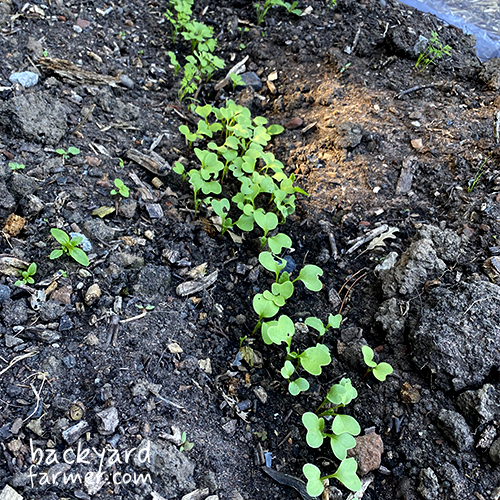
Turnips grow quickly in cool, moist conditions. They can struggle if they germinate into hot, dry weather, particularly if the seedbed dries out. If prolonged heat is forecast and you cannot water reliably, waiting for conditions to improve is often better than sowing simply because the calendar says you can.
Spring sowings from roughly March to May usually establish while the soil is still relatively cool and spring moisture is easier to maintain. In colder areas, wait until the ground is workable rather than sowing into cold, saturated soil.
Late summer is another useful sowing window, particularly as temperatures begin to moderate. These sowings can provide an autumn crop and make good use of space after early potatoes, peas, broad beans or other crops that have finished.
For a more detailed month-by-month guide, see When to Sow Turnips in the UK.
Which Turnip Varieties Are Worth Growing?
You do not need a long list of varieties. Choose according to how quickly you want to harvest, when you plan to sow and whether bolting is likely to be a problem.
| Variety | Best for | Why grow it |
|---|---|---|
| Oasis F1 | Spring and summer sowings | A useful slow-to-bolt choice for variable conditions |
| Tokyo Cross F1 | Quick crops and succession sowing | Fast-growing and well suited to harvesting young |
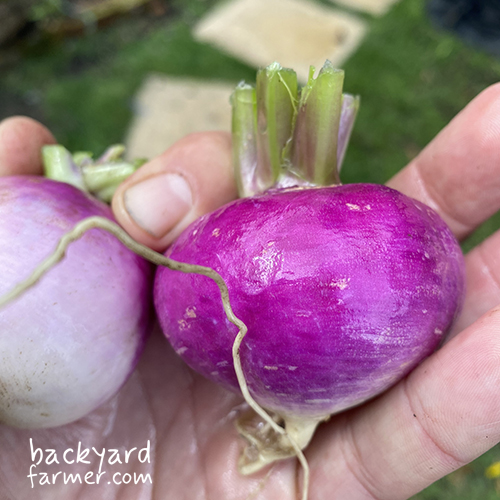
| Purple Top Milan | Traditional turnips | Produces familiar purple-shouldered roots |
Bolt resistance gives a crop more flexibility, but it does not remove the need for consistent moisture. Harvest roots while they are young to avoid coarse texture.
Where Should You Grow Turnips?
Turnips grow well in full sun, although they can also produce a crop in light shade. A sunny position usually gives the fastest growth, while light shade can help the soil stay cooler and moist for longer in summer.
Choose fertile soil that holds moisture but does not remain waterlogged. Prepare a fine, even seedbed by removing stones, breaking up compacted areas and raking the surface level. Stones and large clods can interfere with germination and distort developing roots.
If the soil needs improving, add well-rotted compost or manure in advance rather than applying a heavy dressing immediately before sowing. Turnips are particularly useful for:
- Filling gaps between longer-term crops
- Newly cleared allotment space
- Raised beds
- Short-lived vacant beds
- Containers and small gardens
- Following early potatoes, peas or broad beans
How to Sow Turnip Seeds
Turnips are best sown directly where they are to grow. Direct sowing avoids disturbing the developing root.
- Prepare a fine seedbed. Remove weeds and stones, then rake the surface level.
- Make a shallow drill. A drill about 1cm deep is usually sufficient.
- Water dry soil before sowing. This is particularly useful during dry spring or late-summer conditions.
- Sow thinly. Leave enough space between seeds to reduce thinning.
- Cover lightly. Replace the soil gently without compacting it heavily.
- Keep the seedbed moist. Water as necessary until the seedlings emerge.
- Thin the seedlings. Once they are large enough to handle, thin them to 10–15cm apart for young roots; allow more space for larger maincrops.
Leave about 23–30cm between rows so that you can weed and water easily. If you want small baby turnips, you can sow a little closer and harvest them young, but overcrowding will reduce root size.
Protect young turnips from flea beetles
Flea beetles make numerous small holes in the leaves of young brassica plants. The damage is most serious while seedlings are small, because losing too much leaf area can check growth before the plant becomes established.
Hot, dry weather can make flea beetle damage more noticeable. Cover newly sown rows with fine insect mesh or horticultural fleece as soon as you sow them, securing the edges so beetles cannot get underneath. Adjust the cover as the plants grow and check that the crop is not becoming too hot.
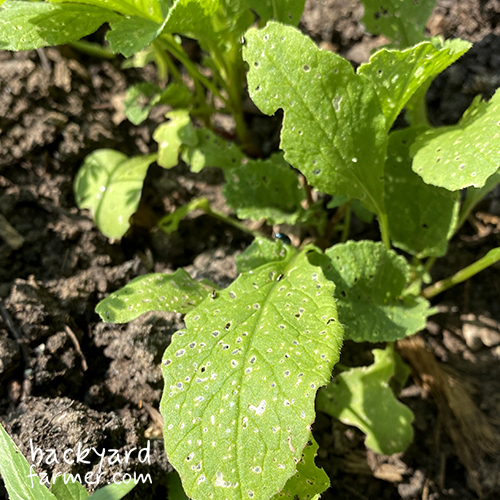
The obvious flea beetle damage comes from adults feeding on the leaves, not chewing into the turnip itself. Their larvae can feed on roots, but this rarely causes significant damage in gardens. A plant with heavily peppered leaves may therefore look worse than the root underneath. The main concern is severe damage to small seedlings, which can slow or stop their growth.
See our full guide to flea beetles on brassicas.
How to Care for Turnips
Turnips need relatively little attention once established. The main priorities are consistent moisture, enough space and weed control while the roots develop.
Watering
Water during dry spells, particularly while the roots are swelling. Avoid allowing the soil to dry out completely and then soaking it heavily, as irregular moisture can lead to uneven growth, splitting and coarse roots. Drought stress can also encourage bolting.
Water the soil around the plants rather than repeatedly wetting the foliage. A thorough watering is more useful than a light sprinkle that only dampens the surface.
Thinning
Thin seedlings once they are large enough to handle. Crowded plants compete for light, water and nutrients and are less likely to form good roots. Remove the weakest seedlings first and leave the strongest plants at their final spacing.
Feeding and weeding
Turnips grown in fertile soil should not need regular feeding during their short growing period. If the soil is poor, improve it before sowing with well-rotted organic matter or a balanced fertiliser used according to the product instructions.
Keep the bed free of weeds while the seedlings establish. Hand-weed carefully around the rows or hoe between rows without damaging the shallow roots.
How Long Do Turnips Take to Grow?
Turnips take approximately 6–10 weeks to grow for many varieties, although baby roots may be ready sooner and larger roots may need longer.
Timing depends on the variety, sowing date, temperature, moisture and the size you want to harvest. A quick-growing variety sown into warm, moist soil may produce small roots in around six weeks, while a crop growing slowly in cool conditions may take longer.
Do not rely on the calendar alone. Check the shoulders of the roots and harvest a few to see whether they have reached the size and texture you want.
What Do Turnips Look Like as They Grow?
Turnips change quickly, so regular checks make it easier to spot pest damage, overcrowding and roots that are ready to harvest.
Turnip seedlings
The first seedlings appear with two rounded seed leaves, followed by the first true leaves. At this stage they are particularly vulnerable to flea beetles and drying out.
Young plants
As the plants establish, they produce a small rosette of brassica leaves. Thin them before the foliage becomes crowded and keep the soil moist while the roots begin to develop.
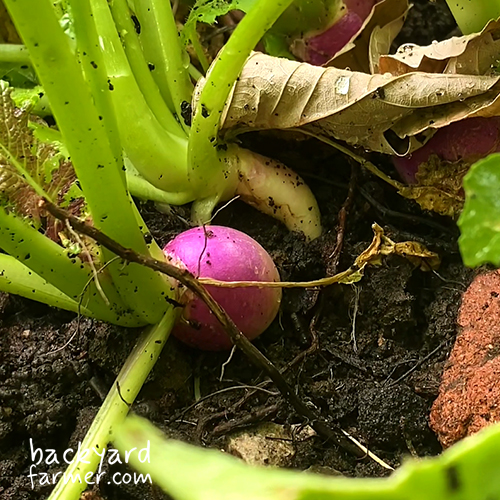
Root beginning to swell
The top of the root may become visible at soil level as it enlarges. This is a useful time to start checking the crop, although some varieties develop more of their root below ground.
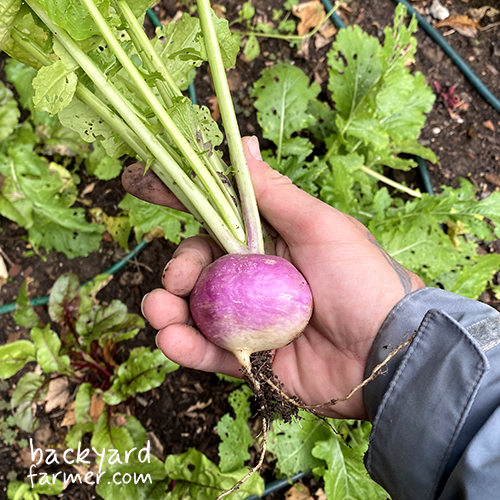
Harvest-ready turnip
Young turnips are often harvested when the root is around golf-ball size, although the ideal size varies by variety and preference. The roots should feel firm and should not be left until they become woody or over-mature.
Can You Grow Turnips in Containers?
Yes. Turnips are well suited to containers because they grow quickly and do not need to occupy the space for a whole season.
Choose a container deep enough for the roots to develop, with drainage holes in the base. Fill it with good-quality, free-draining compost, sow thinly and thin the seedlings once they emerge.
Keep containers watered because compost dries out more quickly than garden soil, particularly in warm or windy weather. Successionally sowing small containers can provide a steady supply of young roots. Protect emerging seedlings from flea beetles with fine mesh if necessary.
Common Turnip Problems
| Symptom | Likely cause | What to do |
|---|---|---|
| Tiny holes throughout leaves | Flea beetles | Protect seedlings with fine mesh and keep plants growing steadily. See our guide to flea beetles on brassicas. |
| Plants flower before roots develop | Bolting | Improve moisture consistency, avoid sowing immediately before stressful weather and consider a slow-to-bolt variety. |
| Roots remain very small | Crowding, drought or checked growth | Thin plants promptly and water consistently. |
| Roots become woody | Crop left too long or drought stress | Harvest younger and avoid allowing the soil to dry out. |
| Roots split | Irregular moisture | Water more consistently, particularly while the roots are swelling. |
| Roots damaged below ground | Cabbage root fly | Use suitable crop protection and avoid leaving damaged plants in the bed. |
| Roots are distorted and plants struggle | Possible clubroot | Avoid spreading contaminated soil, improve drainage and test the soil pH; liming acidic soil can reduce clubroot severity. |
When Should You Harvest Turnips?
Early turnips can be ready in around six weeks, although many varieties take closer to 6–10 weeks depending on growing conditions and the size you want to harvest.
Do not automatically wait for the roots to reach their maximum size. Young turnips are usually sweeter and more tender, while older roots can become coarse or woody, particularly after drought.
Golf-ball size is a useful general guide for many varieties, but check the seed packet and harvest according to your preference. Check a few roots regularly and pull individual turnips as they reach the size you want.
For more detail, see When and How to Harvest Turnips.
Can You Eat Turnip Leaves?
Yes. Young, healthy turnip leaves can be eaten as greens. Pick a few smaller leaves while the plants are growing and cook them like other brassica greens.
Avoid eating leaves that are heavily damaged, diseased or contaminated with pest treatments. Remove leaves sparingly if you also want a good root crop.
Turnip FAQs
Yes. Turnips are generally straightforward, quick-growing crops. The main challenges are keeping the seedbed moist, protecting young plants from flea beetles and harvesting before the roots become coarse.
Turnips can grow in light shade, although full sun usually gives faster growth. Avoid deep shade, where the plants may grow slowly and produce smaller roots.
A turnip root that has been pulled will not grow back into another usable root. If you harvest only a few leaves, the plant can continue growing, but removing the whole root ends that plant’s crop.
Turnips are at their best when treated as a quick crop rather than something left in the ground for months. Choose a suitable sowing window, keep the soil moist, protect seedlings from flea beetles and start checking the roots within a few weeks.
For the next step, see our turnip harvest guide. Use the Allotment Planner to fit quick crops into your growing space.