
Cabbage is ready to harvest once the head feels firm and solid and has reached a normal size for the variety. Harvest times vary by type, so firmness is usually a better guide than size alone.
Cabbage Harvest Season in the UK
| Cabbage type | Typical harvest period |
|---|---|
| Spring cabbage | March–May |
| Summer and autumn cabbage | July–October |
| Winter and Savoy cabbage | Mid-October–February |
These are general UK harvest windows rather than fixed dates. Variety, sowing time and weather can shift the season, so use the firmness and condition of the head as your final guide.
How to Tell When Cabbage Is Ready to Harvest
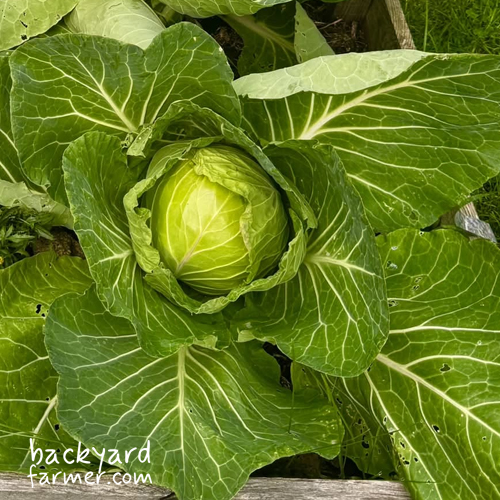
The simplest way to check a cabbage is to feel the head. A mature cabbage should feel firm and solid rather than soft, loose or springy, with tightly packed leaves and roughly the expected size for its variety.
Look for:
- a firm, well-formed head;
- tightly packed leaves rather than a loose centre;
- no significant splitting, rotting or pest damage.
Don’t wait for the largest possible head if it already feels mature — firmness is a better guide than size alone.
When to Harvest Different Types of Cabbage
Spring Cabbage
Spring cabbage can be harvested young as loose spring greens or left longer to form a firm head. It is usually harvested from March to May, depending on the variety and weather. For more growing information, see How to Grow Spring Cabbage in the UK and the main How to Grow Cabbage in the UK guide.
Pointed and Summer Cabbage
Pointed cabbage is ready when the head feels firm and the leaves are tightly held together; it does not need to become especially large. Summer cabbage is usually harvested from July onwards, so check plants regularly because mature heads can split if left too long.
Red and Autumn Cabbage
Red and autumn cabbages are ready when the heads feel firm and solid. Check mature heads regularly for splitting, rot and pest damage.
Winter and Savoy Cabbage
Winter and Savoy cabbages are hardy and can often remain standing outside for harvesting as needed. Harvest them if the heads begin to split, soften or deteriorate, or if they suffer significant pest damage. For more information, see How to Grow Winter Cabbage in the UK.
How to Harvest Cabbage
Harvesting cabbage is straightforward:
- Check that the head feels firm and mature.
- Use a clean, sharp knife to cut through the stem just below the head.
- Remove damaged, yellowing or dirty outer leaves.
- Check between the leaves for pests, rot or signs of splitting.
- Use the cabbage promptly or store it if it is a suitable, undamaged variety.
If you want to try for a small second crop, leave the stump and roots in place after cutting the main head.
What to Do if a Cabbage Head Splits
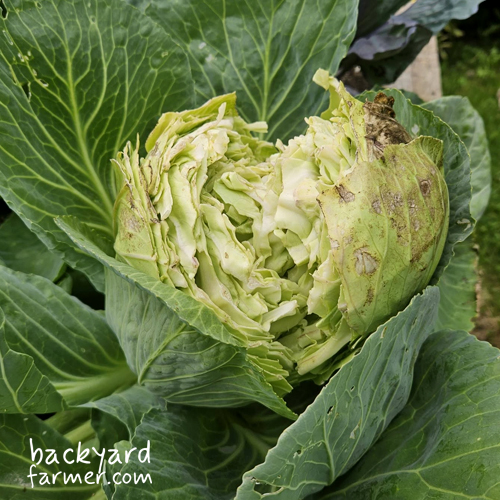
If a mature cabbage splits, harvest it promptly. A freshly split head can usually still be eaten if it is firm and free from decay, but it will not store well. Remove damaged leaves, check carefully for pests or rot and use it first.
Can You Leave Cabbage in the Ground?
Winter and Savoy cabbages often stand well outside and can be harvested as required through autumn and winter. This is useful if you want to spread the harvest rather than cut every plant at once.
Summer and pointed cabbages are generally better harvested once mature. Inspect standing plants regularly and cut them if they begin to split, soften, rot or attract pests. For advice on crops intended to stand through colder months, see How to Grow Winter Cabbage in the UK.
Can You Harvest Cabbage More Than Once?
Some spring and summer cabbages can produce a small second crop. Leave the stump and roots in place after cutting the main head and make a shallow cross in the top of the stump. Several smaller shoots may develop, giving you a few mini-heads rather than another full-sized cabbage.
Storing Cabbage After Harvest
Summer and pointed cabbages are generally best used relatively quickly after cutting. Red, autumn and winter varieties usually keep better when the heads are firm and undamaged. Store clean, healthy heads in a cool, dry, frost-free and well-ventilated place, and use split or damaged heads first.
Cabbage Harvest FAQs
A cabbage is ready when the head feels firm and solid and has reached a normal size for the variety. Firmness is usually a more reliable sign than maximum size.
It depends on the type. Spring cabbage is mainly harvested from March to May, summer and autumn cabbage from July to October, and winter and Savoy cabbage from mid-October to February.
Cut cleanly through the stem just below the head with a sharp knife. Remove damaged outer leaves and check the cabbage for pests, rot or splitting before using or storing it.
Hardy winter and Savoy types often can be left standing for a while, but they should be checked regularly. Tender summer and pointed cabbages are usually better harvested once mature.