
Turnips are usually ready to harvest sooner than many gardeners expect. Early varieties can produce usable roots in around six weeks, while maincrop types often take closer to ten weeks. Start checking the roots when the shoulders begin to show above the soil and pull a test turnip to judge its size and texture.
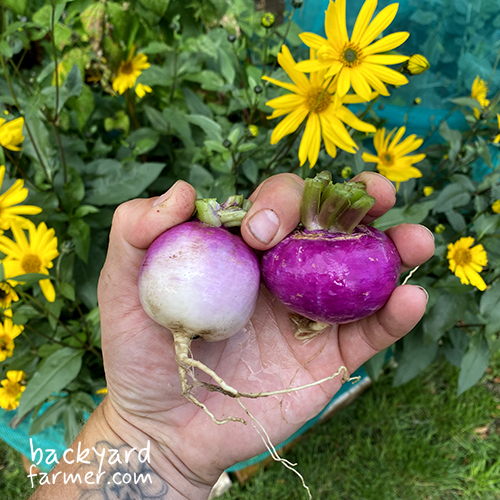
Harvest size matters as much as the number of weeks since sowing. Young turnips are generally sweeter and more tender, with golf-ball-sized roots making a useful target for many early varieties. Larger roots can still be good for soups, stews and roasting, but leaving them too long may result in a coarse or woody texture. Late crops should also be lifted before severe frost if you want to store them.
Turnip Harvest Calendar
| Period | Typical harvest |
|---|---|
| May–June | Earliest spring-sown roots |
| July–September | Main harvest for early turnips |
| October onwards | Maincrop turnips |
| Late autumn | Lift late crops as required before severe frost |
| Early winter | Protected roots may sometimes remain in mild conditions |
These dates are a guide. Variety, sowing date, growing conditions and the size you want all affect harvest time. If you sowed successionally, simply lift the largest roots first and leave smaller ones to develop.
When Are Turnips Ready to Harvest?
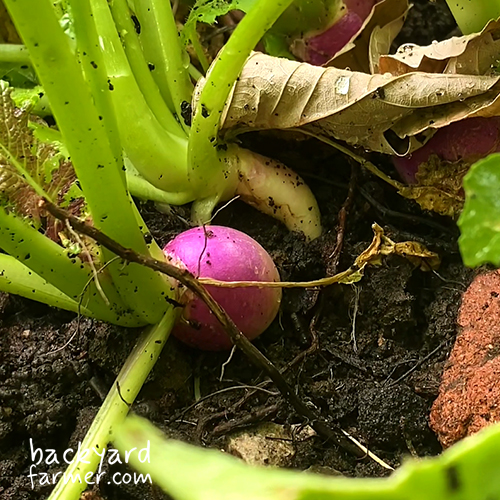
Turnips are ready when the root has reached a useful size, feels firm and has the texture you want for eating. The shoulder usually begins to show above the soil surface and may be white, cream, purple-topped or another colour, depending on the variety.
The main signs to look for are:
- The top or shoulder of the root is visible at soil level.
- The root has reached the size you want.
- The root feels firm rather than soft or spongy.
- A test root looks well formed when pulled.
If you’re unsure, pull one of the largest roots as a test. If the size and texture are right, harvest similar roots and leave smaller ones to grow on.
Do not judge readiness from the foliage alone. Turnips can produce plenty of leaf while the root remains small, particularly if the plants are overcrowded, have suffered from drought or have been checked by cold weather.
What Size Should Turnips Be When Harvested?
There is no single correct harvest size for every turnip. The best size depends on the variety and how you plan to use the roots.
Baby Turnips
Smaller than golf-ball size, baby turnips are very tender and mild. They can be eaten raw, roasted whole or cooked quickly with their leaves. The trade-off is lower yield.
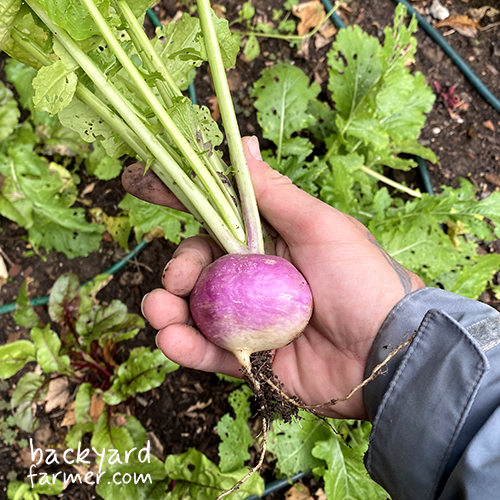
Young Turnips
Around golf-ball size, young turnips offer a good balance of sweetness, tenderness and useful yield. This is often the best general target for early varieties.
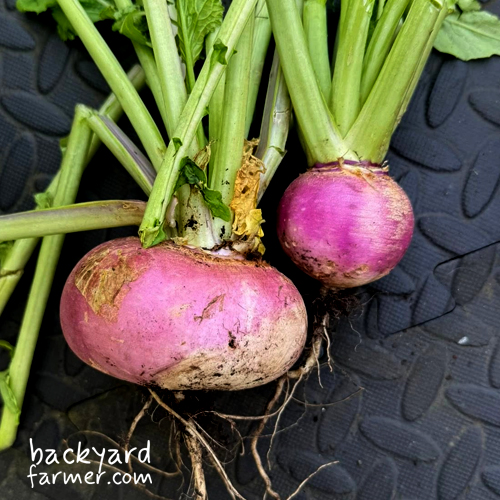
Larger Turnips
Some varieties can be left towards tennis-ball size or larger, particularly for soups, stews, mash and roasting. However, larger roots are more likely to have a stronger flavour or coarser texture, so check a test root before leaving the whole crop to grow on.
Harvest according to texture and use, not simply maximum root size.
How Long Do Turnips Take to Harvest?
Many early turnips can be ready in around six weeks, while maincrop types often take closer to ten weeks. Baby roots may be ready sooner, while larger cooking roots may need longer.
Treat packet maturity times as a guide. Weather, moisture and growing conditions affect development, so start checking the actual roots around the expected harvest date.
For growing and sowing advice, see How to Grow Turnips in the UK.
When to Harvest Purple Top Milan Turnips
Purple Top Milan is a fast-growing early turnip, so start checking the roots from around six weeks after sowing. For tender roots, harvest at roughly golf-ball size, pulling the largest first and leaving smaller plants to grow on.
Treat maturity dates as a guide rather than a deadline. Weather and growing conditions can affect how quickly individual roots develop.
How to Harvest Turnips
Harvesting turnips is straightforward, especially when the soil is loose and moist.
- Check the exposed shoulder and choose a suitably sized root.
- Loosen firm or dry soil with a hand fork if needed.
- Grip near the crown and pull steadily upwards.
- Brush off loose soil and remove the tops if storing.
Turnips growing in loose soil can usually be pulled by hand. In heavy clay or dry, compacted ground, loosening the soil first reduces the risk of snapping the root or leaving part of it behind.
Handle storage roots carefully and use bruised or damaged ones first.
What Happens If You Leave Turnips Too Long?
Leaving turnips in the ground for a little longer is not always a problem, but quality can decline once the roots become oversized or stressed. They may develop a coarse or woody texture, a stronger flavour, cracks or splits, and greater susceptibility to pests, rot and deterioration after drought or prolonged wet weather.
Oversized turnips may still be suitable for soups, stews, mash or roasting, but there is usually little advantage in leaving a useful-sized root simply to make it bigger.
Can You Harvest Turnips Too Early?
Yes, but small turnips are perfectly edible and baby turnips are deliberately harvested early for their tender texture and mild flavour. The trade-off is simply yield.
If some roots are still tiny, harvest the largest first and leave the rest to swell while conditions remain suitable.
Can You Leave Turnips in the Ground Over Winter?
Turnips can tolerate some cold weather, but they are not as reliably hardy as swedes. In mild, sheltered parts of the UK, late-sown roots may remain in the ground for a while, particularly if protected with fleece or cloches.
Lift them before severe frost or prolonged wet conditions if you need to store them. Hard frost can damage the roots, while frozen soil can also make harvesting difficult. Do not leave mature turnips indefinitely in the hope that they will improve; they are more likely to become coarse, split or deteriorate.
Turnips and swedes should not be treated the same when planning winter harvests. Swedes are generally better suited to remaining in the ground through colder conditions, while turnips are often best harvested younger and earlier.
How to Store Turnips After Harvesting
Turnips are best stored cool, dark and frost-free. After lifting:
- Remove the leafy tops.
- Brush off loose soil.
- Separate damaged, soft or diseased roots.
- Use damaged roots first.
- Keep sound roots cool and frost-free.
- Check stored roots regularly for rot.
For short-term storage, place the roots in a cool shed, garage or refrigerator. Removing the leaves prevents them from drawing moisture from the root and causing it to lose firmness.
For longer storage, pack sound autumn roots in slightly moist sand, coir or another clean, breathable medium. Keep the container somewhere cool but protected from frost. The roots should not be wet, as excess moisture encourages mould and rot.
Don’t wash roots intended for longer storage unless necessary. Brush off loose soil and wash them before use; if you do wash them, dry them thoroughly first.
Can You Harvest Turnip Leaves and Still Grow the Root?
Yes, but harvest sparingly if the root is your priority. Young turnip leaves are edible, but removing too much foliage reduces the plant’s ability to feed the developing root. Take a few outer leaves and leave the centre growing.
For more growing advice, see How to Grow Turnips in the UK.
What If a Turnip Has Bolted Before Harvest?
A bolted turnip has shifted into flowering, so the root may remain small or become coarse. Pull one and check it: if it is still firm and tender, use it; if it has become woody or strongly flavoured, leaving it longer is unlikely to improve it.
Turnip Harvest FAQs
Unlike parsnips, turnips do not need frost to improve their flavour. They are generally at their sweetest and most tender when harvested young. Hard frost can damage turnip roots, so late crops are better protected or lifted before severe weather.
Either method is fine as long as you remove the foliage without damaging the root. Twist the tops off carefully, or cut them close to the crown without cutting into the turnip itself. Removing the foliage reduces moisture loss during storage.
For immediate use, the leaves can be kept separately and cooked while fresh.
When to Harvest Turnips: Final Advice
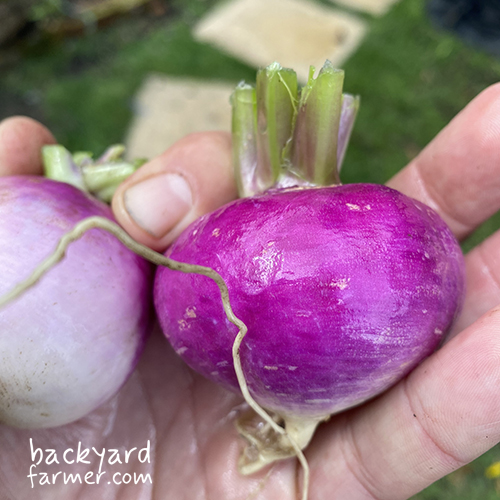
Start checking early turnips from around six weeks, but let the root itself make the final decision. For many early varieties, around golf-ball size gives an excellent balance of tenderness, flavour and yield; pull the largest first and let smaller roots continue growing.
For the rest of the crop journey, see How to Grow Turnips in the UK and When to Sow Turnips in the UK.