
Celery grows well in the UK with the right conditions, producing crisp, flavourful stalks from late summer into autumn.
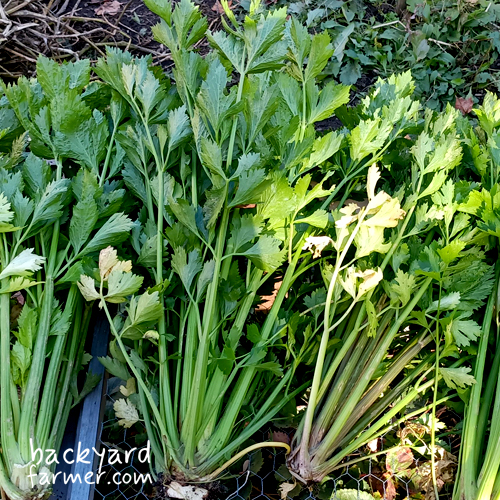
The key to success is keeping plants warm when young and the soil consistently moist once they’re established. Cold weather can cause premature flowering, while dry soil often produces thin, stringy stalks.
Fortunately, modern green and self-blanching varieties are much easier to grow than traditional trench celery. With an early start indoors and regular watering, you can enjoy a productive crop without complicated growing methods.
Key growing tip: Celery needs steady growing conditions. Protect young plants from cold and prevent the soil from drying out during summer.
When to Sow and Plant Celery in the UK
Celery needs a long growing season, so it’s best started indoors before conditions are warm enough for outdoor planting.
Sow seeds from mid-March to early April in a warm greenhouse, propagator or suitable indoor position.
Plant outside from late May into June, once the risk of frost has passed and temperatures are reliably mild.
| Month | Growing Task |
|---|---|
| March–April | Sow seeds indoors |
| April–May | Grow on seedlings |
| Late May–June | Harden off and plant outdoors |
| June–July | Water, mulch and maintain plants |
| August–October | Harvest celery |
Unlike many vegetables, celery can bolt after exposure to cold temperatures even without frost.
Young plants are particularly sensitive to prolonged temperatures below 10°C. Waiting until late May or early June is usually safer than rushing them outside during a cold spring.
Best Celery Varieties for UK Growing
There are two main types of stalk celery: modern green or self-blanching varieties and traditional trench celery.
Green and Self-Blanching Celery
Modern green and self-blanching varieties are generally the easiest choice for allotments and vegetable gardens.
They can be planted closely together in blocks, allowing neighbouring foliage to shade the developing stalks.
This reduces the need for traditional blanching, although some varieties and outer plants may benefit from additional protection from sunlight.
Green celery can have a stronger flavour than fully blanched types, making it useful for both cooking and eating raw.
Traditional Trench Celery
Traditional celery is grown in trenches, with soil gradually drawn around the stems to exclude light.
This produces paler, milder stalks but requires considerably more preparation and maintenance.
For most home gardeners, modern block-grown celery is the more practical option.
Recommended Variety: Celery ‘Octavius F1’
Celery ‘Octavius F1’ is a vigorous, productive green variety with thick, succulent stalks and good flavour. Slow to bolt and suitable for growing in closely spaced blocks, it’s a practical choice for UK allotments and vegetable gardens.
Where to Grow Celery
Position and Sunlight
Celery grows best in a sunny, sheltered position where the soil retains moisture.
Choose somewhere protected from strong, drying winds, particularly if your allotment or garden is exposed.
Some light shade is tolerated, but celery still needs sufficient sunlight for healthy growth. A sunny bed with reliable moisture is preferable to a dry, exposed location.
Preparing the Soil
Celery prefers fertile, moisture-retentive soil enriched with organic matter.
Before planting:
- Remove weeds and unwanted vegetation.
- Incorporate well-rotted compost or manure.
- Loosen compacted soil where necessary.
- Water dry ground thoroughly.
- Ensure excess water can drain away.
If you use a no-dig system, a generous layer of mature compost over the soil is a suitable alternative.
The aim is to provide fertile ground that stays moist without becoming waterlogged.
Good soil preparation helps maintain steady growth and reduces the need for additional feeding later in the season.
How to Grow Celery from Seed
Celery seeds are tiny and can take up to three weeks to germinate. Starting them indoors provides the warmth needed for reliable establishment.
Sowing Celery Seeds
- Fill a seed tray or modules with moist, peat-free seed compost.
- Sow the seeds thinly over the surface.
- Press gently into the compost, leaving seeds uncovered or adding only a very light covering.
- Maintain temperatures around 15–20°C.
- Keep the compost moist until seedlings appear.
Celery seeds generally benefit from light during germination, so avoid burying them deeply. However, some varieties, including ‘Octavius F1’, have packet instructions specifying a sowing depth of approximately 0.5cm. Always follow the supplier’s guidance for your chosen variety.
A propagator lid can help retain moisture, but remove or ventilate it once seedlings emerge.
Caring for Celery Seedlings
Move germinated seedlings into a bright position and keep the compost moist without saturating it.
Good ventilation helps prevent damping off, a problem that can cause young seedlings to collapse.
Once plants develop several true leaves, carefully transplant them into individual modules or small pots.
Celery seedlings often grow slowly at first, so patience is important.
Keep young plants above 10°C and avoid exposing them to sudden cold spells. Chilling during early development can trigger bolting later in the season.
Planting Out Celery and Spacing
Celery is usually ready for outdoor planting around ten weeks after sowing, depending on growing conditions.
Wait until the weather is reliably mild, ideally with overnight temperatures remaining above 10°C.
The RHS advises that young celery plants should not be exposed to temperatures below 10°C for longer than 12 hours until established, as this can trigger premature flowering.
Hardening Off Celery Plants
Gradually introduce seedlings to outdoor conditions over approximately 10–14 days.
Begin by placing them outside in a sheltered position during mild weather, returning them under protection overnight.
Increase their exposure gradually, but delay planting if a prolonged cold spell is forecast.
How to Plant Celery Outdoors
Modern green and self-blanching varieties grow well in closely spaced blocks.
- Water seedlings before transplanting.
- Prepare planting holes approximately 23cm apart in each direction.
- Carefully remove each plant from its container.
- Plant at the same depth as it was growing previously.
- Firm the soil gently and water thoroughly.
Close spacing allows neighbouring plants to shade one another, helping produce more tender stalks.
Leave access around the bed so you can water and harvest without compacting the soil.
You can use the free BYF Allotment Planner to organise your celery planting area and work out spacing alongside other crops.
Growing Celery in Pots
Celery can be grown successfully in containers, although regular watering becomes particularly important.
Choose a large, reasonably deep container with drainage holes and fill it with fertile, moisture-retentive peat-free compost.
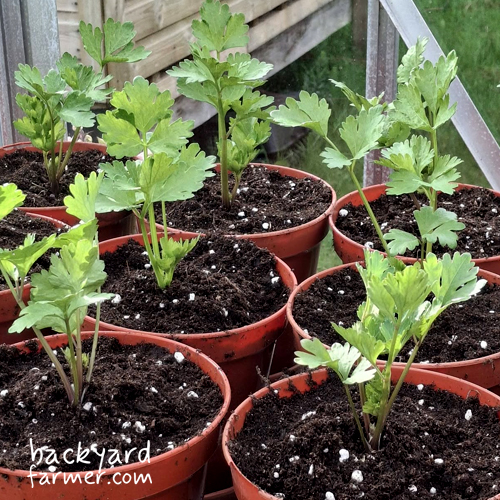
Allow sufficient room for the plants to develop, using approximately 23cm spacing where growing several together.
Position the container somewhere sunny and sheltered, ideally close to a convenient water supply.
Check the compost regularly during warm weather, as containers dry out much faster than garden beds.
Container-grown celery can also benefit from a balanced liquid fertiliser every fortnight during active growth.
Larger containers are generally easier to manage because they retain moisture for longer than small pots.
How to Care for Celery
Once established, celery needs relatively little maintenance beyond regular watering, occasional feeding and keeping the growing area free from weeds.
Watering Celery
Consistent moisture is the most important part of celery care.
If the soil repeatedly dries out, plants may develop smaller, tougher or stringier stalks.
During dry weather:
- Check soil moisture beneath the surface.
- Water thoroughly around the roots.
- Avoid allowing plants to wilt repeatedly.
- Apply mulch to reduce evaporation.
- Check container plants more frequently.
Rather than following a fixed daily watering schedule, adjust watering to the weather and your soil conditions.
A well-prepared bed may retain moisture for several days, while containers exposed to afternoon sunshine can dry out much more quickly.
Aim for consistently moist soil, not permanently saturated ground.
Mulching Celery
Apply a layer of mature compost or well-rotted organic matter around established plants.
Mulching reduces evaporation, suppresses weeds and helps maintain even soil moisture.
Leave a small gap around the base of the stalks to avoid trapping excessive moisture against the plant.
Feeding Celery
Celery prefers fertile soil but doesn’t automatically need frequent feeding.
Plants growing in compost-enriched ground may require little additional fertiliser.
If growth appears weak because of poor soil fertility, a light application of organic nitrogen-rich fertiliser may help.
Container plants generally benefit from more regular feeding because nutrients are gradually depleted from the compost.
However, additional fertiliser won’t compensate for inadequate watering.
Blanching Celery
Blanching excludes light from celery stalks, producing a paler colour and milder flavour.
Traditional trench celery requires blanching, but many modern green varieties can be grown without it.
Close block planting provides natural shading, particularly for plants growing towards the centre.
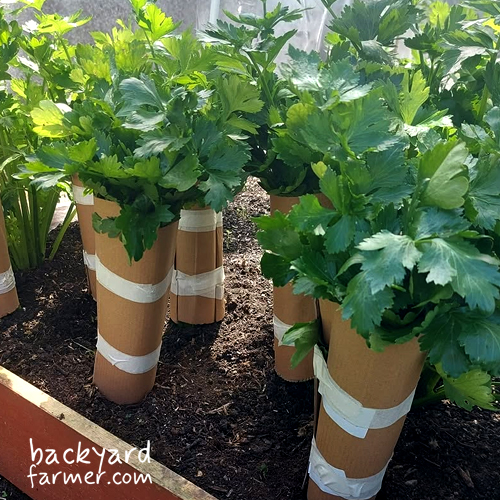
If you prefer milder stalks, loosely wrap newspaper or corrugated cardboard around the stems once plants are well developed, leaving the leafy tops exposed.
Avoid trapping excessive moisture and check beneath collars regularly, as slugs and other pests may shelter inside.
For most modern green celery, blanching is optional rather than essential.
Common Celery Pests and Growing Problems
Most problems with celery relate to cold temperatures during early growth, inadequate moisture or unsuitable soil conditions.
Pests and diseases can also affect the crop, particularly during prolonged wet weather.
| Problem | Likely Cause | What to Do |
|---|---|---|
| Celery bolting | Cold exposure while young | Delay outdoor planting until conditions are mild |
| Thin or stringy stalks | Drought, slow growth or ageing | Maintain moisture and harvest promptly |
| Slow growth | Cold conditions, poor soil or competition | Improve growing conditions and remove weeds |
| Slugs and snails | Feeding on tender plants | Inspect regularly and protect seedlings |
| Celery leaf miner | Fly larvae feeding inside leaves | Remove badly affected foliage and consider insect mesh |
| Celery leaf spot | Fungal infection | Remove affected leaves and practise crop rotation |
| Seedlings collapsing | Damping off or excessive moisture | Improve ventilation and avoid waterlogging |
Why Does Celery Bolt?
Bolting happens when celery begins flowering prematurely rather than producing a useful crop of stalks.
Cold exposure while plants are young is one of the main causes, even when temperatures remain above freezing.
Keep seedlings warm and delay planting until conditions are suitable.
Once celery has bolted, stalk quality usually deteriorates and the plant is unlikely to produce a worthwhile harvest.
Celery Leaf Miner
Celery leaf miner larvae feed inside the leaves, creating pale blotches that eventually turn brown and papery.
Minor damage can often be tolerated without affecting the entire crop.
Inspect foliage regularly and remove badly affected sections where practical.
Fine insect-proof mesh can help prevent adult flies from reaching the plants, particularly when combined with crop rotation.
Celery Leaf Spot
Celery leaf spot is a fungal disease that causes spotting and deterioration of the foliage.
It can spread during periods of prolonged leaf wetness and may become troublesome in susceptible crops.
Remove badly affected foliage, clear infected plant debris and avoid repeatedly growing celery or related crops in the same bed.
Watering around the roots rather than over the foliage can also help reduce unnecessary leaf wetness.
When and How to Harvest Celery
Most modern green celery varieties are ready to harvest from August through October in the UK.
Harvest timing depends on the variety, sowing date and growing conditions.
When Is Celery Ready to Harvest?
Celery is ready when the stalks have reached a useful size and feel firm and crisp.
Homegrown plants don’t need to reach supermarket dimensions to be worth harvesting.
Avoid leaving mature plants standing for too long, as older stalks may become increasingly fibrous.
Most modern green varieties should be harvested before damaging frosts arrive.
How to Harvest Celery
For a full harvest, lift the plant carefully with a garden fork or cut it near the base.
Remove roots, damaged outer stalks and unwanted foliage.
You can also pick individual outer stalks while leaving the central growing point intact.
This allows smaller harvests over time, although lifting mature plants is generally the simplest approach for varieties grown as whole heads.
Celery can cause skin irritation, particularly when plant sap comes into contact with skin exposed to sunlight. Consider wearing gloves and long sleeves when tending or harvesting plants.
Storing and Using Homegrown Celery
Celery is best used soon after harvesting, while the stalks remain crisp.
Remove soil and damaged leaves before storing it in the refrigerator, keeping the stalks protected from drying out.
Homegrown celery may have a stronger flavour than supermarket celery, particularly if growing conditions have been less than ideal.
Smaller or strongly flavoured stalks are still useful in:
- Soups and stews
- Vegetable stocks
- Sauces and casseroles
- Stir-fries
Healthy celery leaves are also edible and can be used to flavour stocks, soups and cooked dishes.
Can You Grow Celery Through Winter?
Most modern green and self-blanching varieties are grown as summer-to-autumn crops in the UK.
They tolerate cool autumn weather but can suffer damage during frosty conditions.
Fleece or cloches may provide temporary protection from early cold spells, extending the harvest slightly.
Some traditional trench varieties are more tolerant of cold and can remain productive later into the season with suitable protection.
However, ordinary green celery shouldn’t be considered a reliably winter-hardy crop.
For most gardeners, the simplest approach is to harvest before damaging frosts and start a fresh crop the following spring.
What to Grow After Celery
Once celery has been harvested, the growing area can be used for another crop or prepared for the following season.
Celery belongs to the Apiaceae family, alongside carrots, parsnips, parsley and celeriac.
As part of sensible crop rotation, avoid repeatedly growing crops from this family in the same bed, particularly where pests or diseases have occurred.
Depending on when the bed becomes available, suitable options include:
- Autumn-sown broad beans: Useful where the ground becomes available in time for overwintering sowings.
- Garlic: Can be planted in autumn in suitable, well-drained soil.
- Green manure: Helps protect bare soil and can improve growing conditions for future crops.
If the bed becomes available too late for planting, apply compost or another suitable mulch to protect the soil until spring.
Frequently Asked Questions
Modern self-blanching celery generally takes around five to six months from sowing to harvest, depending on the variety and growing conditions. Traditional trench celery can take considerably longer.
Most UK gardeners sow in March or April and begin harvesting from August onwards.
Yes. Place the intact base of a celery bunch in shallow water, keeping the central growing point above the waterline.
Fresh leaves may emerge, and the base can be transferred into compost once roots develop.
However, this method is better for producing small amounts of foliage than another full-sized bunch of celery.
Yes. The edible stalks and leaves grow above the soil, while the roots develop underground.
This differs from celeriac, a closely related crop grown for its swollen edible base.
Celery can tolerate light shade, but it grows best with good sunlight and consistently moist soil.
A sunny, sheltered position is generally preferable, provided the ground doesn’t dry out.
Stringy stalks can result from irregular watering, slow growth or harvesting plants after they have become too mature.
Keep the soil consistently moist, provide fertile growing conditions and harvest stalks when they reach a useful size.
Some varieties are also naturally more fibrous than others.
Celery commonly bolts when young plants are exposed to prolonged cold weather.
Even temperatures above freezing can trigger flowering if plants are chilled during early growth.
Keep seedlings warm and wait until outdoor conditions are reliably mild before planting.
Celery can continue producing growth when individual outer stalks are removed and the central growing point remains intact.
However, harvesting the whole plant usually ends the main crop.
Growing fresh plants each spring is the most dependable way to produce full-sized celery stalks.
Some celery varieties tolerate cool weather and light frost with protection, but most modern green and self-blanching types aren’t reliably winter-hardy.
Harvest ordinary celery before damaging frosts. Hardier traditional varieties may remain productive later into the season, depending on local weather and protection.