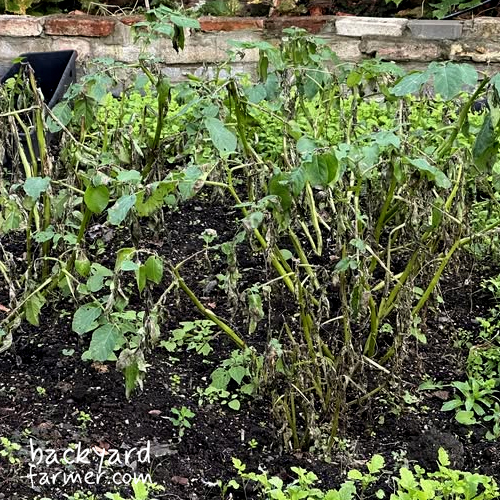
Potato blight is a serious disease that causes potato leaves and stems to rot, sometimes spreading to the tubers underground. It can develop rapidly during warm, wet weather and destroy infected foliage within days.
However, blighted foliage doesn’t automatically mean your potatoes are lost. Recognising the symptoms and knowing when to remove infected growth can help protect the harvest before the disease reaches the tubers.
Potato Blight at a Glance
| What you’re seeing | What to do |
|---|---|
| A few suspicious brown leaves | Check for blight symptoms before taking action |
| A few confirmed blight lesions | Remove affected leaves and monitor closely |
| Around 25% of leaves affected or blight on stems | Cut down and remove the foliage |
| Foliage removed because of blight | Usually wait around two weeks before lifting |
| Tubers showing internal decay or rot | Discard affected potatoes |
| Sound tubers from a blighted crop | Use promptly rather than relying on long-term storage |
How to Recognise Potato Blight
Potato blight usually begins as irregular, dark or water-soaked patches on the leaves. These lesions can spread rapidly, causing affected foliage to shrivel, turn brown and collapse.
Common symptoms include:
- Dark, irregular patches that enlarge quickly.
- Water-soaked or rotting areas on leaves.
- Pale green margins around actively spreading lesions.
- Fine white growth on leaf undersides during humid conditions.
- Brown or black lesions developing on stems.
- Rapid deterioration of affected foliage.
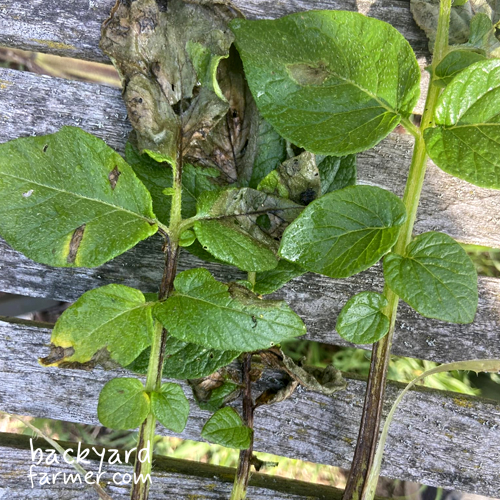
The white growth is produced by the disease organism under suitable conditions, but it isn’t always visible. Its absence doesn’t rule out blight.
As infection progresses, spores produced on affected foliage can spread through the air or wash into the soil during rain, potentially infecting developing tubers.
The RHS guide to potato blight includes photographs of infected leaves, stems and tubers.
Potato Blight vs Frost Damage and Natural Dieback
Not every brown or dying potato leaf indicates blight.
Frost, nutrient deficiencies and normal crop maturity can produce similar-looking symptoms. Consider the pattern of damage, recent weather and how quickly the foliage is deteriorating.
| Possible problem | What to look for |
|---|---|
| Potato blight | Rapidly spreading dark or water-soaked lesions, sometimes with white growth beneath leaves |
| Frost damage | Blackened or wilted exposed foliage following cold weather |
| Natural dieback | Gradual yellowing and deterioration as the crop reaches maturity |
| Nutrient deficiency | Characteristic yellowing patterns, usually without rapidly spreading wet-looking lesions |
| Potato blackleg | Blackened, decaying stem bases, sometimes with yellowing and stunted growth |
Potatoes approaching harvest may naturally begin yellowing and dying back. This usually develops more gradually than the rapid tissue collapse associated with active blight.
Frost damage often follows a clear period of cold weather and may be concentrated on exposed growth.
These are diagnostic clues rather than definitive tests. If the cause is uncertain, examine the leaves and stems carefully and monitor how symptoms develop before removing an otherwise healthy crop.
What to Do if Your Potatoes Have Blight
The best response depends on how far infection has progressed.
A few affected leaves may justify careful removal and continued monitoring. Once blight becomes widespread or reaches the stems, protecting the tubers becomes the priority.
When to Remove Affected Leaves
If only a few leaves show convincing blight symptoms, remove the affected leaves or leaflets promptly.
This may slow disease development slightly, but it won’t eradicate the infection.
Continue inspecting the remaining foliage, particularly during warm, humid weather when blight can spread rapidly.
Check both leaf surfaces and the stems for new lesions.
Avoid removing large amounts of healthy foliage because of a few uncertain brown marks. The plant needs functioning leaves to continue developing its tubers.
If confirmed infection continues spreading, more decisive action may be necessary.
When to Cut Down the Entire Foliage
The RHS recommends removing the entire potato foliage, known as the haulm, when approximately 25% of leaves are affected or blight lesions appear on the stems.
Cut the stems close to soil level and remove the infected foliage and fallen debris.
This reduces the amount of infected material producing spores above the developing potatoes.
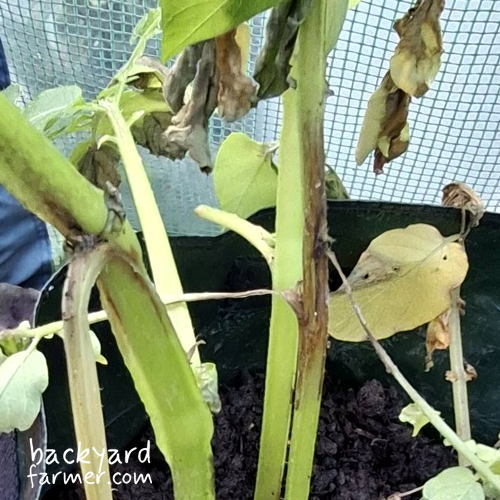
During wet weather, spores can wash from infected leaves and stems into the soil and reach the tubers. Removing the foliage helps reduce that risk.
Cutting down the haulms doesn’t cure blight. It sacrifices further growth to help protect the potatoes that have already formed.
Without functioning foliage, further tuber growth largely stops.
Keep confirmed blighted foliage out of ordinary home compost. The RHS recommends alternative disposal methods, including suitable council green waste collections or deep burial.
Check your local council’s guidance before using its green waste service.
When to Harvest Potatoes After Blight
After removing infected foliage, the RHS generally recommends leaving potatoes underground for around two weeks before harvesting.
Why Wait Two Weeks?
Potato skins become firmer after the haulms have been removed, making tubers less vulnerable to damage during lifting and handling.
The interval also gives infectious spores remaining from the affected foliage time to decline, helping reduce the risk of tuber infection.
However, waiting won’t cure potatoes that are already infected.
Potatoes won’t continue bulking significantly without functioning foliage. The purpose of waiting is to prepare the existing tubers for harvesting, not to increase their size.
Can You Leave Potatoes Underground Longer?
The two-week recommendation isn’t an instruction to leave potatoes in the ground indefinitely.
Prolonged wet conditions, slug activity and developing tuber rot can increase losses if harvesting is delayed unnecessarily.
Once the skins have set, lift the crop when soil conditions are suitable.
Avoid harvesting from excessively wet ground where possible, as this can increase handling damage and make affected potatoes harder to assess.
If tubers are already deteriorating or soil conditions are causing losses, the usual waiting period may need reconsidering.
Our guide to harvesting potatoes in the UK explains the normal signs of crop maturity.
Can You Eat and Store Potatoes from a Blighted Crop?
Blighted foliage doesn’t automatically mean the potatoes underground are infected.
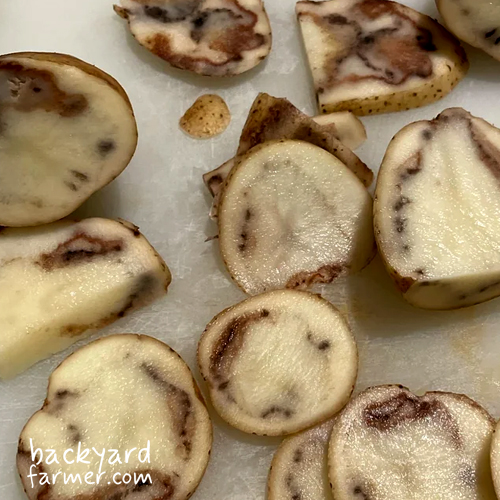
Sound tubers may still be suitable for eating, but infection can sometimes develop without obvious symptoms at harvest.
This makes careful inspection and prompt use particularly important.
How to Recognise Blight in Potato Tubers
Infected potatoes may develop brown or purplish patches on their skins.
Cutting through an affected area can reveal reddish-brown, granular decay extending beneath the skin and sometimes deeper into the flesh.
The tissue may initially remain firm before secondary bacterial infection produces soft, wet rot.
| Tuber condition | What to do |
|---|---|
| Firm, sound potato from a blighted plant | May still be suitable for normal food use |
| Brown or reddish internal decay | Discard the affected potato |
| Soft, wet or foul-smelling rot | Discard |
| Apparently sound potatoes from an affected crop | Prefer prompt use rather than long-term storage |
| Potatoes retained in storage | Inspect frequently and remove any showing deterioration |
Don’t assume that cutting away visible decay makes a blight-affected potato suitable for eating.
Will Potatoes from a Blighted Crop Keep?
The RHS advises using potatoes from affected crops as soon as possible and avoiding storage where practicable.
Lightly infected tubers may appear healthy when lifted but develop rot later.
Secondary bacterial infections can cause further deterioration during storage.
If you retain apparently sound potatoes, keep them separate from your main stored harvest where practical and inspect them regularly.
Our guide to storing potatoes covers normal storage conditions, although potatoes from blighted crops require additional caution.
What Causes Potato Blight?
Potato late blight is caused by Phytophthora infestans, a fungus-like organism known as an oomycete.
It infects potato leaves, stems and tubers and spreads rapidly under favourable conditions.
Airborne spores from infected crops are an important source of infection in Britain. They can arrive from neighbouring gardens, allotments or commercial potato fields.
Infected tubers and volunteer potato plants can also carry the pathogen between growing seasons.
Warm, humid conditions and prolonged leaf wetness favour infection.
The same organism causes late blight in tomatoes.
Late blight is different from early blight, which is caused by Alternaria fungi and is considered relatively uncommon in British gardens.
When Is Potato Blight Most Likely in the UK?
Potato blight is most commonly associated with warm, wet and humid weather, with outbreaks possible from June onwards.
UK blight forecasts use the Hutton Criteria to identify conditions favourable for infection.
A Hutton period occurs when both conditions are met on two consecutive days:
| Condition | Requirement |
|---|---|
| Minimum temperature | At least 10°C |
| Relative humidity | At least 90% for six hours |
| Duration | Both conditions on two consecutive days |
A Hutton warning indicates favourable weather for infection, not a confirmed outbreak on your allotment.
The James Hutton Institute’s BlightSpy service provides weather-based blight risk forecasts.
Monitoring forecasts alongside regular plant inspections can help growers recognise periods of increased risk.
How to Prevent Potato Blight
Potato blight cannot always be prevented, particularly when airborne spores arrive during favourable weather.
However, choosing suitable varieties, removing potential sources of infection and protecting developing tubers can reduce losses.
| Method | How it helps |
|---|---|
| Blight-resistant varieties | Reduces susceptibility, although resistance isn’t immunity |
| First early potatoes | May be harvested before widespread summer infection |
| Earthing up | Helps protect tubers against spores washed into the soil |
| Certified seed potatoes | Reduces the risk of introducing infected planting material |
| Removing volunteer potatoes | Eliminates potential sources of infection |
| Crop rotation | Helps reduce potential soil-borne disease risks |
| Monitoring weather and crops | Supports earlier recognition and action |
Choose Blight-Resistant or Early Potatoes
Growing resistant varieties is particularly useful where potato blight occurs regularly.
The RHS identifies several varieties with useful resistance, including:
- ‘Sarpo Mira’
- ‘Sarpo Axona’
- ‘Alouette’
- ‘Carolus’
However, resistance isn’t immunity. Changes in the pathogen population can sometimes overcome previously effective resistance.
Another approach is to grow first early potatoes, which can often be harvested before blight becomes widespread later in summer.
This is different from genetic resistance.
An early variety may escape serious disease simply because its harvest is completed before the main period of infection.
It can still develop blight if conditions become favourable earlier in the season.
Protect Tubers and Remove Sources of Infection
Earthing up potatoes with soil provides some protection against blight spores washing down towards the developing tubers.
It doesn’t prevent foliage infection, but it helps reduce the opportunity for spores to reach potatoes underground.
If growing potatoes beneath mulch, keep developing tubers thoroughly covered, although the same level of protection against blight hasn’t been established for loose surface mulch.
Remove volunteer potatoes that emerge from previous crops, particularly where blight has occurred.
Avoid saving tubers from affected crops as seed potatoes for the following year.
Crop rotation helps reduce potential soil-borne disease risks, but it cannot prevent airborne blight spores arriving from neighbouring crops.
The pathogen most commonly survives between seasons in infected potato tubers. Longer-lived resting spores may also occur, although their importance in ordinary British gardens remains uncertain.
The RHS recommends leaving at least four years between potato crops in the same soil, avoiding tomatoes there during that period too.
For general growing advice, see our guide to growing potatoes in the UK.
Common Potato Blight Mistakes to Avoid
Some familiar potato blight advice is oversimplified or based on treatments that aren’t available to UK amateur gardeners.
| Common mistake | Why it matters |
|---|---|
| Assuming every brown leaf means blight | Frost, maturity and nutrient problems can produce similar symptoms |
| Cutting down plants at the first suspicious mark | May sacrifice healthy growth unnecessarily |
| Believing tubers continue growing after haulms are removed | The waiting period is mainly for skin setting |
| Leaving potatoes underground indefinitely | Can increase losses from slugs and rot |
| Storing visibly infected potatoes | Risks further deterioration during storage |
| Relying on crop rotation alone | Airborne spores can still cause infection |
| Assuming resistant varieties are immune | Resistance isn’t absolute |
| Using outdated or homemade blight sprays | Effectiveness, crop safety and UK authorisation may be uncertain |
The RHS currently states that no fungicides are available to UK amateur gardeners for controlling potato blight.
Older recommendations involving copper-based sprays shouldn’t be treated as evidence of current authorisation.
Homemade mixtures using bicarbonate, milk or other ingredients haven’t been established as dependable treatments for potato late blight in the official evidence reviewed.
Accurate identification, timely foliage management and protecting the harvest remain the most practical approach.
Frequently Asked Questions
Yes, if the tubers are sound and show no signs of disease or decay. Blighted foliage doesn’t automatically mean infected potatoes. Discard tubers showing suspicious browning or rot, and use apparently healthy potatoes promptly.
Established potato blight cannot be reliably cured using methods available to UK amateur gardeners. Removing a few affected leaves may slow early spread, but extensive infection usually requires foliage removal to protect the tubers.
The RHS generally recommends waiting around two weeks after removing infected foliage. This allows skins to harden before lifting. However, deteriorating soil conditions, slugs or developing rot may make prolonged delays unsuitable.
Not significantly. Potato tubers depend on healthy foliage for continued growth. Once the haulms have died or been removed, further bulking largely stops, although the skins can continue maturing before harvest.
The RHS advises against adding confirmed blighted foliage to ordinary home compost. Council green waste collections may be suitable where accepted locally. Removing infected material helps reduce potential disease sources.
There isn’t one guaranteed period. Infected potato tubers are an important source of infection between seasons. Longer-lived resting spores may also occur, although their significance in British gardens remains uncertain. Crop rotation and removing volunteers help reduce potential risks.