
Introduction
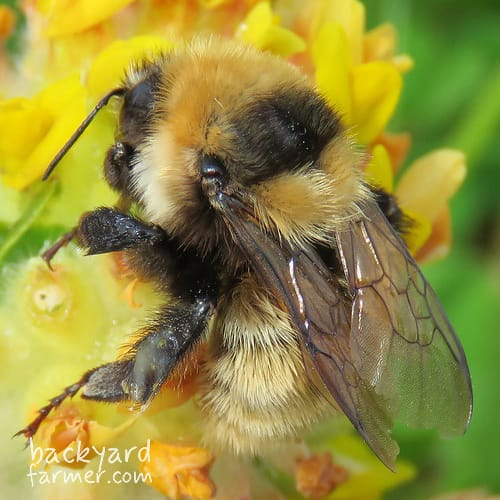
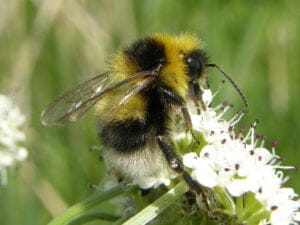
The Great Yellow Bumblebee is one of the UK’s rarest bumblebees, now found mainly in parts of northern and western Scotland. It is best recognised by its yellow or golden body, a black band between the wings, and no contrasting white, buff or red tail.
Location matters with this species. If you see a similar yellow or ginger bumblebee elsewhere in the UK, it is much more likely to be another species. This guide shows you what to look for, where it lives, and how to tell it apart from similar bumblebees.
How to Identify the Great Yellow Bumblebee
Great Yellow Bumblebee identification is usually based on three features:
- Yellow or golden body
- Black band between the wings
- No clearly contrasting tail
This species can look quite uniform compared with many familiar UK bumblebees. Instead of having a white, buff or red tail, the abdomen stays yellow or golden. The dark band across the thorax, between the wing bases, is usually the most useful feature to check.
A yellow bumblebee is not automatically a Great Yellow Bumblebee. Always check the colour pattern, the black thoracic band and the location before confirming an ID.
Queen Great Yellow Bumblebee
Queens are the largest Great Yellow Bumblebees and are usually the first to appear in spring.
Look for:
- Size: largest caste, broad and robust
- Colour: dense yellow or golden hair
- Thorax: clear black band between the wings
- Abdomen: yellow or golden, with no separate white, buff or red tail
- Season: usually seen from late spring onwards
- Behaviour: often feeding heavily or searching for nest sites
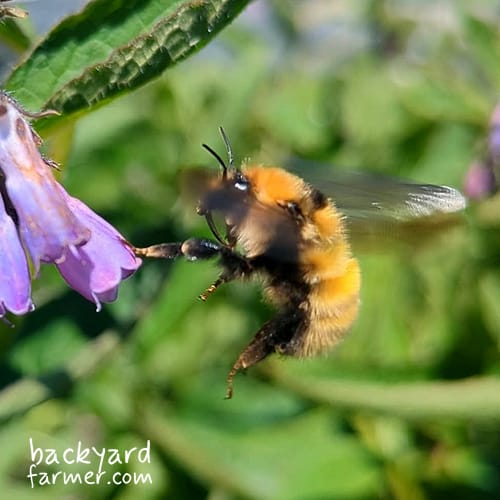
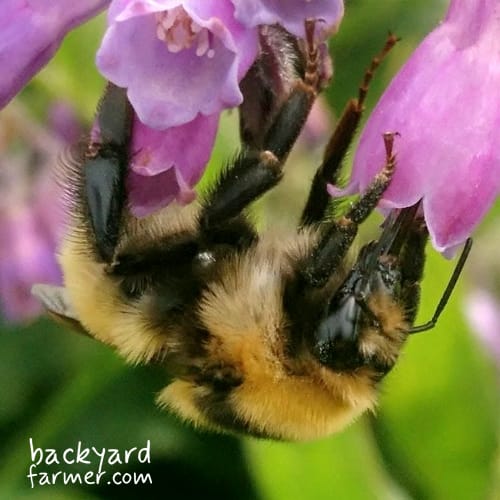
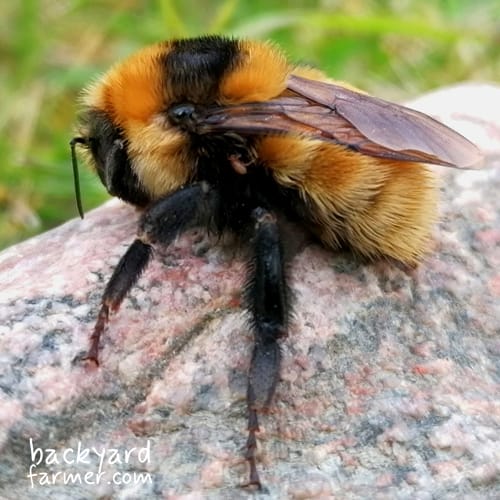
Queens are most likely to be seen in rough grassland, machair and flower-rich coastal habitats within the species’ Scottish range.
Female Worker Great Yellow Bumblebee
Workers are smaller than queens but have the same basic colour pattern.
Look for:
- Size: smaller and neater than the queen
- Colour: yellow or golden overall
- Thorax: black band between the wing bases
- Tail: no obvious contrasting tail colour
- Season: mainly seen through summer
- Behaviour: usually foraging between flowers
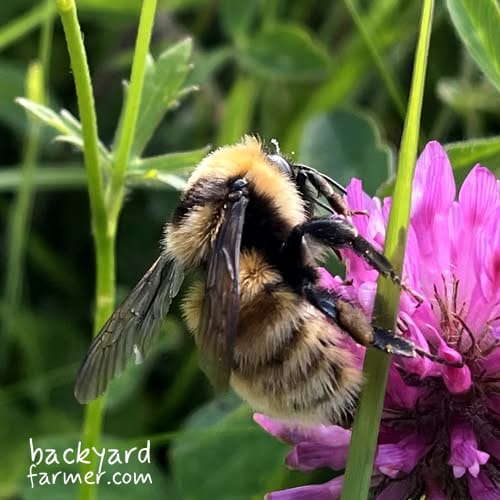
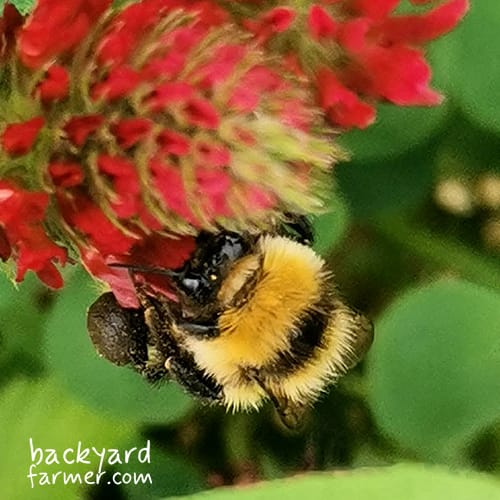
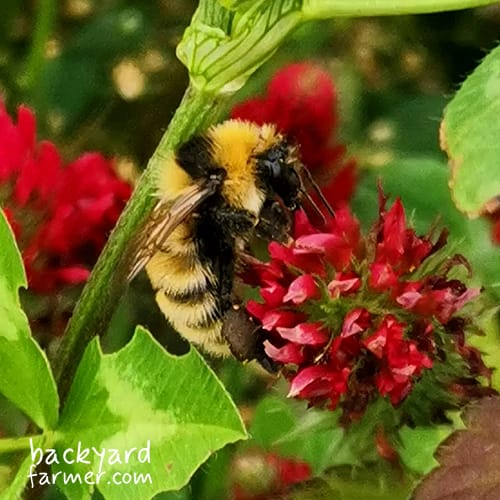
A clear view from above or the side helps confirm the black thoracic band and yellow abdomen.
Male Great Yellow Bumblebee
Males appear later in the season as the colony matures. They are usually slimmer than queens and workers.
Look for:
- Build: slimmer body shape
- Antennae: longer than females
- Colour: similar yellow-and-black pattern
- Thorax: black band between the wings
- Tail: no strong contrasting tail colour
- Season: usually later in summer
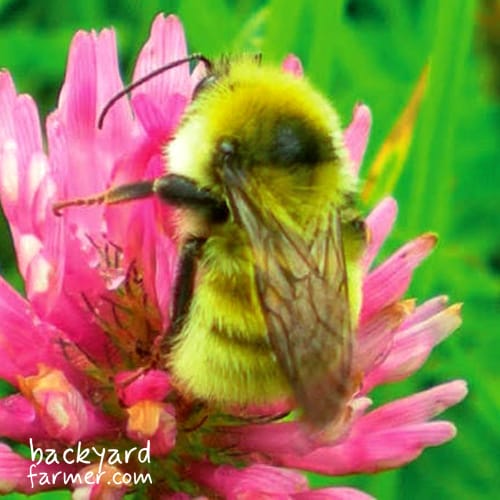
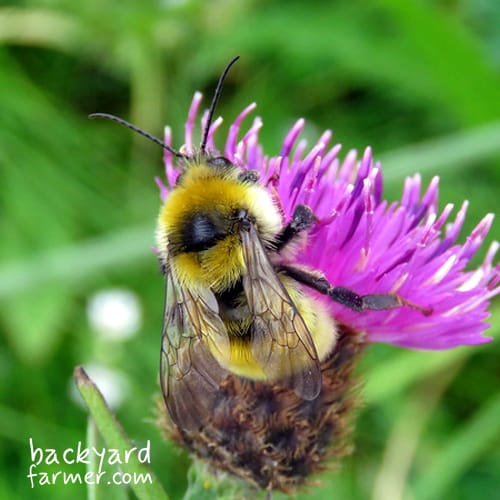
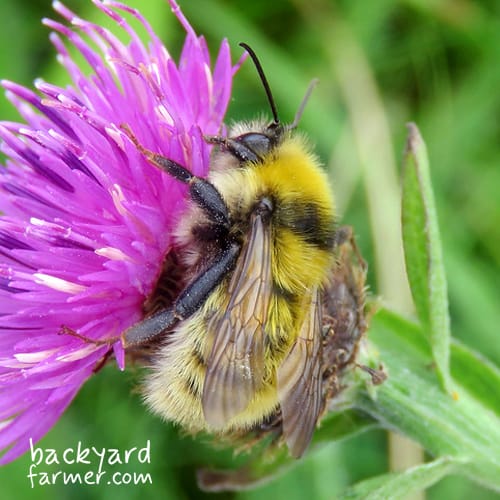
Males can be harder to separate by colour alone, so use season, body shape, antennae and location together.
Identification and Key Facts
| Attribute | Details |
|---|---|
| Common name | Great Yellow Bumblebee |
| Scientific name | Bombus distinguendus |
| Main identification | Yellow body, black band between the wings and no contrasting tail |
| UK status | Very scarce and highly restricted |
| UK distribution | North West Sutherland, Caithness, Orkney and some of the Hebridean islands |
| Active period | Approximately mid-May to September |
| Preferred habitat | Machair, flower-rich grassland and traditionally managed farmland |
| Nesting behaviour | Usually nests underground in old rodent holes or sheltered cavities |
| Common forage plants | Red clover, knapweed, vetches, thistles and other flower-rich grassland plants |
Where Is the Great Yellow Bumblebee Found?
Distribution is one of the most important clues when identifying this species. The Great Yellow Bumblebee was once found across a much wider area of Britain, but it has disappeared from much of its former range.
Today, it is found only in parts of Scotland, mainly:
- North West Sutherland;
- Caithness;
- Orkney;
- Some of the Hebridean islands.
Its key habitats include machair, flower-rich coastal grassland and traditionally managed farmland. These landscapes provide the long season of flowers this species needs.
If you see a yellowish bumblebee elsewhere in the UK, it is much more likely to be a Common Carder Bumblebee, Moss Carder Bumblebee or another similar species.
Similar Species
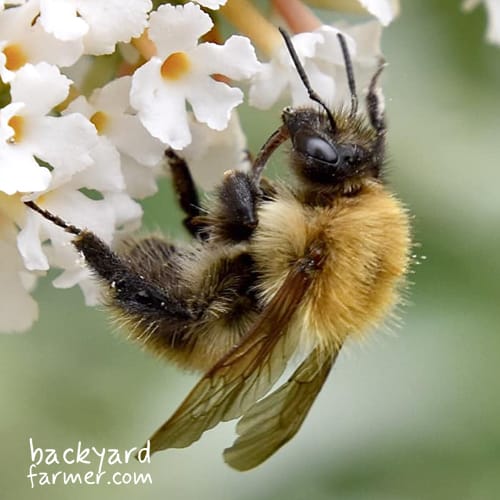
Common Carder Bumblebee – Bombus pascuorum
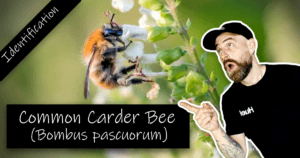
The Common Carder Bumblebee is much more widespread and is often ginger, tawny or brown rather than bright yellow. It does not have the Great Yellow Bumblebee’s strong black band between the wings.
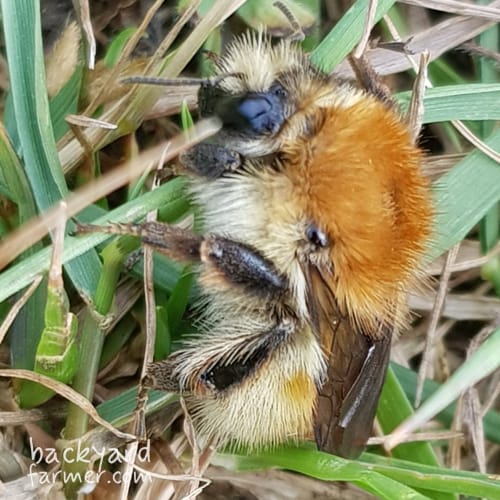
Moss Carder Bumblebee – Bombus muscorum
The Moss Carder Bumblebee can look pale golden or yellowish, but it usually lacks the sharply defined black thoracic band. It is also generally softer and more ginger-toned in appearance.
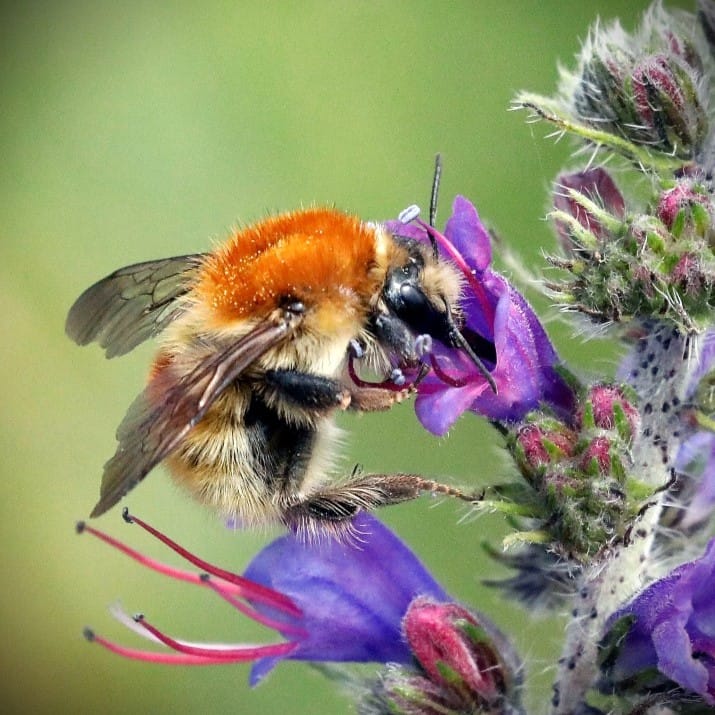
Brown-Banded Carder Bumblebee – Bombus humilis
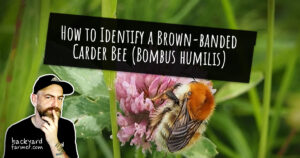
The Brown-banded Carder Bumblebee is usually warm ginger or brown, with a darker band across the abdomen rather than a black band across the thorax. Its UK distribution is also different.
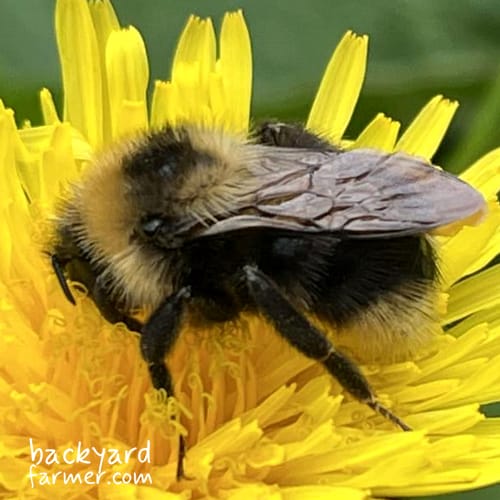
Field Cuckoo Bumblebee – Bombus campestris
Some male Field Cuckoo Bumblebees can show yellow colouring and dark markings, but they usually have black abdominal patches, thinner hair and a different overall shape.
Habitat, Nesting and Life Cycle
Great Yellow Bumblebee queens emerge from hibernation from mid-May onwards and begin searching for suitable nesting sites. Nests are usually made underground, often in old rodent holes or sheltered cavities.
Once a queen has established a nest, workers begin to appear roughly six weeks later. These workers collect pollen and nectar, help rear the next brood and keep the colony supplied through summer.
Later in the nesting period, males and new queens are produced. After mating, the old colony dies out, and only newly mated queens survive the winter to begin the cycle again the following year.
Flowers Visited by Great Yellow Bumblebees
The Great Yellow Bumblebee needs a steady supply of flowers from late spring into late summer. A short burst of blossom is not enough. It depends on landscapes where nectar and pollen are available across the whole colony season.
Useful forage plants include:
- Red clover
- Kidney vetch
- White clover
- Knapweed
- Vetches
- Bird’s-foot trefoil
- Thistles
- Scabious
- Woundwort
- Other flower-rich grassland plants
Continuous flowering is more useful than one short flush. This is one reason traditional hay meadows, machair and low-intensity grazing systems are so important for the species.
Why the Great Yellow Bumblebee Matters
The Great Yellow Bumblebee is not just another attractive bumblebee. It is a sign of a much wider habitat problem: the loss of flower-rich grassland and traditional low-intensity farming landscapes.
Its decline reflects the disappearance of the kind of countryside where wildflowers bloom for months, rough grass is left for nesting, and cutting or grazing is not overly intensive. When these habitats disappear or become fragmented, specialist pollinators such as the Great Yellow Bumblebee struggle to survive.
Protecting this species also protects a wider group of wild bees, butterflies, hoverflies and flowering plants.
Why Has the Great Yellow Bumblebee Declined?
The Great Yellow Bumblebee has declined mainly because of habitat loss and changes in land management.
Key pressures include:
- loss of flower-rich grassland;
- earlier and more frequent mowing;
- intensive grazing and overgrazing;
- conversion of traditional farmland;
- herbicide and pesticide use;
- fragmented habitats;
- poor connection between remaining populations;
- loss of suitable nesting areas.
The result is that surviving populations are now scattered and vulnerable. Small, isolated populations are more exposed to poor weather, habitat damage and reduced genetic exchange.
How You Can Help
Useful action depends on where you live. The Great Yellow Bumblebee has a very restricted UK range, so garden planting outside that range is unlikely to help this species directly. However, the same approach will still support local bumblebees and other pollinators.
Within Its Scottish Range
You can help by:
- maintaining flowers from spring to autumn, especially clovers, vetches, knapweed, thistles and other nectar-rich plants;
- leaving rough grass, banks and undisturbed ground for nesting and shelter;
- avoiding unnecessary pesticides and herbicides;
- delaying cuts on flower-rich ground where possible;
- keeping a varied mix of short grass, longer grass and flowering plants.
Outside Its Current Range
You can still support pollinators by:
- improving habitat for local bumblebee species;
- planting a mix of early, mid-season and late flowers;
- avoiding unnecessary pesticide use;
- recording unusual bumblebee sightings;
- supporting conservation projects working in Scotland.
Frequently Asked Questions
They are now mainly found in far northwest mainland Scotland, Orkney and some of the Hebridean islands.
Look for a yellow or golden bumblebee with a clear black band between the wings and no contrasting tail.
It does not have a separate tail colour. The abdomen is yellow or golden rather than ending in a white, buff or red tail.
They are usually active from around mid-May to September, depending on weather and location.
Yes, but mainly in gardens close to existing Scottish populations. Elsewhere in the UK, a similar bee is more likely to be another species.
Common Carder Bumblebees are usually ginger or brown and do not have the strong black band between the wings.
It has declined because of flower-rich grassland loss, changes in traditional land management and fragmented remaining habitats.
Conclusion
The Great Yellow Bumblebee is one of the UK’s rarest and most distinctive bumblebees. The key clues are simple: a yellow or golden body, a black band between the wings and no contrasting tail.
Because its range is now so restricted, location matters as much as colour. Protecting the flower-rich Scottish landscapes where it survives is one of the most important ways to help this remarkable species.